It's been a little while since we ventured together into the Dark Coil, Peter Fehervari's particular, horror-soaked, corner of the Warhammer 40,000 universe.
Dark Coil: Damnation ended up being my favourite 40k read of 2025, only losing out on favourite Scifi read because I finally picked up the Hair Carpet Weavers.
The Reverie felt a little different, but perhaps June wasn't the time to read grim, eerie, horror in the far future. With that slightly mixed bag of experiences with the Dark Coil behind me, I was very eager to pick up the Dark Coil: Ascension, the second omnibus collection bringing together Fehervari's weird and wonderful trips into 40k. It didn't disappoint - another collection of good novels and great short stories, another set of slightly mindbending plots, another exploration of the human psyche pushed to and far, far, beyond its limits - and ultimately one that left me a little bereft, with no more coiled worlds to conquer.
That would, again, be a very short review. But this is the intersection of my particular rambling and the 40k fiction best described by it, so let's wind our way through the collection and see what we can find.
The Stories
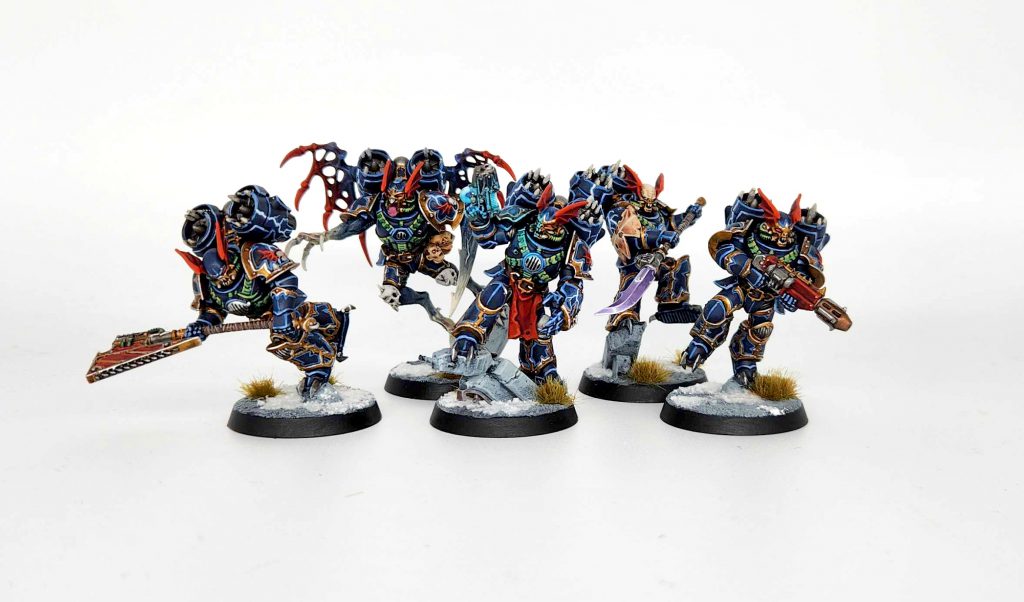
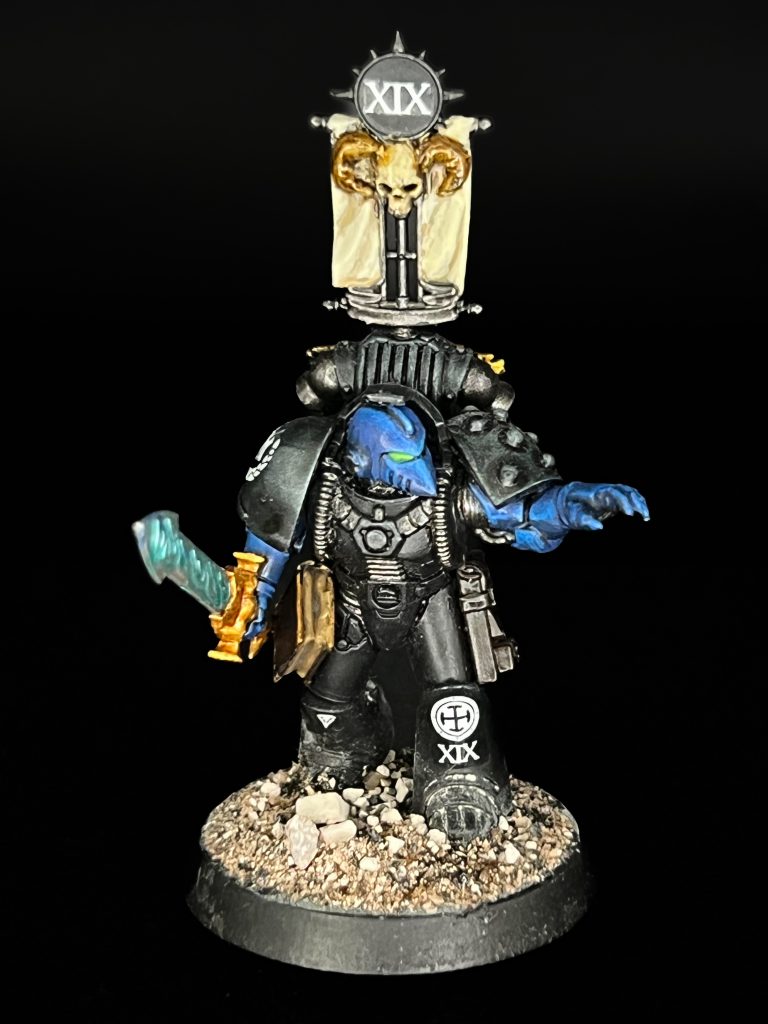
To a greater extent than Dark Coil Damnation, Ascension's strength is in it's short stories. We're presented with a solid eight here, with varying degrees of direct and indirect connection to the two longer novels. They are all - almost all - fantastic flurries of horror writing in 40k, drenched in that-which-man-was-not-meant-to-know, plumbing psychosis and identity and glazed with an occasionally preposterous amount of bloody violence. Nightbleed and Nightshift Nineteen provide horror in the dark of the kind that follows you home and makes you look askance at each pool of shadow, Walker in Fire and Nightfall take you through the traditions and mindset of two very different chapters of space marine, showing the author in full command of writing more traditional 40k with his own unique twists.
 Credit: Robert "TheChirurgeon" Jones
If 40k is grimdark, which given the ways games like Sunrot and artists like Totally Not Panicking are pushing that envelope has become only debatable rather than definitional, 40k fiction usually isn't. It has much more in common - usually - with noir detective fiction or straight up milfic slop. The far future might be a horrible place to live but we usually don't dwell in it all that often, only visiting the mundane and horrific on the way to a big fight. Take Helsreach - one of my favourite 40k novels - there is only war, people die, sacrifices are made but there are heroes, and bright, clean, combats and a definable enemy. Where each of the short stories in this collection excels is in blurring or obliviating those lines entirely. That's the Dark Coil in a nutshell really - no heroes, dirty, damaging violence and horrible, horrible places. 40k taking place in ex-industrial shitholes that feel it, or in gothic manses that creak almost audibly on the page, just has more pull and excitement than a story centering something you might come up with in an RPG session or as a series of games. 40k as written, rather than as played, where you're not translating the game or universe to literature but forcing established patterns, styles and formats into the shapes demanded by 40k - a subtle but I think pretty important difference.
Reveries and Dreams
Fittingly, we begin with a novel that takes a big swing at that difference. It feels a little strange to be re-reviewing a book, now in omnibus rather than standalone form, but the Reverie felt like two stories sandwiched together. I didn't love it as a result - I liked it, particularly the first half - but the flip of the switch into Marine ultraviolence never quite came together. The Reverie is the beginning of a more interesting, more intricate story, and picking it up alone meant that it never quite committed to what it was - a first chapter of a substantially better story. Ascension situates the Reverie properly, slamming into it as the first part of the omnibus and then following the Marines Resplendent as they become the Marines Penitent through The Crown of Thorns, The Sins of my Brothers and the Thirteenth Psalm. In this context, it is a better story, threads and promises picked up and run with (often in different directions) from the Reverie out into the Universe. We have taken the time to understand the conflict at the heart of the Chapter, we can visualise the slow, excruciatingly long-term plans of the chief architects of its malady and now, finally, we see the plan unfurl.
 Raven Guard Librarian. Credit: NotThatHenryC
The thread of the Marines Resplendent runs throughout the collection, piercing into Requiem Infernal and its sister short story Aria Arcana. You can follow it as it cuts through the rest of the Dark Coil, sometimes running in parallel and sometimes moving obliquely, the Marines in the foreground and background alternately a sinister threat, a bastion of order and a simmering pit of chaos. That the stories connect and run through each other is often described as the great strength and appeal of the Dark Coil, a little universe put in place and left to run within a forgotten corner of the franchise. I can sympathise with that, but in the case of the Reverie it leads to frustration. The short stories here happen after - far after - the events of the Reverie, but they are essential to understanding it. It's not a question of sequels, but a single story interleaving, a place where non-linear storytelling would work better than the ARG-style clues and references you end up with without the collection. If you don't have the omnibus, it would be easy to miss Sins of My Brothers, or Aria Arcana, but they are absolutely essential parts of the Reverie and Requiem Infernal - building richer stories when read in close order.
I'm not sure I like this mode of storytelling all that much. While I do like piecing things together over series and time (thinking here of something like the Filth as a great example), often when it's tried you end up in a place where a reference or callback stands in place of showing and telling. You can get mired in reference and callback - look at the End and the Death, or any Marvel movie - to no great effect. I think Ascension escapes this fate, but by the skin of its teeth - returning to Vytarn to see a somewhen resulting, or causing, the time we spent there in Damnation is great, while a slightly throwaway return to the Dolorosa Coil is more of a "hey, look, aren't I clever for remembering" moment.
When the Coil repeats upon itself thematically (Nightbleed and Requiem Infernal) or in revisiting places, chapters, symbolism, it is usually earned and I think never more so than in the stories in Ascension. With a move from visual to musical art as the motif of the collection, you feel that Fehervari wrote an overture that he keeps in his head and each of the stories here, no matter their length, provides an accompaniment and refrain that explore it. We are truly in Ascension territory here, each story exploring how we may become something decidedly else through our actions, desires, plans and identities. There is a theme of transformation - Marine into Heretic, Healer into Killer, Man into Daemon - that repeats and recurs and spirals around itself becoming ever more frequent in the ordering of the stories - transformation occurs more rapidly, a countdown to zero that ends in the final pages of the Requiem Infernal where it comes to a final end-and-reset before achieving both apotheosis and stasis in Aria Arcana.
It's a collection filled with the tension of transformation. What happens next, and who it happens to, isn't just a theme to work from but the heart of everything in here, characters, plot, and prose. Everyone is poised in a liminal state that resolves itself through a reflection, acceptance and rejection of some inner light - the unbroken candlelight of the Vytarn shrines acting as a lodestar for whole worlds to metamorphose, for souls to latch on to when shedding their meat in preparation for Ascension. The tension ratchets through each story - we are not particularly tense for transformation in the Reverie, though we know it is coming, while by Aria we demand it. Short stories provide windows into the moment of change, the how, what and where of it happening, most clearly and obviously in Nightbleed, my favourite of the bunch.
Requiem for Someone Else's Dream
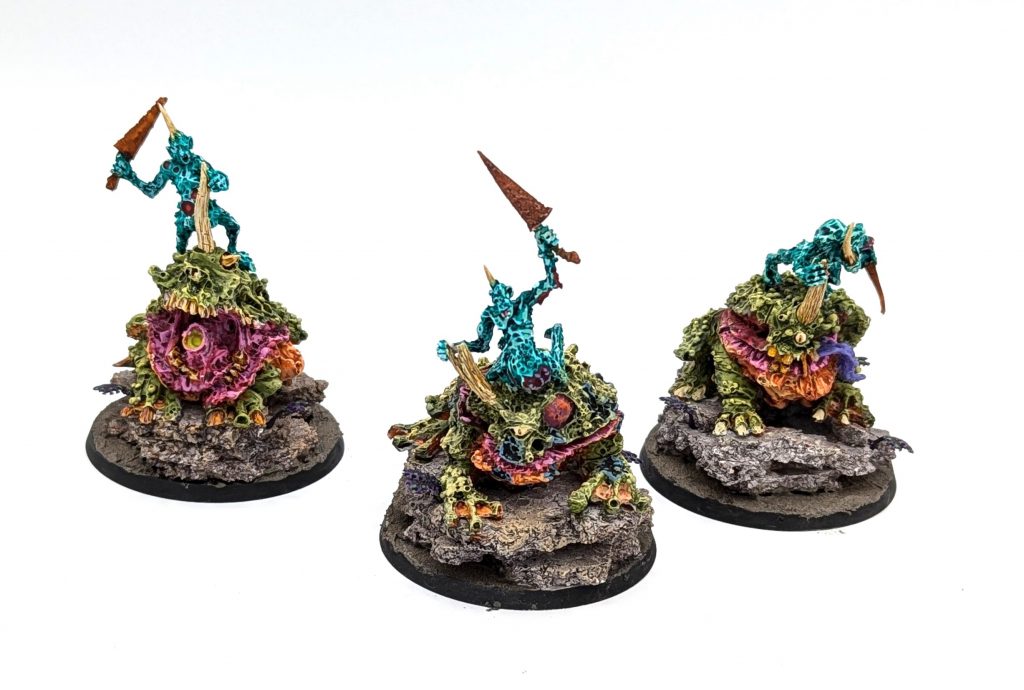
All this is nowhere more true than in Requiem Infernal, which squats like a spider in the web of the Dark Coil. Squatting is a good word for it. This is a malignant little book, a splinter in the mind and eye that festers for a good long while before erupting. The threads of Vytarn, the Sisters, the Marines and the poor bloody infantry come together, finally, and the result is a solid bit of scifi horror. It's consistently unpleasant, a Dracula retelling complete with Demeter, Mina and Renfield, a buzzing hive of flies in the rotting meat of 40k stories where there is never a rest from degradation and horror. It's not unpleasant to read - very pleasant in fact, a good balance between the florid and the clear - but the situations, characters, settings, themes and their unfurling, all reek. There's few places that make
everything about 40k less pleasant and more viscerally unsettling than the Order of the Last Candle and the Blood of the Demeter. It hits the same point that makes people ignore the fact that Lovecraft was one of history's most insane racists and keep on reading his work - there's something there that goes above and beyond "there's some mold on the floor" into an uncomfortable and challenging space. 40k should be horrifying. We have become too comfortable within it.
 Credit MildNorman
Space is always fun in the Dark Coil, as narrative not geography drives characters through and around worlds. Requiem plays with space and time as much as anything in the coil, with successively grander settings that contrive their way into feeling smaller and smaller as time goes on. We go from Ship to Gothic Castle to the Invisible College, but each one feels tighter, a constricting choke point of conflict and madness and decay. Frankenstein replaces Dracula and the story shifts into something else - something perhaps a little predictable as Fire Caste retells itself with new purpose and meaning, complete with hero sergeant, commissar and exponential fungal growth, but that is the nature of the Coil. We return to themes unwillingly, with Requiem Infernal metastasising, not referencing. Fehervari knows it's the same story, but that is because the horror at the heart of the Coil reaches out and takes it, the
story as all-consuming passion emanating from whatever the hell is at the centre of the coil, the culmination of many threads and many heart-stopping moments. It reaches back into the rest of the collection and further into Damnation, not so much recontexualising as wresting additional meaning from nothingness - a story that infects the works around it. Are they - are we? - damned to repeat the same steps in different skin, and if so, why?
Wither Now?
That's not really a review, is it? Requiem Infernal is good. I enjoyed it. It felt 40k and it felt Dark Coil. There are dangling plot hooks left as a DM does towards the end of a campaign, but nevertheless it does feel like an end. I want to see where the Deathwatch and the Night Lords go, and I want to see if anything has survived on the Korontas Ring, but I'm not crazy about it. It feels satisfyingly done, a coil wound with it's threads in place and now forever to simmer and warp the little corner of the universe. There will be, no doubt, more Coil stories, and Fehervari has certainly earned his renown and the right for more. There'll be pieces and twists that come back to us that will reveal Ascension to have been just another step on the road, but for now? Now we feel done, spent, exhausted. We have been dragged along a bloody and shattering road, and there's the opportunity to get off it and stand aside, to see the path as a whole. If you haven't read the Dark Coil stories you'll get a huge amount out of these omnibuses (omnibi?), and whatever your level of engagement - or perhaps your level of incipient psychosis - it's a lot of fun to dive in.
As a standalone book this would be a weird read - doable, given the focus on Marines and Sisters here - but this isn't one. If you haven't read Damnation yet, start there. Then come here. Come. Come and stay in the coil with us. It's dark, and quiet, and close. There is a heartbeat here and a meaning if you care to look.
Have any questions or feedback? Drop us a note in the comments below or email us at contact@goonhammer.com. Want articles like this linked in your inbox every Monday morning? Sign up for our newsletter. And don't forget that you can support us on Patreon for backer rewards like early video content, Administratum access, an ad-free experience on our website and more.Thank you for being a friend.
 This website uses cookies. Learn more.


 Goonhammer Hobby Round-Up: March 2026
 Goonhammer Reviews: Tribal Conquest
 Conquest: Weaver Courts Gemred Knights and Scaile Dancers Model Review