Finding the right World War I wargaming ruleset has been my white whale for some time. Despite having a display cabinet filled with lovingly painted WWI miniatures, I’ve yet to find a ruleset that is just right for me (if I even know what that would be - I guess I’ll know it when I see it).
So, the announcement of Zero Hour (a World War I ruleset by Gripping Beast) immediately caught my attention. Here was a chance to see if this might actually be the promised rule set that I had been looking for for all these years. With copy in hand, I’ve recently put it on the table to try it out and give my impressions.
I'm going to be conducting this review using the Little Wars TV template for reviewing game rules (breaking it down into five categories, presentation, playability, mechanics, historical flavor, and support) sans scoring each category - I’ll simply give my impressions of each.
Credit: Alexander Smith
Presentation
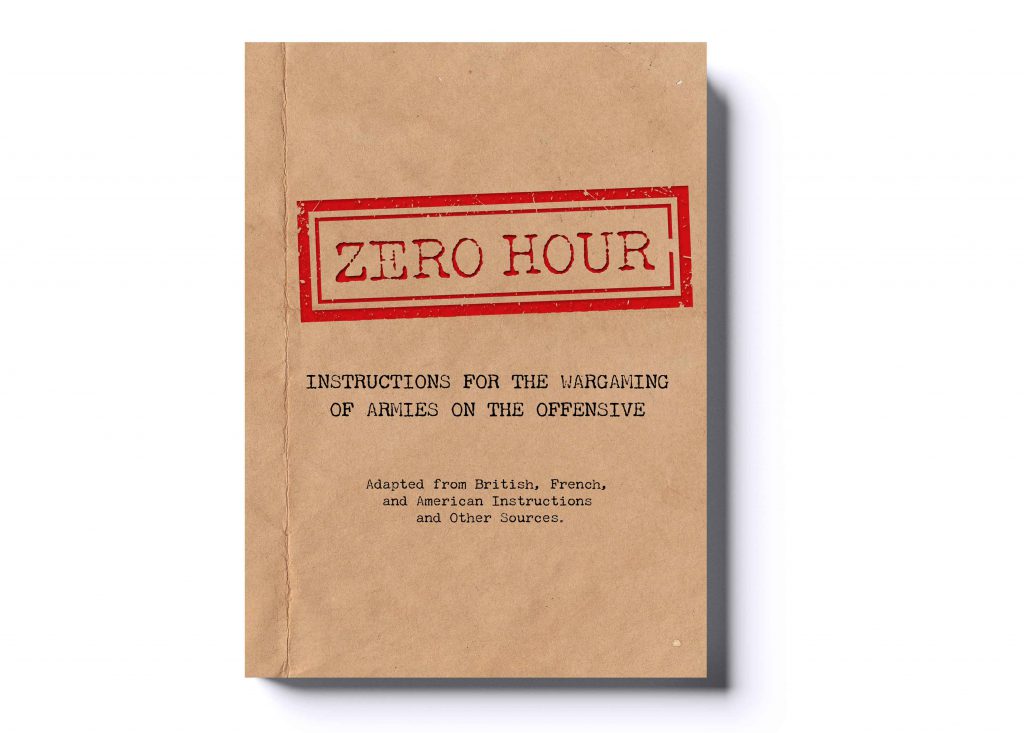
The 62-page softback rulebook is nicely produced and has a unique cover, mimicking a set of orders from the Great War. Inside, the design is quite nice with a typewriter-style font, and plenty of color images of beautiful terrain, miniatures and battle scenes. Overall the quality is nice and appropriate for the £22 price tag.
One thing I would have definitely liked to have seen more of would be diagrams and illustrations showing how to perform certain actions in parts of the rulebook. All of the images in the rulebook are wonderfully evocative, showing some great setups of battle scenes and miniatures marching and whatnot. However, for visual learners, it's often useful to have some illustrations to reinforce the correct method for playing the game.
Credit: Alexander Smith
The rules themselves are written fairly loosely, acting more as a guide than an instruction manual. Zero Hour largely forgoes prescriptive instructions on how to precisely conduct each step of playing. Overall, the impression I get is an author determined to keep their rulebook lean, sometimes to the detriment of clarity (more on this later).
Playability
It’s hard to categorize Zero Hour. Models are individually based, with casualty removal, however it's an unabashedly large game, by which I mean it's designed for 100 or more 28mm miniatures on the battlefield per side. In an era where skirmish or warband-style games with a small model count are in vogue, Zero Hour has no reservations about going big. The closest fit I think would be to describe it as a mass skirmish game.
Credit: Alexander Smith
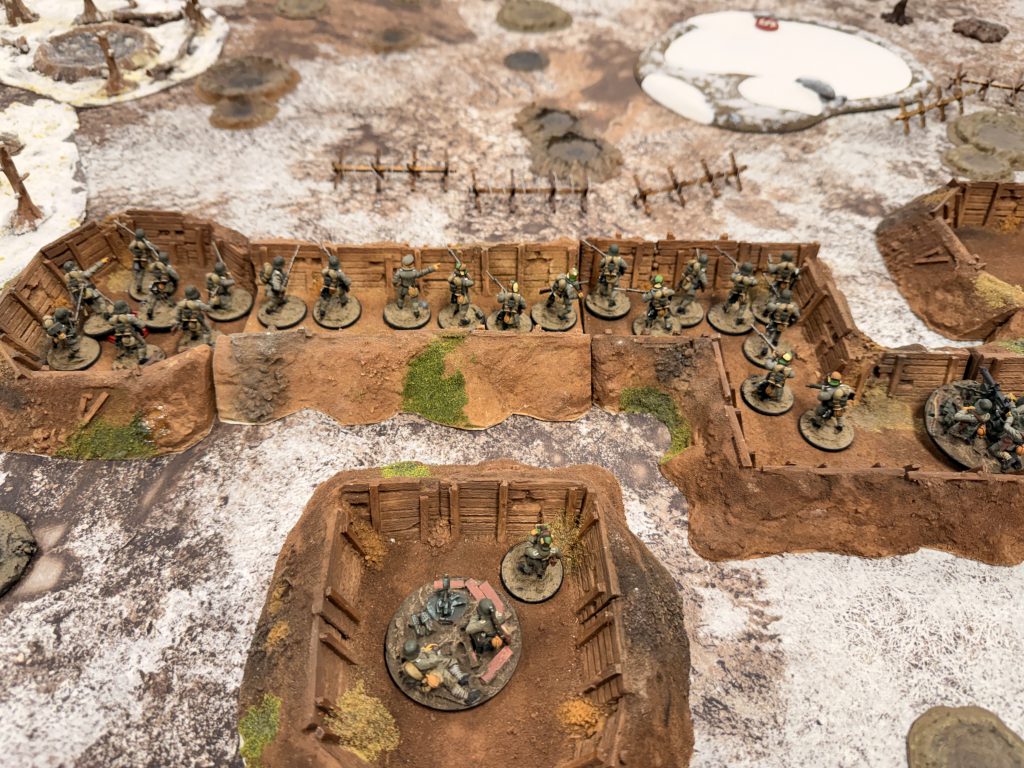
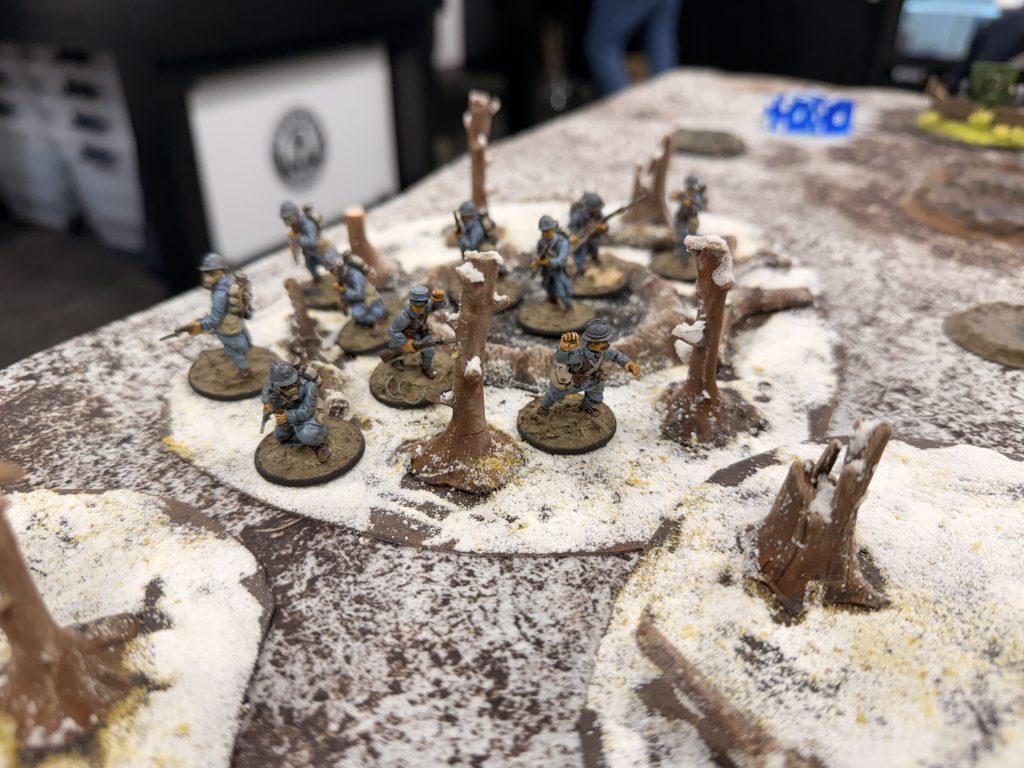
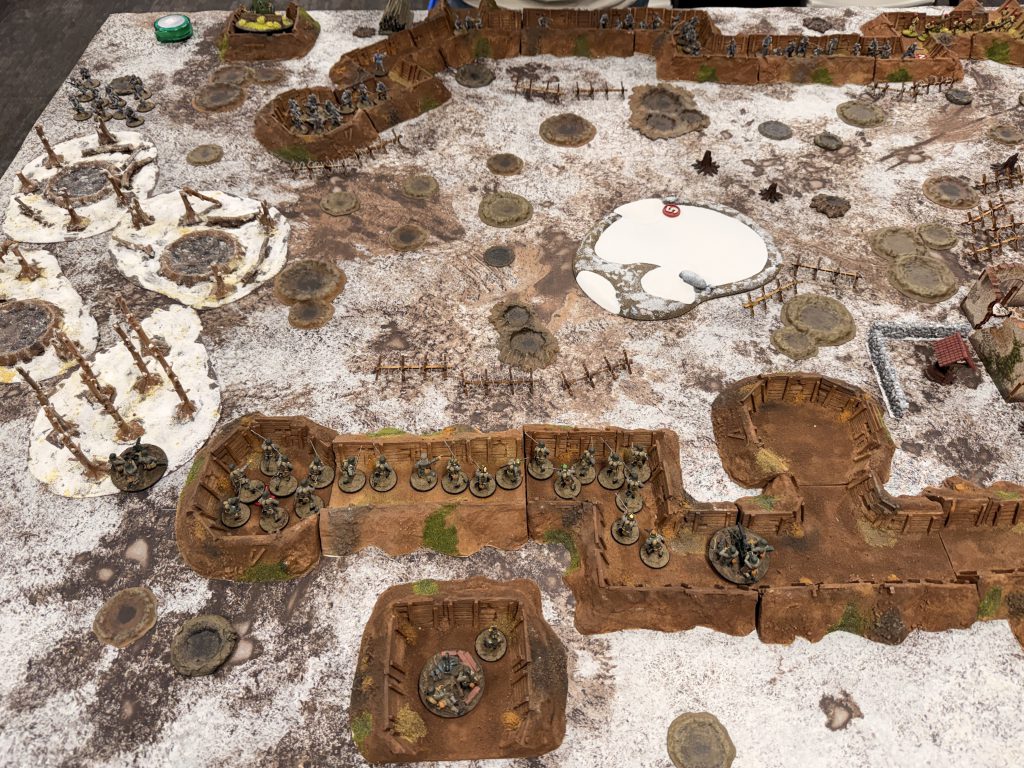
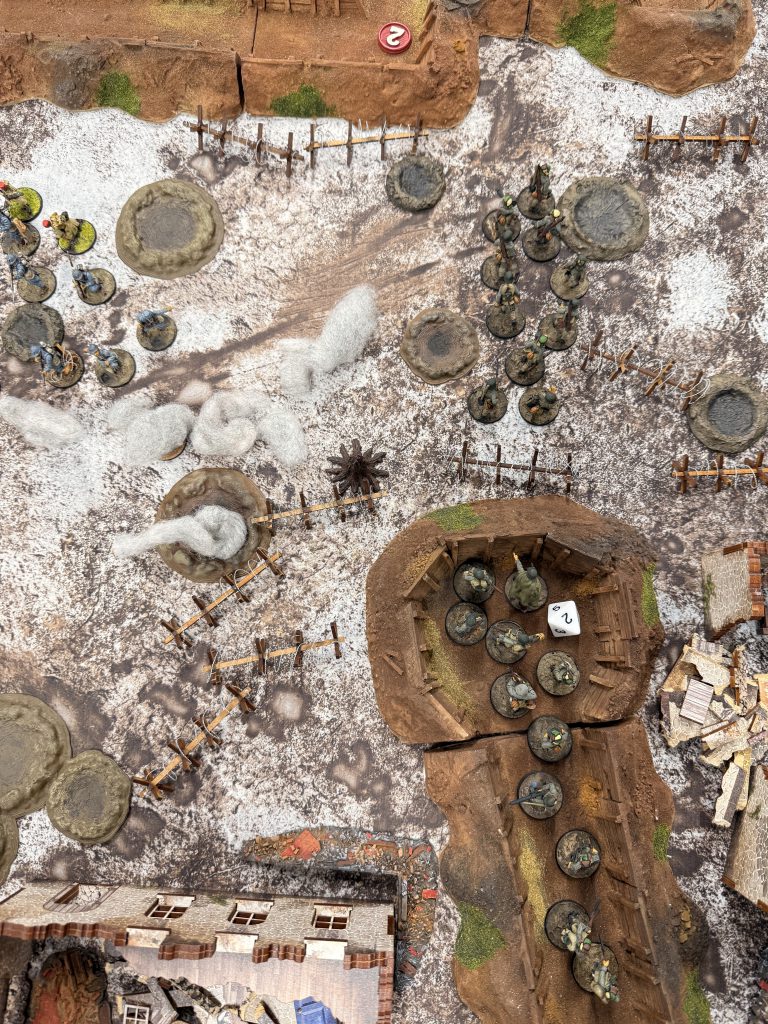
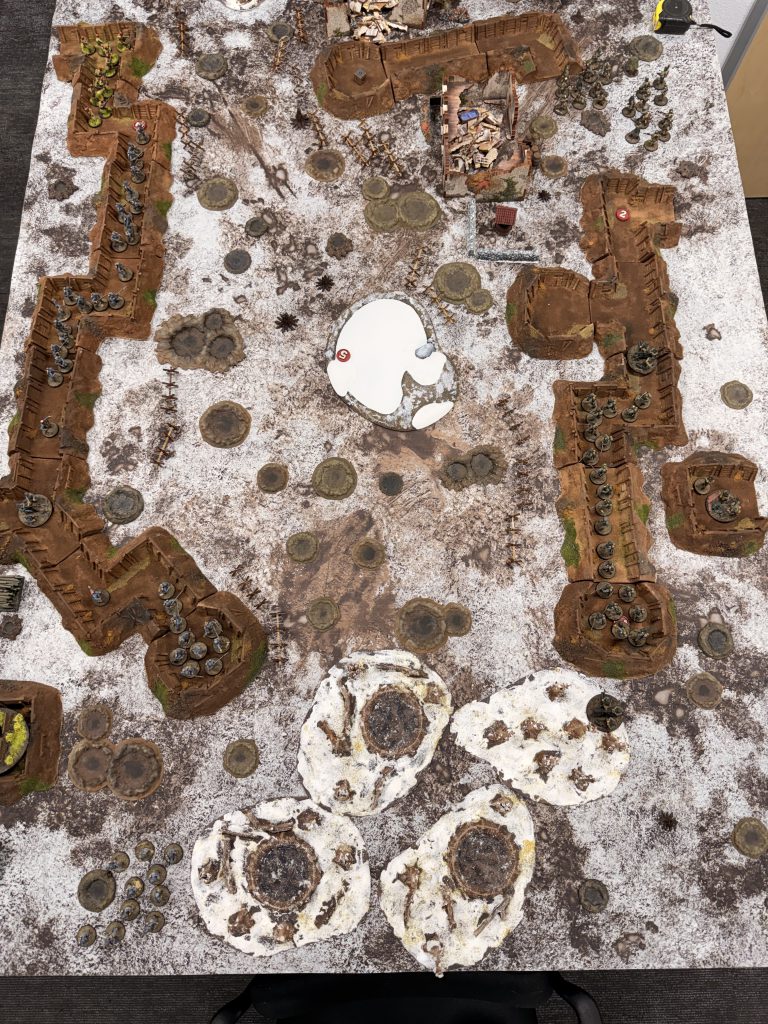
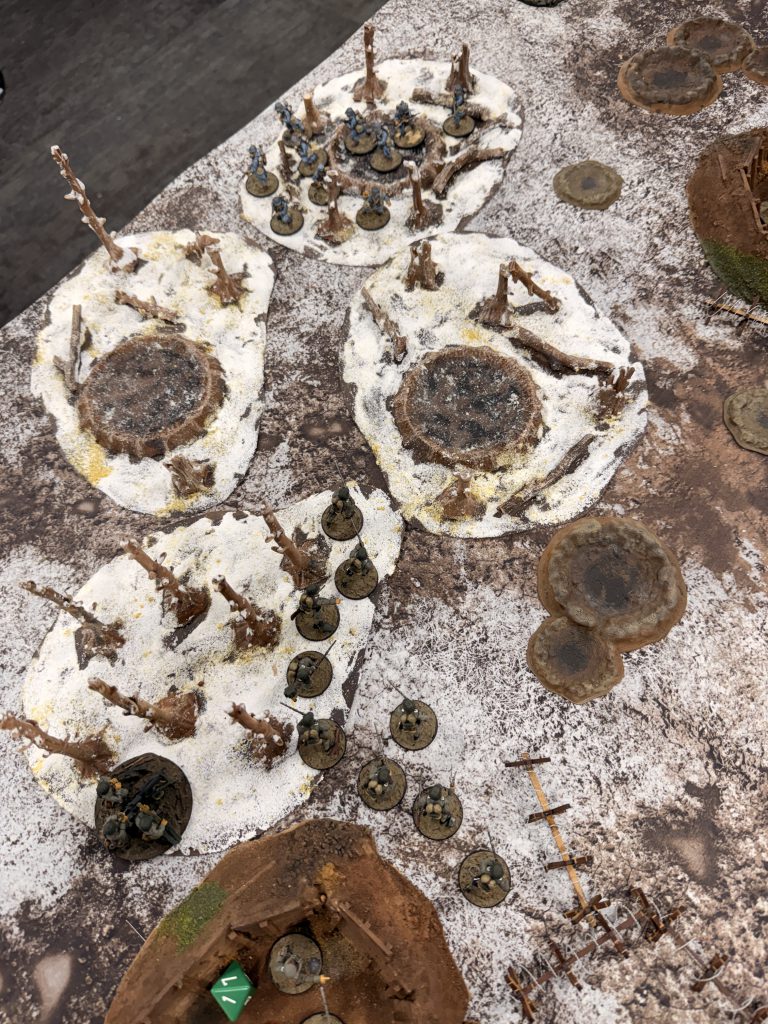
The author recommends 1000 points as a typical battle size. For reference, in my playthrough I was only able to field approximately 500 points each for my French and Germans, which consisted of 50 infantry and three support weapons per side. As you can see, a 1000 point battle would be quite large. This means, of course, that players have to invest quite a lot into their forces before they could realistically get a game of Zero Hour onto the tabletop for the typical size.
As for how the game plays, its roots as a convention game are easily seen throughout the rule set in that it seems to have taken the KISS (Keep It Simple, Stupid) principle to heart. The author seems to have taken care to excise as many fiddly mechanics or rules wherever possible. The emphasis throughout is on fast play, presumably to make it possible for a game of its size to be playable in an afternoon. I appreciate the attempt to keep things lean, however in some cases a sentence or two of further elaboration would definitely help.
Credit: Alexander Smith
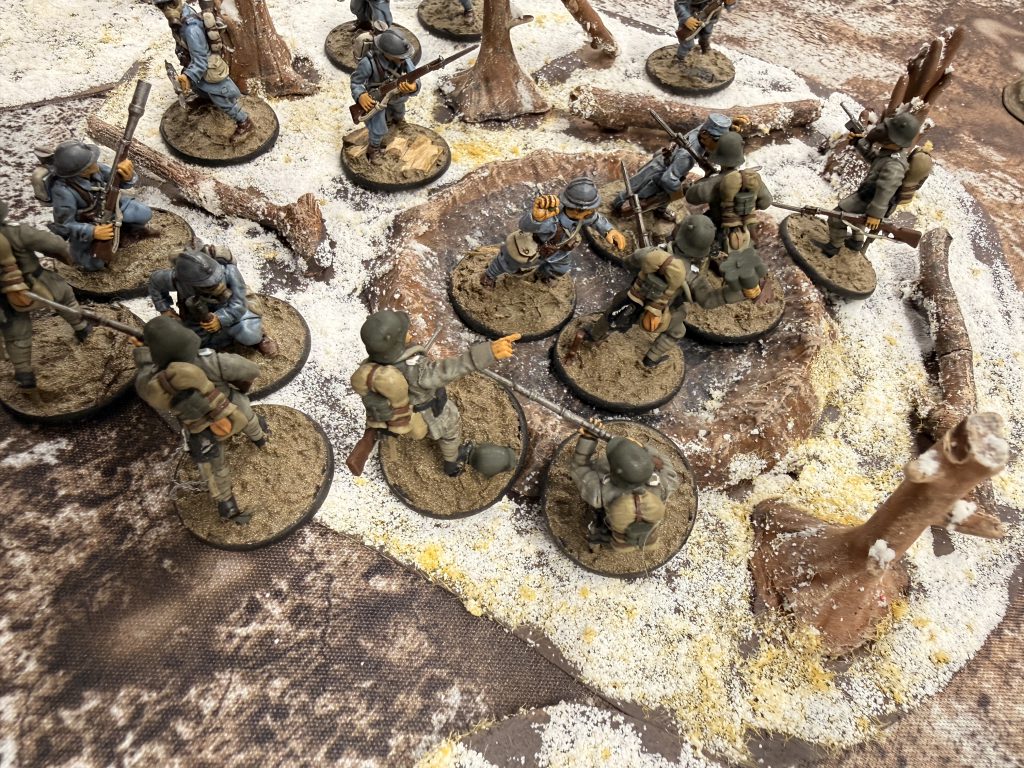
A perfect example of this is the Stragglers rule. In the clean-up phase at the end of the turn, units of three or fewer models are considered Stragglers and can be absorbed into nearby friendly units, thereby eliminating a unit from the field. It’s a great rule that I wish more game systems would adopt. Most of my Bolt Action games inevitably see a couple of lone stragglers wandering the battlefield looking for a purpose besides slowing the game down.
Several questions arise, though, from the wording here. Can ANY unit of three or less models mob up into a friendly unit, including officers and support units? What about units that start with three or less models at the beginning of the game? If a unit is reduced to three or less models by taking casualties, and no friendly units are within 6”, are they removed from the table? It is somewhat implied in the first line, but not explicitly stated to be so. The result is that the player must attempt to intuit the author’s intention here, and in a few other places. A short FAQ / Errata would likely help to shed light on these interactions.
Credit: Alexander Smith
Mechanics
For the most part, the game utilizes a standard D6 attack, save, morale system. Interestingly, Zero Hour uses a 3d6 system for randomization in which certain results, such as the highest or lowest are chosen. For example, an artillery strike might take the two highest results from a 3d6 roll, while a light machine gun might use the lowest roll from a 3d6.
Credit: Alexander Smith
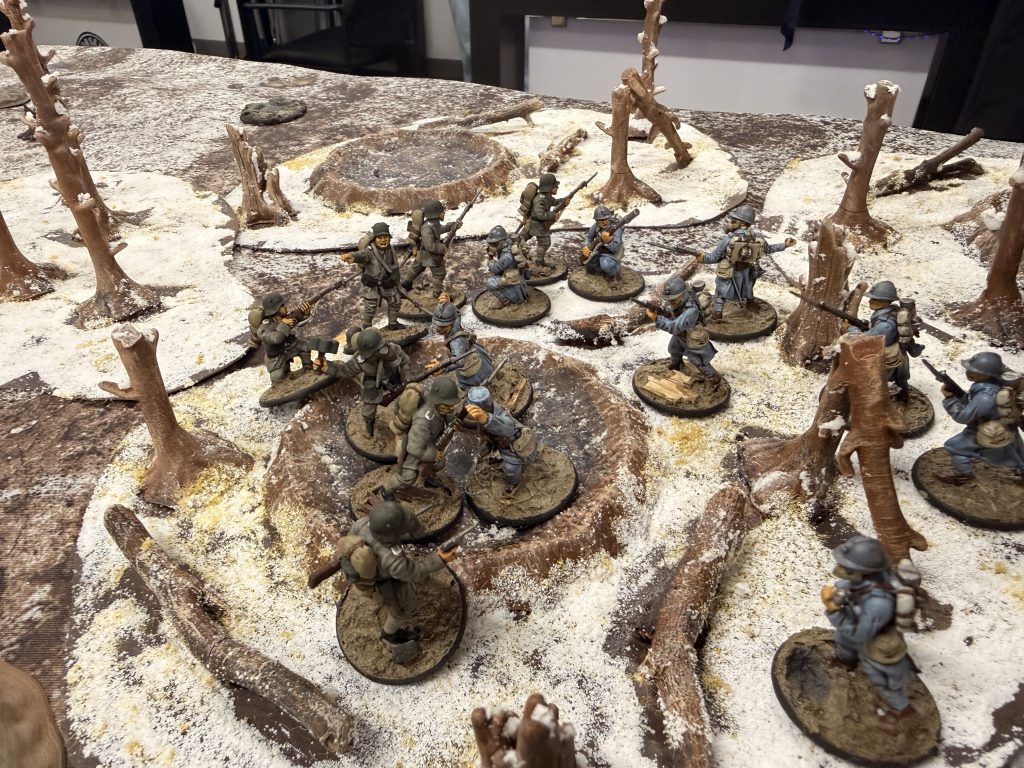
I should state that this is definitely a "bucket of dice" game. Since units require a six to hit while shooting, a lot of dice need to be thrown to inflict any casualties. At one point in my game, a unit of German Stormtroopers was able to roll 30 dice in a shooting attack due to their light machine gun and the use of a Rapid Fire order.
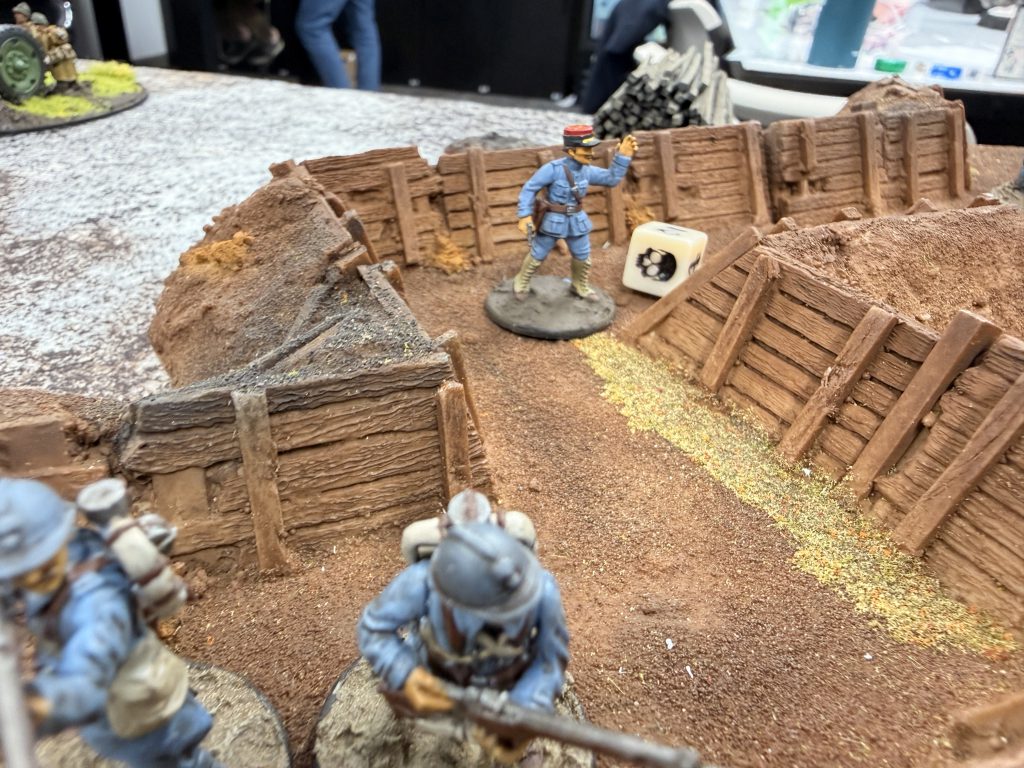
Speaking of orders, the most unique aspect of the game is the order system. Units can carry out some basic tasks on their own without orders such as moving and shooting. However, to do anything more complicated or advanced, they require an order from an officer. Each unit has a built-in Junior Officer and each larger formation has a commanding Senior Officer. Finally, the force has an Army Commander, in charge of the force as a whole. Orders allow your units to do things such as move at double pace, rapid fire to gain more dice, or charge into melee combat. All in all, there are about 15 orders that normal units can perform, and another 8 special abilities reserved for your Army Commander.
Credit: Alexander Smith
I think this appropriately represents the level of command-and-control in WWI armies. Small unit tactics were still in their infancy in this period, and only specialized troops, such as Stormtroopers had training on how to act independently in the field. This was still a time when officers were essential for directing the behavior of the men and keeping them on mission. The rule set then puts the officers front-and-center and makes them an indispensable part of your force. Junior Officers, in command of platoons, are in danger of being killed anytime their unit takes a casualty. While Junior Officers die along with their men, Senior Officers cannot be directly targeted by enemy shooting attacks, allowing them to wander the battlefield with relative impunity (although they can still be the victims of a stray artillery round).
Overall, I like the order system. It provides some interesting decision-making for players. However, as stated before, a little more elaboration would go a long way to making sure the Orders are clearly understood by players. With so many possible orders at our command, it can sometimes be difficult for the reader to differentiate between them and choose the one that will give the desired outcome. What is the practical difference, for instance of choosing Aimed Shot for a +1 to hit, or Rapid Fire for double attack dice?
Credit: Alexander Smith
Historical Flavor
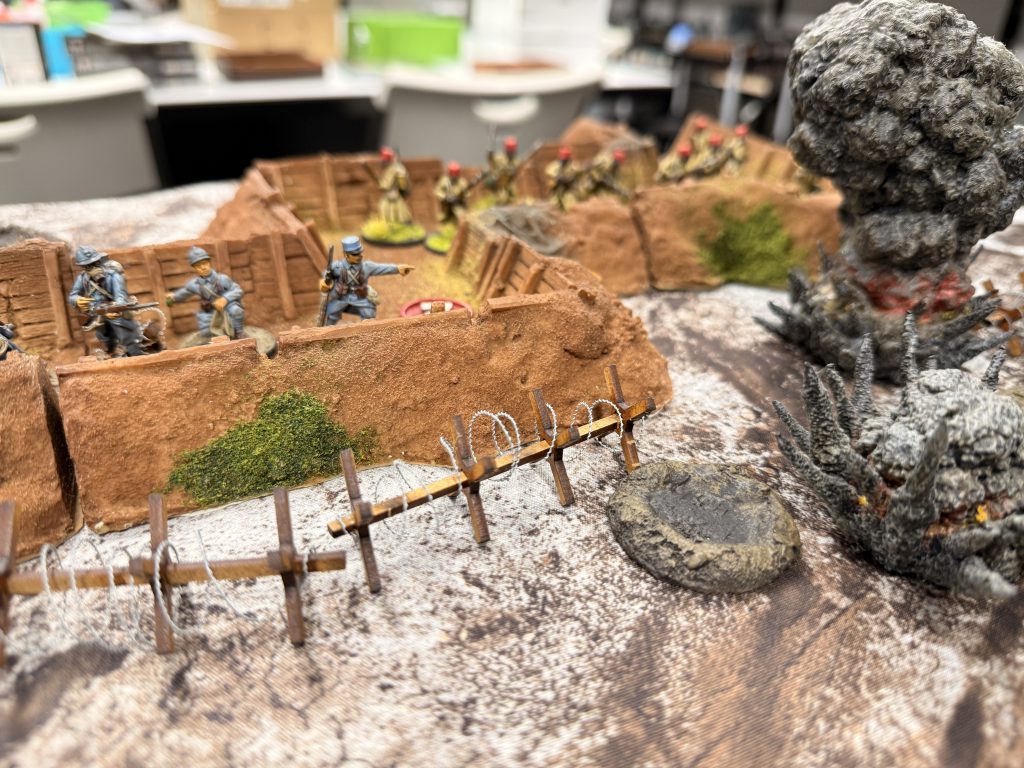
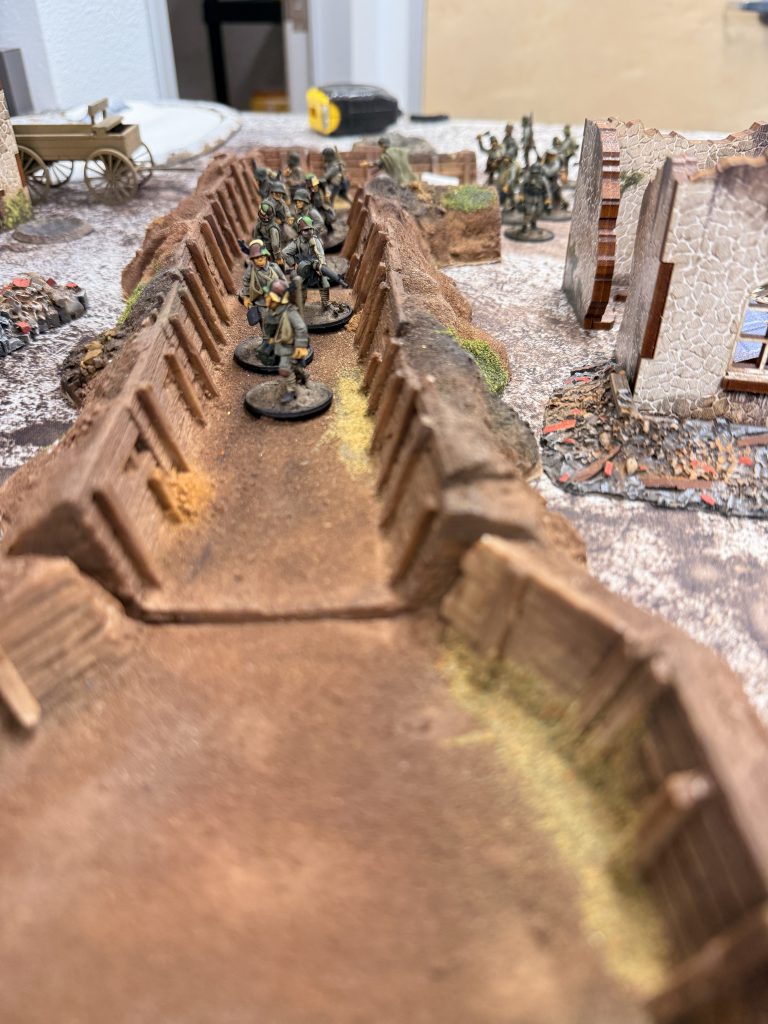
Right off the bat I want to emphasize that Zero Hour does not shy away from trench warfare as an integral part of playing the time period. It’s baffling to me that so many WWI rules go out of their way to minimize trench warfare, most often by setting their ruleset at the beginning/end of the war, when mobile warfare was more commonplace. Perhaps it is the common perception that trench warfare is essentially impossible to properly represent on the table top, and something that most players wouldn't be interested in attempting in the first place.
Credit: Alexander Smith
My perspective is the trench warfare aspect is one of the most interesting parts of WWI, and the defining characteristic of the conflict! Trench warfare does not have to be a boring slugfest in which neither side can make any meaningful headway. The reality is that most local attacks were successful in at least temporarily gaining control of the opposing sides' trenches and then had to defend against vigorous counter attacks. I find that trying to puzzle together solutions for breaking through enemy defenses is extremely an interesting wargaming challenge and something that isn't seen quite so often in rulesets. So Zero Hour, rather than making World War II, Diet Edition, has instead embraced trench warfare and all of the foibles.
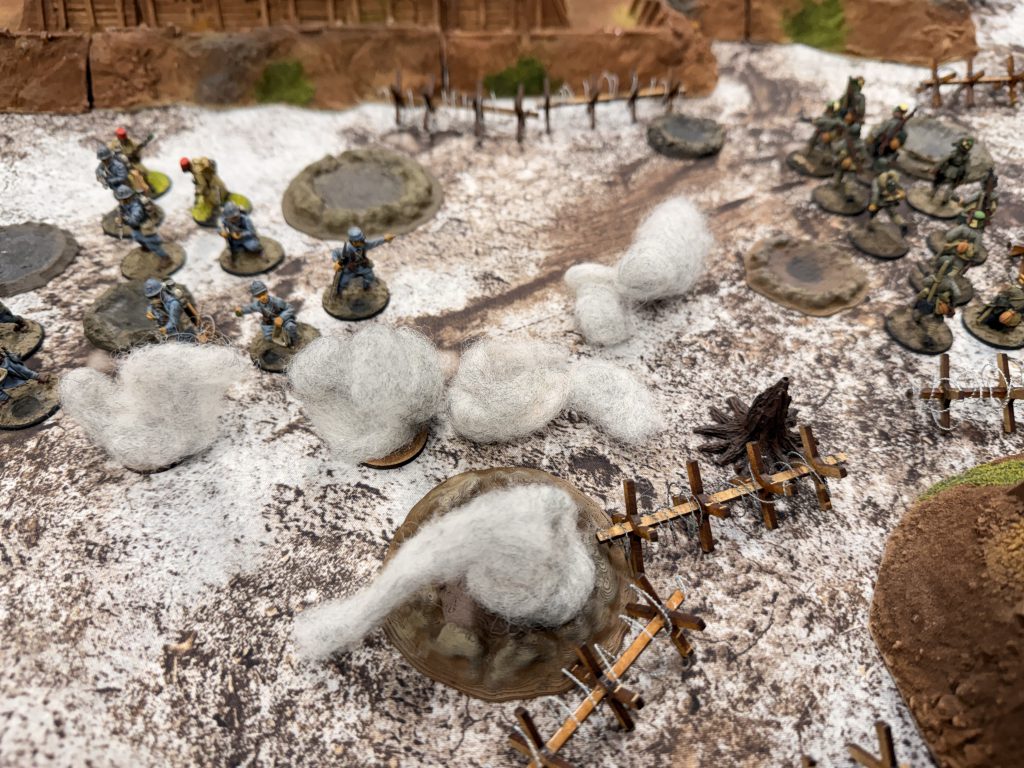
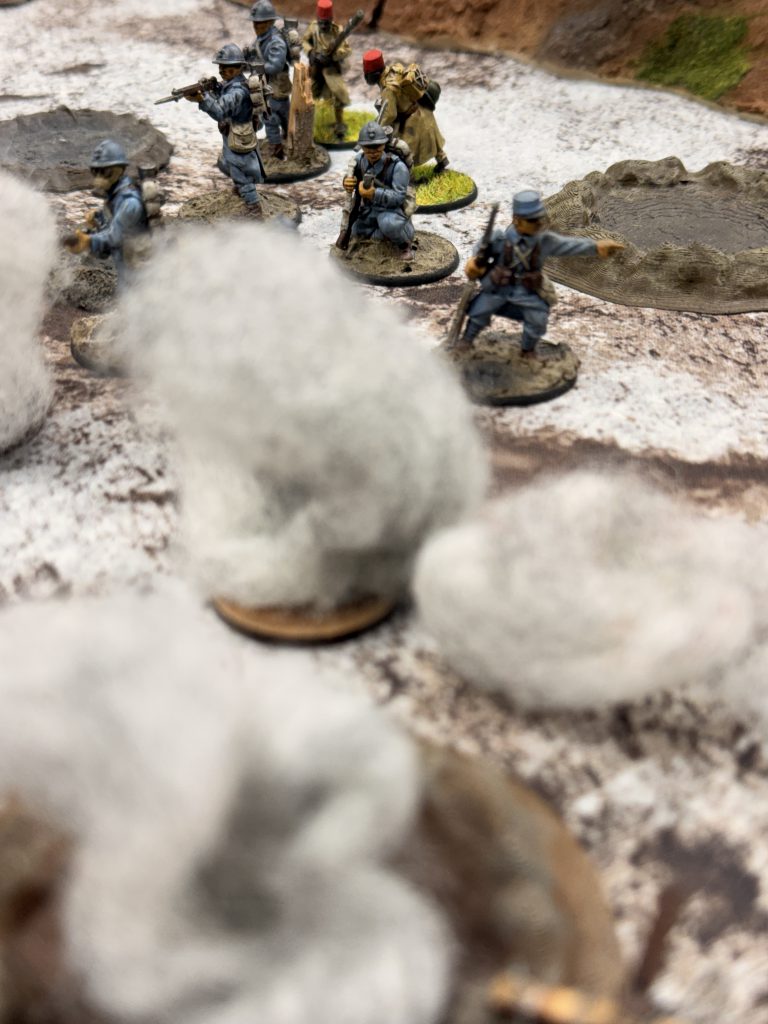
In particular the orders system, especially the Army Commander orders, give players the tools they need for the most part to take on an enemy trench line. For example, players can call in artillery by the bucketload, lay down smoke, call in poisonous gas, and add air support.
Credit: Alexander Smith
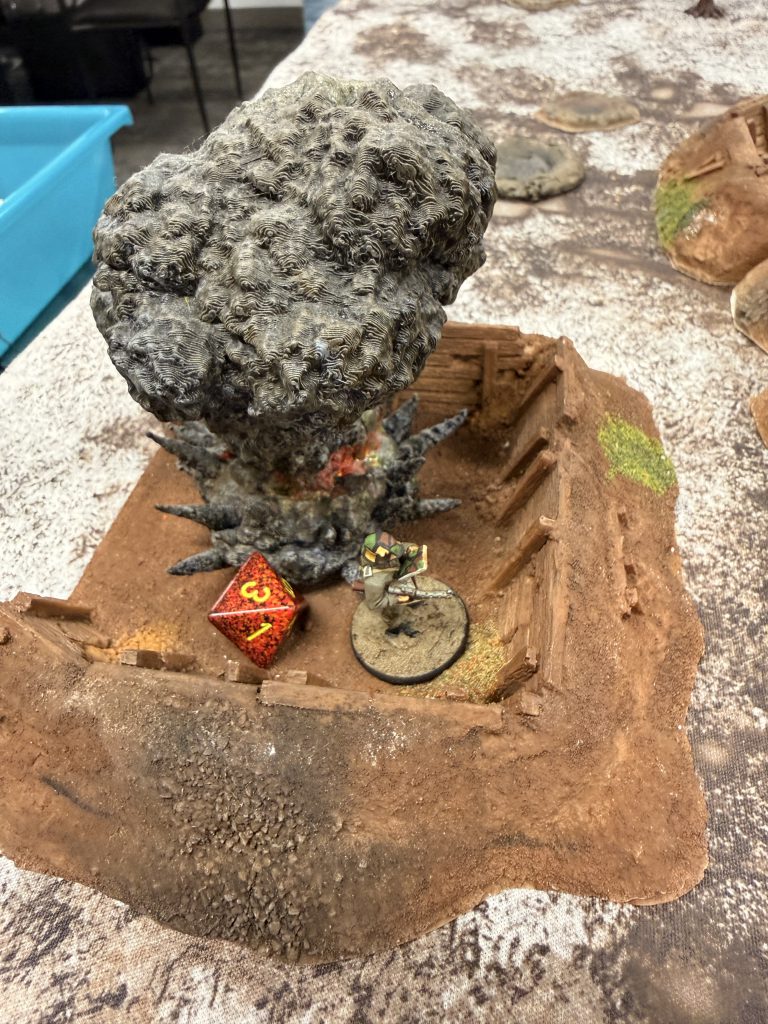
In particular, I'm a big fan of the inclusion of the creeping barrage that allows a player to create a line of explosions that damage anything they hit as well as block line of sight, which is historically accurate. Launching a creeping barrage requires a sustained use of a player's order tokens, but provides a 15” wall of shells that both screen your advancing forces and act as a looming wall of doom as it creeps forward towards the enemy trenches. Another inclusion that I appreciated was the ability to launch troops from a forward position which represents either units infiltrating into no man's land or the use of Russian Saps.
There are a few places, though, where I think the ruleset doesn't quite stick the landing. For one, barbed wire is strangely a non-factor in this rule set. Rather than presenting a formidable obstacle, non-cavalry units can move through wire, with only a small penalty to their movement speed. Historically, clearing wire was an extremely important and difficult prospect during WWI, and I would have liked to see more of an emphasis on dealing with the wire.
Credit: Alexander Smith
Furthermore, the units provided are essentially blank templates in which players can add special rules to customize their units. A guide is given to the participants with suggestions for which special rules may be appropriate for them, but this is the extent of customization between the various combatants. There is nothing to inherently distinguish, say, an Italian infantry unit from a German one, aside from any special rules the player may select. I think unique orders per faction may have been an interesting way of differentiating between them, or different unit sizes with different equipment options might also have helped to give each a sense of uniqueness.
The lean nature of the rule book also precludes really anything in the way of a historical overview. In a way, the rules presupposes a certain level of knowledge of WWI by its readers. Those who are not already well versed in the period may find themselves a bit overwhelmed and lost as to how to equip and collect their force in a historically accurate way. To the author's credit, it seems that the need for this has been recognized and they have begun producing supplementary materials to help players collect and assemble their forces.
Credit: Alexander Smith
Zero Hour includes a scenario generator that has randomly generated objectives for both players. However, there is no instruction given as to how to set up a table nor any historical scenarios provided that players can reenact. This largely leaves the duty of historical research upon the players shoulders, which some gamers enjoy. WW1, however, can be a quite difficult subject to research, with a dearth of material compared to WW2, I can see some players needing more of a guiding hand to get started.
Publishing Support
Dave Stone, the author, is very active on Facebook in the Zero Hour group. There he can be found answering questions and has recently released several free additional supplements for the ruleset containing army lists for Germany, France, and Britain. He also has mentioned intention to continue to add to this ruleset in the future. As for miniature support, Gripping Beast has the wonderful Woodbine miniature lines and the author provides miniature guides for most of the factions as well to help players get started. Gripping Beast seems intent on advertising and supporting the ruleset, which I am gladdened to see.
Credit: Alexander Smith
Final Thoughts
Who would I recommend Zero Hour to? In my opinion, the best audience for this ruleset are players who are willing to put in the commitment to run a convention or club game on a grand scale. Newbies to WWI may be daunted by the size of forces required and the freeform nature of army and scenario building.
Is then, Zero Hour the white whale in which I’ve been searching for? Well, not quite. But it’s the closest any of the rulesets I’ve tried have come. In time, with some supplements, I think this ruleset has some real promise.
Credit: Alexander Smith
Have any questions or feedback? Drop us a note in the comments below or email us at contact@goonhammer.com. Want articles like this linked in your inbox every Monday morning? Sign up for our newsletter. And don’t forget that you can support us on Patreon for backer rewards like early video content, Administratum access, an ad-free experience on our website and more.
 This website uses cookies. Learn more.
 Credit: Alexander Smith
 Credit: Alexander Smith
 Credit: Alexander Smith
 Credit: Alexander Smith

 Credit: Alexander Smith
 Credit: Alexander Smith
 Credit: Alexander Smith
 Credit: Alexander Smith
 Credit: Alexander Smith
 Credit: Alexander Smith
 Credit: Alexander Smith
 Credit: Alexander Smith
 Credit: Alexander Smith
 Credit: Alexander Smith

 Infinity N5 First Principles: Understanding the Outcomes of Face to Face Rolls
 Tactical Feedback: Timing the Go-Turn
 SRM's Roundabout to Adepticon 2026: Curd Is the Word