In addition to the formal announcements of the new BattleTech Core Rules, Core Box, and Starter Box, Adepticon brought many of us our first opportunity to grab the new Map Pack: Volcanic and Map Pack: Glacier, as well as a sneak peek at Aces: Snowblind. For a much smaller group of lucky attendees – myself included – it was also a chance to get our hands on Battletech’s next campaign book, Hot Spots: Draconis Reach.
Large-scale models of Huginn and Muninn, Hot Spots: Draconis Reach's cover stars, at Adepticon 2026. Credit: Valk
Hot Spots: Draconis Reach builds on the updated campaign system that was first seen as part of the BattleTech: Mercenaries expansion, then further expanded upon with Hot Spots: Hinterlands in late 2024. Hinterlands was clearly intended to be the first of many Hot Spots campaign books, with the series providing players with an opportunity to take Your Dudes™ across the Inner Sphere’s many conflict zones in search of riches and glory in the ilClan era. When it released, my group aggressively worked through Hinterlands in a PvE league format, and while we found the book generally enjoyable, it became plainly evident early on that the Mercenaries campaign system was still in need of some tweaking, as did the generic Tracks that each individual Contract was composed of. My group in Austin’s focus on playing a PvE league (which was mostly supported by the book) to avoid having games become a zero-sum affair also resulted in us finding some rather unique issues with how GM-run opposing forces were constructed and employed, especially at Scale 1. To this day, the “0 Days Since Manticore HPPC Headcap” sticker still gets more use in our server than feels reasonable.
Manticore Heavy Tanks. Credit: Valk.
As the series’ sophomoric entry, Draconis Reach thus has some big shoes to fill, needing to provide at minimum a series of campaign scenarios that are enjoyable to play, while also being expected to resolve many of the wrinkles that players discovered once its predecessor hit the broader community. The release of BattleTech Aces: Scouring Sands further raised expectations, as Scouring Sands provided not only a fully-contained single-player/co-op campaign for Alpha Strike that integrated many of the same bookkeeping factors found in the Mercenaries campaign system, but also made some additions of its own, namely introduction of the Named Pilot system and the replacement of SPAs with edge abilities. My experience with Aces left me feeling like these more granular ways of accruing pilot experience and better-balanced special abilities were ideas that should be integrated into traditional BattleTech. Edge abilities felt like a far more graceful way to elevate “heroic” pilots, giving them less impactful abilities that could be used less often, rather than trying to find a way to balance something like Jumping Jack or Melee Master as described in Campaign Operations. Similarly, limiting the number of “special” pilots one could have would also prevent people from simply rotating in redshirts once per campaign, X-COM style, in order to quickly build out a roster of veteran or elite pilots whether or not those pilots actually did anything for the rest of the Contract.
The good news is that the Hot Spots writing team appears to have made many of the changes I hoped to see with Draconis Reach. In fact, they were kind enough to just drop a sidebar of “patch notes” in the opening chapters of the book. We’ll dig into those first.
Re-Construction
First, we’ll look at what’s changed for mercenary unit construction, as it’s likely the first part of the book most players will see significant changes.
Regular Military Commands
While the primary appeal of this campaign system, as before, is to take Your Dudes™ and get paid to get into fights, this is a bit less viable in the Draconis Reach than it was in the Hinterlands. The Draconis Reach constitutes the border worlds between the Federated Suns and Draconis Combine, the former of which just threw the latter off their capitol planet. Both factions are currently in the process of licking their wounds, but they’re both far from finished as military powers. This is distinctly different from the state of affairs in the Hinterlands, where the only real standing military with power projection in the region was Clan Hell’s Horses. The Hell’s Horses received a small number of rules for players who wanted to run a force as part of their command, but for the most part, working as a unit attached to a regular military was not well-supported in Hinterlands.
Draconis Reach vastly expands the number of supporting rules for the major militaries of the region, allowing players to build forces from the Armed Forces of the Federated Suns (AFFS), Draconis Combine Mustered Soldiery (DCMS), and the Raven Alliance. Each faction gets their own tables of “specialty” units that players are encouraged to choose from, as well as unique purchase tables representing ‘Mechs that aren’t normally available to mercenaries. This is still a mercenary-focused campaign system though, so regular military units cannot engage in all the book’s Contracts. AFFS and DCMS units can participate in eight of the thirteen Hot Spot Contracts listed, and the Raven Alliance can only engage in one, though all three have the option to play the generic “Acts of Piracy” Contracts in one way or another.
Hatamoto-Chi. Credit: Rockfish
Scale Limits
Scale Limits have also been adjusted for balance. This wasn’t an issue I ran into in my experience with the game, but it’s easy to see how it could have become one if left unchecked. Rather than having no limitations on the number of units in a Contract or on a Track, players are now limited to having three times the number of units of the Scale that the Track is played at, with infantry being specifically called out as only counting for half of a unit in this context. Similarly, Contracts also have a unit limit of three times the Scale the Contract was negotiated at. This is only checked at the beginning of a contract, so you can take your new toys home, but if you have 8 units and negotiate a Contract at Scale 2, you can only take 6 with you.
In addition, there are also now BV/PV limits on the units you do bring with you on a Contract. As before, it’s based on the Scale that the Contract was negotiated at and shakes out to 1.5 times the per-track BV/PV limits at that scale (4500 BV for Scale 1, 9000 BV for Scale 2, 13500 BV for Scale 3). This might feel a bit confusing at first, but given that Draconis Reach makes it exceptionally clear this time around that players can take a Contract at a larger Scale and then choose to play individual Tracks at a smaller scale (i.e., bring a 9000 BV/6 unit Scale 2 force and then play all tracks as 3000 BV/3 unit Scale 1 games), these separate limits for Contract forces and Track deployments begin to make a little more sense
I’m actually a big fan of this change as a whole; it didn’t make much sense to me that players could have what was effectively a Clown Car-class DropShip containing a functionally infinite number of ‘Mechs and only paying Scale 1 transportation costs for all of them. Similarly, you’re forced to be a little more careful about what ‘Mechs you take with you on any given Contract, as you won’t be able to bring an entire stable of heavy hitters and simply swap one out for another in the next Track if it gets too roughed up.
Contract Negotiations and Reputation
This was another system in Hinterlands that I didn’t have much trouble with myself, but can easily see the flaws with in retrospect. Previously, you could negotiate any given Contract’s terms by using Reputation, applying up to double the Contract’s Scale in Reputation Points to adjust steps on the negotiation table. This led to some rather hilarious situations, such as a Scale 3 player with a high Reputation being able to wring generous contract terms out of what were described as employers working under austere conditions. It also further punished players who had gone on a losing streak recently, as you could easily go into the negatives with your Reputation from consecutive losses, then be unable to negotiate contract terms that would help you get back on your feet. Since Reputation was a zero-sum statistic that respectively went up or down with each win or loss, it often had the result of making the rich richer while the poor stayed poor.
These problems appear to have been largely rectified in Draconis Reach, with Reputation becoming harder to gain or lose, negotiations being more limited, and the Contract Steps table being expanded to make Support terms less easily abused (Straight/100% and Battle/10% were the “sweet spot” before and are now harder to achieve).
Reputation has now been changed so that you gain Reputation upon victory in a Contract, rather than a Track, and players who lose either Contracts or Tracks are no longer penalized by doing so unless they break contract entirely. There’s now several ways to lose Reputation instead, mostly tied to Acts of Piracy contracts, going into debt for extended periods, and destroying non-target buildings (read: no more pre-sighting artillery on possible objective buildings and then just flattening it and everything around it when you figure out which one it is).
While Reputation is no longer as easily gained, Contract negotiations have also been adjusted. One can still use up to twice the Scale of the Contract in Reputation points, meaning Scale 2 players have a ceiling of 5 adjustments per Contract (4 Reputation plus sacrificing 2 steps in an existing contract term). However, this has now been changed so that no term can be adjusted more than once per Scale. Additionally, the Contract Steps Table has been revised, expanding the number of step levels from Hinterlands’ 13 steps to 17 total steps, with more granular levels of Support and Base Pay rights filling the empty slots.
Changing Battlefields
In addition to changes in bookkeeping, Draconis Reach has heavily revised the way that the Tracks themselves work, as well as how player companies manage their men and machines in the aftermath.
Tracks and Orders
The original versions of the Tracks in Mercenaries and Hinterlands often had vague or misleading wording, and some felt as if they lacked any sort of balance. The objectives have been adjusted accordingly and now include elements that feel like they should’ve been there to start with (“X% of a player force” is now clearly defined as “by BV or PV” and clearly defines whether or not Assets count for that objective, which varies by Track). Assets can also do much more than they did previously, as they can contribute to objectives such as component capture in Objective Raid.
Scanning, a gameplay element common to multiple Tracks, has also been significantly reworked. Rather than leaving it so that only non-Asset units could scan and having a fixed range for all probe types, all ‘Mechs and vehicles can now scan, including Assets. The range of the scan is determined by type as well, giving Clan Active Probes and Bloodhound Probes a significant advantage over what were previously cost-efficient options like the Light Active Probe. Scans are also a much more involved process, as all scans now take two turns within the scan radius to complete, probe-enabled scans are now affected by enemy ECM, and initiating a scan takes up the entirety of the Physical Attack Phase on the turn it is declared. This gives scan targets on tracks like Retreat a chance to evade out of scanning range and makes scanning target buildings on Strike a much riskier proposition without a probe.
On top of the reworks to the existing Track objectives, Orders have also been added. The Orders system adds a new set of objectives to each Track, with each track typically having separate Orders for both Attacker and Defender. These orders are meant to be simpler than the primary objectives, but give players an opportunity to do something even if total victory seems far out of reach. This is critically important, as combat pay has been reworked so that players do not earn combat pay for a track unless they complete at least one objective, in which case they will receive half pay (previously, you always earned at least half combat pay for participating).
Losses and Gains
As mentioned previously, the Support rights in the Contract Steps table have been expanded out to include more steps for Straight support to make Battle support rights more difficult to attain. Previously, Battle support rights felt largely irrelevant unless there were high-end machines available for purchase on planet; you would ideally want Support 100% or Battle 10% so that all of your repair and rearm costs would be completely covered, but weren’t incentivized to push beyond that step, as the percentage would cover the cost of replacing any lost ‘Mechs. If all you could buy were lights and you lost a heavy or assault-class ‘Mech, it felt a little pointless, and if you could buy Clan ‘Mechs and were more likely to lose a cheap light ‘Mech, it felt more important so that your employer would subsidize the purchase of the better ‘Mech. Now, Battle rights simply cover a given percentage of the cost of the ‘Mech that was lost, which makes it both easier to track and also makes it worth taking even if there aren’t any ‘Mechs of note available for purchase on the contract.
On the human side of the equation, pilot recruitment and advancement has been significantly overhauled. For those of you who have played BattleTech Aces, you’ll immediately recognize the “new” Named Pilot system. Named pilots function identically to MechWarriors in general as described in the older iterations of the Mercenaries campaign system, having a fixed cost to hire and needing to be healed when they take pilot wounds. However, these pilots accrue SP for each Track they participate in, which can be used to purchase Edge tokens, Edge Abilities, and Gunnery/Piloting skills. Each company is limited to having a total of four named pilots, regardless of Scale, with extra units being piloted by unnamed pilots who come with a standard G4/P5 skill level and are not eligible to improve skills, but cost only 100 SP to hire. Although limited, named pilots are also now more likely to be regularly available even when injured, as Draconis Reach quietly upgraded the healing rate for MechWarriors from 1 wound to 2 wounds per month.
All named pilots start as G4/P5, and the first two named pilots that you start your company with come with 150 SP and 1 Edge Token each, enough to upgrade Piloting (but not Gunnery), but more Edge Tokens, or buy one Edge Ability. Future named pilots do not come with any SP or Edge Tokens – those must be earned. When pilots participate in a Track, they can be assigned earn up to a total of 200 SP per Scale from your Combat Pay, of which each pilot can receive 100 SP. An “MVP” pilot is also chosen and can receive an additional 20 SP.
Edge Tokens can be spent each game for a number of abilities (adding 1 to an Attack roll, forcing a reroll on motive systems damage, forcing a reroll on an incoming crit check, or using a named Edge Ability). These Edge Tokens are refreshed between tracks at no cost. Edge Abilities work similarly to Campaign Operations/Hinterlands’ Special Pilot Abilities, but typically have a reduced effect (for example, Jumping Jack, which costs Edge Tokens to activate and only reduces the AMM to +2, unlike its SPA equivalent that was always active and reduced AMM to +1). While having easier access to special abilities may seem a little unbalanced to start with, their limited-use nature and the revision of the handicap system (which now applies to GM-run Opposing Forces too) to be more meaningful than “you get a tiny bit of extra BSP to spend” is likely to level it out.
Temporary pilots do not count towards the 4 named pilot roster limit until hired on permanently (though you’re still limited to deploying 4 named pilots at any time). It’s usually easier for them to be permanently hired, but they now must actively participate in the Contract they were hired for. They also do not acquire SP for experience until they’ve been hired permanently, and then you’ll need to “buy out” their existing G/P skills before you can start improving them. This feels like a very minor change, but given the number of high-skilled pilots in Hinterlands who could be hired at G2/P4, sit in a hangar bay for an entire Contract, then brought on permanently and immediately get their skills further improved, it’s a necessary one.
What’s Actually New?
Now that we’ve covered the “patch notes,” we can take a look at the new concepts that Draconis Reach brings to the Mercenaries campaign system.
Big(ger) Leagues
The option for player companies to join “Big League” units was present in Hot Spots: Hinterlands, but given the limited rewards for joining either the 21st Centauri Lancers or the Shadowblacks, most players appeared to overlook it. Draconis Reach dramatically expands the number of established units a player can join, as well as offers new partnerships for players to take advantage of.
Draconis Reach offers players an opportunity to join the Akitsu-Guntai, the Eridani Light Horse, Hansen’s Roughriders, or the Crater Cobras, most of which feature discounted Special Command Ability training and the latter of which has an exclusive manufacturer sponsorship (more on that later). In addition, mercenary commanders can attach themselves permanently to the Federated Suns or Draconis Combine, giving them access to the purchase tables for one of two parent commands in each faction. Alternatively, players who started as a House unit can leave to become a mercenary, with the option to effectively “reset” at Scale 1 and then hire on their older units/pilots as their contracts expire, or go completely rogue, which allows other players to claim bounties upon destroying their units.
For those of you less interested in signing your command away, Draconis Reach has introduced a new form of sponsorship, this time coming in the form of exclusive manufacturer sponsorships with either Victory Industries or StarCorps Industries. Mercenaries who sign a sponsorship with either – or with Independence Weaponry as part of the Crater Cobras – become locked into an exclusivity agreement that allows you to purchase any number of units from the associated corporation’s purchase table at a discount of 20%, but locks you into purchasing from that table exclusively (salvage, ransom, and temporary hires are excluded from this agreement) unless you break the sponsorship deal, after which you become permanently ineligible to work with them again. Corporate sponsorship requires a bit more detailed map tracking, as delivery times are based on jump distance from the faction border, and in the case of Victory/StarCorps, players must travel to an associated planet to ink the deal.
As before, these integrations and sponsorships are likely to be something that appeals primarily to more roleplay-oriented players, but the additional diversity in both sponsor choice and effects makes it feel like a much fresher addition to the system than it actually is.
Hot Spots: Hinterlands/Aces: Scouring Sands Integration
If you have an existing mercenary crew that you’re not eager to part with, good news! Draconis Reach offers integration for both Hot Spots: Hinterlands and Aces: Scouring Sands units. Hinterlands players will need to fudge their timeline a bit as both books take place over the same period and travel between each region is listed as six months, but the game makes it reasonably easy to transfer your unit from one region to the other.
For Aces players, there’s a choice to be made: you can either immediately move to using Hot Spots rules (i.e., negotiating contracts and terms), or use the provided section of Draconis Reach to convert all of the existing contracts into Aces contract equivalents for Alpha Strike play. A separate section provides rules for terrain setup, and Aces decks can be assigned to the generated Opposing Forces for each contract. While there are no details (that I could find, at least) on how to select Commander decks for each contract, nor are there any Waypoints for the new material, this is a new and welcome addition for players more interested in playing a single-player version of Draconis Reach. It should be noted that this integration should not be mistaken as support for the Aces system in Classic BattleTech's rules (and I'm willing to bet it'll still have some wrinkles in need of house ruling for certain tracks), but it's a welcome step towards bridging the gap, and a solid value add for fans of Alpha Strike.
Vindicator. Credit: porble
The Scrapyard
This is a very “blink and you miss it” addition, but whereas you were previously limited to the purchase options made available to you on a given contract or planet, Draconis Reach now includes a backup option for growing your ‘Mech force. Each month of a contract, you’re able to roll on a new purchase options table for a local scrapyard. You’ll always turn up something, and the list is quite extensive, with twelve possible chassis for each weight class. The catch is that the condition of the ‘Mech isn’t guaranteed. It’s entirely possible to discover your new ‘Mech is actually completely destroyed and unsalvageable…after you paid for it.
Regardless of whether or not the ‘Mech is salvageable, it will come to you in pieces and require you to repair it to some degree, meaning that your brand new Falconer or Gallowglas will be out of the fight for at least one month while you fix it up. Still, 50% off the asking price isn’t a bad deal if you can get it running, especially if you’re in a position where your support rights will take care of most or all of the repair costs.
Le Lion D’Or
The addition of new Hiring Halls to the Draconis Reach campaign should come as a surprise to nobody. What did surprise me was a special hire option at the Tybalt Hiring Hall: the Le Lion D’Or. Unlike most temporary hires, the Le Lion D’Or isn’t a MechWarrior or a BattleMech, but rather an upgradable Manatee-class DropShip, functioning similar to the Argo from HBS BattleTech.
Le Lion D’Or isn’t cheap, running up a bill of 1,000 SP up front and then an extra 100 SP per month in maintenance after that (which is not covered as part of your base pay or base pay percentages during Contracts). In exchange, it cuts down on your transport costs, reducing them by 1 Scale (or halving them for a Scale 1 force). You can also upgrade the DropShip over time to give your company new abilities. These abilities include combat drops to extend your deployment zone, reduction of repair costs and wait times, a MedBay to accelerate pilot wound healing (as previously mentioned, Draconis Reach has already increased the per-month healing from 1 wound to 2; this module makes it 3), simulator pods to provide an off-duty pilot with extra SP, and even a weapons bay to provide a free Air Strike Battlefield Support Strike each game.
While the cost might seem prohibitive at first, it’s immediately apparent that Le Lion D’Or is an exceptionally powerful asset to add to your force (for example, the simulators allow you to improve your named pilots faster than they would from live-fire combat, though you still have to pay for the SP to be assigned). It should be noted that there’s only so much space on board, so you can’t upgrade everything, but for players looking to eek out a little extra advantage, it’ll be indispensable.
Game Worlds
Beyond the standard contracts and unsanctioned pirate raids, Draconis Reach adds in a new type of engagement: game world gladiatorial bouts. While not as flashy or diverse in their dueling arenas as Solaris VII, the planets of Carcassonne, Xhosa VII, and Tybalt each offer ‘Mech duels for fame and fortune.
Each planet comes with certain limitations on participation, such as the maximum reputation of participant units or the “Class” of duel to be held, which run from Class Two (Light) to Class Six (open). All matches are played on a single mapsheet, and a “Gladiator Generator” is provided for GM-provided opponents that can spit out anything from a raw rookie to a G0/P1-skilled legend with multiple Edge Abilities.
While not the focus of the campaign book, this small section feels like something we’ll be seeing more of in the future – if a Hot Spot campaign book ever takes us to the Wolf Empire, I have little doubt we’ll see a revised and heavily expanded version of this section return for the mother of all game worlds: Solaris VII.
Contracts of the Draconis Reach
Draconis Reach includes twelve new standard contracts that form the bulk of the campaign material, as well as a strategic campaign contract on Mallory’s World. Unlike Hinterlands, which had various Hot Spots appear and disappear from month to month, Draconis Reach gives a flat fifteen-month timeframe in which contracts can be taken (if your group cares about such things).
Much like Hinterlands, the contracts here are offered by a grab bag of employers. Some contracts will see you launching reconnaissance missions and raids into the Capellan Confederation on behalf of Duke Loren Hansen of Hansen’s Roughriders, while others will pit Davion-aligned players against Kuritan assaults from across the border. Corporate employers are still present as they fight over livestock and biological research facilities, and Clans Sea Fox and Snow Raven also make an appearance in a clash over mystery cargo on Alta Vista.
Duke Loren Hansen's Regent. Credit: Valk
While there isn’t enough space here to go into detail for every contract, there’s a number of them that stand out as having particularly creative gimmicks. A reconnaissance mission on Tigress, for example, includes a third party “trainer force” that play a partial game before being interrupted by the main force of the opposing contract’s player, with simulated damage being reverted and the remainder of the Recon track being played with one side’s ammunition-based weapons loaded entirely with paint rounds. Another contract on Lucerne includes a unique track with target buildings that spawn hostile reptilian fauna when destroyed, and a contract on Dahar IV gives both sides supplemental forces of IndustrialMech MODs and/or MilitiaMechs from TRO: Irregulars for each track (Clickytech players, we’re so back!).
Mallory’s World Strategic Campaign: Loneliness Island
The capstone contract of the Draconis Reach book is bigger and more complex than any other scenario in the series thus far. The campaign for Loneliness Island has no listed track length, because you and your opponent will determine how long the battle lasts based on your own successes or failures. An included strategic hex map sets the stage, providing both Kuritan- and Davion-aligned forces with multiple options for capturing landing zones, strategic chokepoints and tactical assets.
Rather than simply assembling forces for each track, players will divide their units into formations, which move on the strategic map based on the speed of their slowest ‘Mechs. When two opposing formations enter the same hex, a standard BattleTech or Alpha Strike battle is initiated for control of the hex. The battle for the island takes place over 10 map turns, or until three central strategic points are captured and held for two map turns, one side is fully depleted to 0 SP, or a side loses their landing zone. When these conditions are met, the losing player is enabled to make a last-ditch, all-out assault on the winner’s HQ with the full might of the AFFS or DCMS at their back.
Davion Heavy Guards Savage Wolf. Credit: Jack Hunter
I can’t speak to how well this particular contract will play out in practice; it’s an incredibly ambitious concept for the Hot Spots series even if similar campaigns have been developed and included in other BattleTech products. Nonetheless, the strategic complexity already apparent in the rules as written demonstrate a desire for these campaign books to eventually integrate increasingly detailed, dynamic campaigns for players who can move into Scale 3 and sustain a campaign at this level. An optional rule for players who wish to skip directly to this campaign supports my theory here. While I have a lot of fondness for the system at Scale 1 and 2, I genuinely hope to see more contracts like this in future Hot Spots products – it’s simply too cool a concept for it to only show up once.
Final Thoughts
Overall, I’m very, very happy with what I’ve seen of Draconis Reach so far. I loved the hell out of Hinterlands (even if they made it borderline impossible to get a Stormcrow, grumble grumble), but it was a flawed product in need of some fine tuning, as one might expect from the initial outing of a new book format. My initial review of the book’s material showed me that the feedback that the Hot Spots team received on Hinterlands was very much taken into account, and the result is a campaign book that has integrated fixes for most of the problems I had with the system, as well as some I had never encountered. The integration of elements like the Named Pilots system from Aces and diversification of contract scenarios also demonstrates a more forward-looking approach to the system, where each book is designed to play better than the last, rather than just churning out new framing for the existing campaign mechanics. This is a good sign; even with just a baker’s dozen or so copies out in the wild, there’s already been some questions about the content that NCKestrel and Co. have been ready to answer and clarify on CGL’s official Discord, so the next book should be even more refined than this one.
I will note that none of us here at Goonhammer have had a chance to actually play the contracts involved yet, but we’ll be working through them and dropping a post-mortem update once the book hits stores.
Hot Spots: Draconis Reach is slated to release on May 13, 2026.
Have any questions or feedback? Drop us a note in the comments below or email us at contact@goonhammer.com. Want articles like this linked in your inbox every Monday morning? Sign up for our newsletter. And don't forget that you can support us on Patreon for backer rewards like early video content, Administratum access, an ad-free experience on our website, and subscriber-only content covering competitive Warhammer 40K!
 This website uses cookies. Learn more.

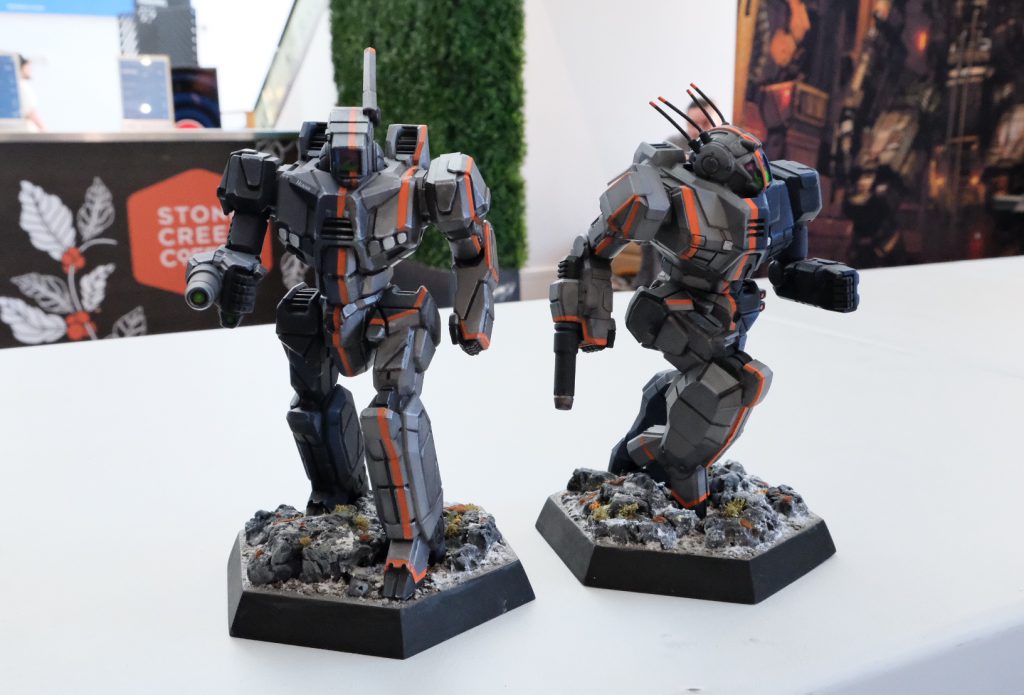 Large-scale models of Huginn and Muninn, Hot Spots: Draconis Reach's cover stars, at Adepticon 2026. Credit: Valk
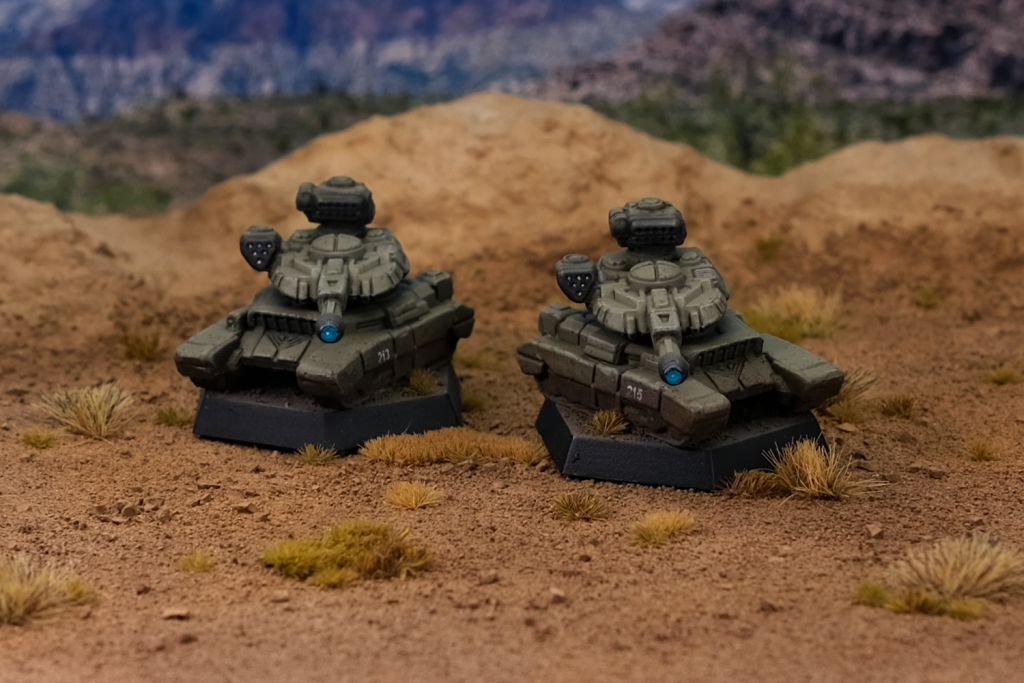 Manticore Heavy Tanks. Credit: Valk.
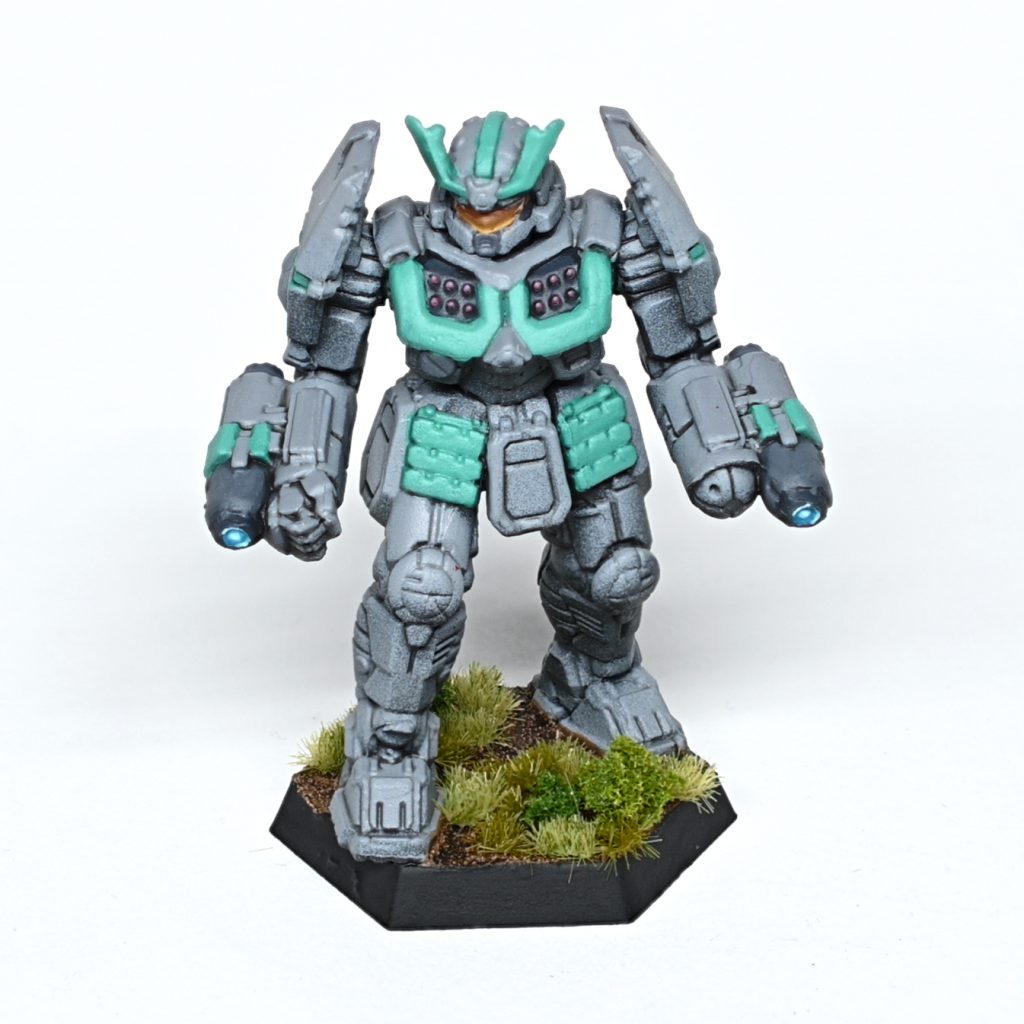 Hatamoto-Chi. Credit: Rockfish
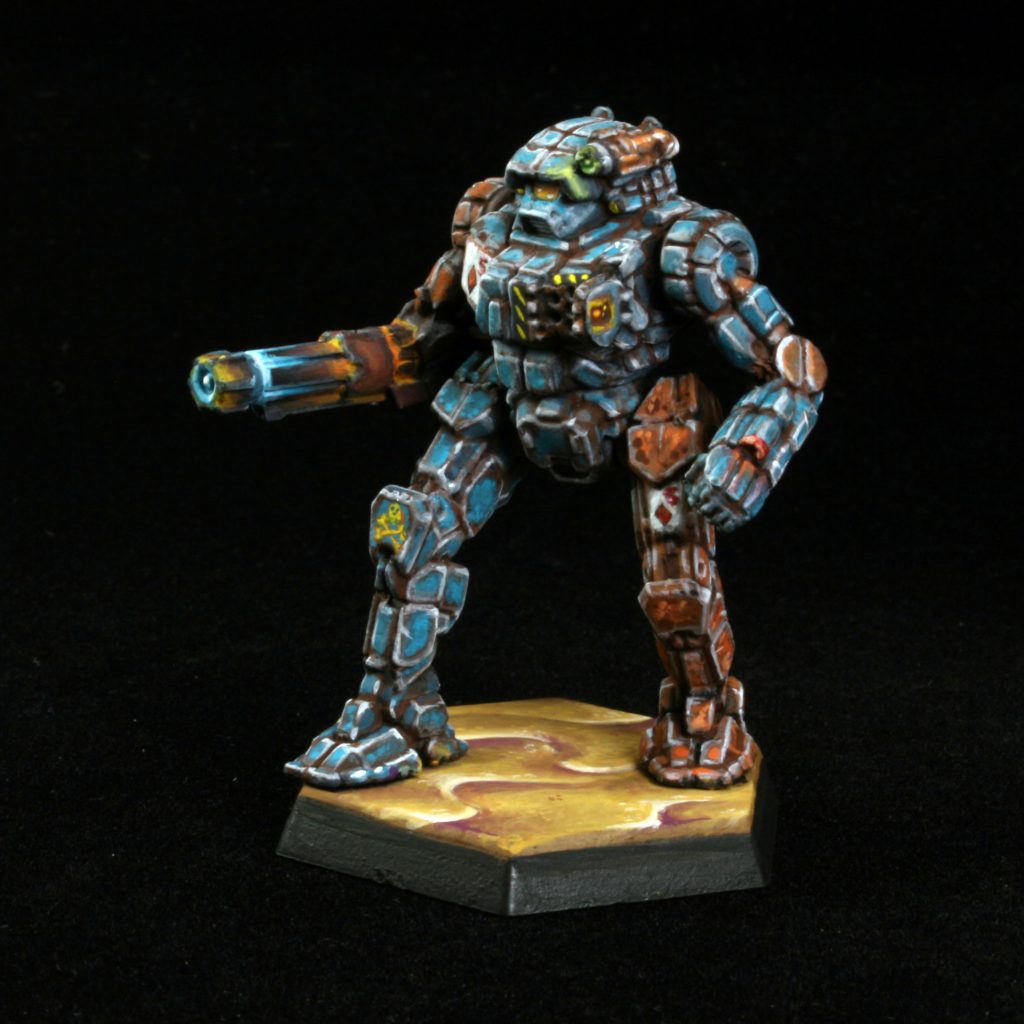 Vindicator. Credit: porble
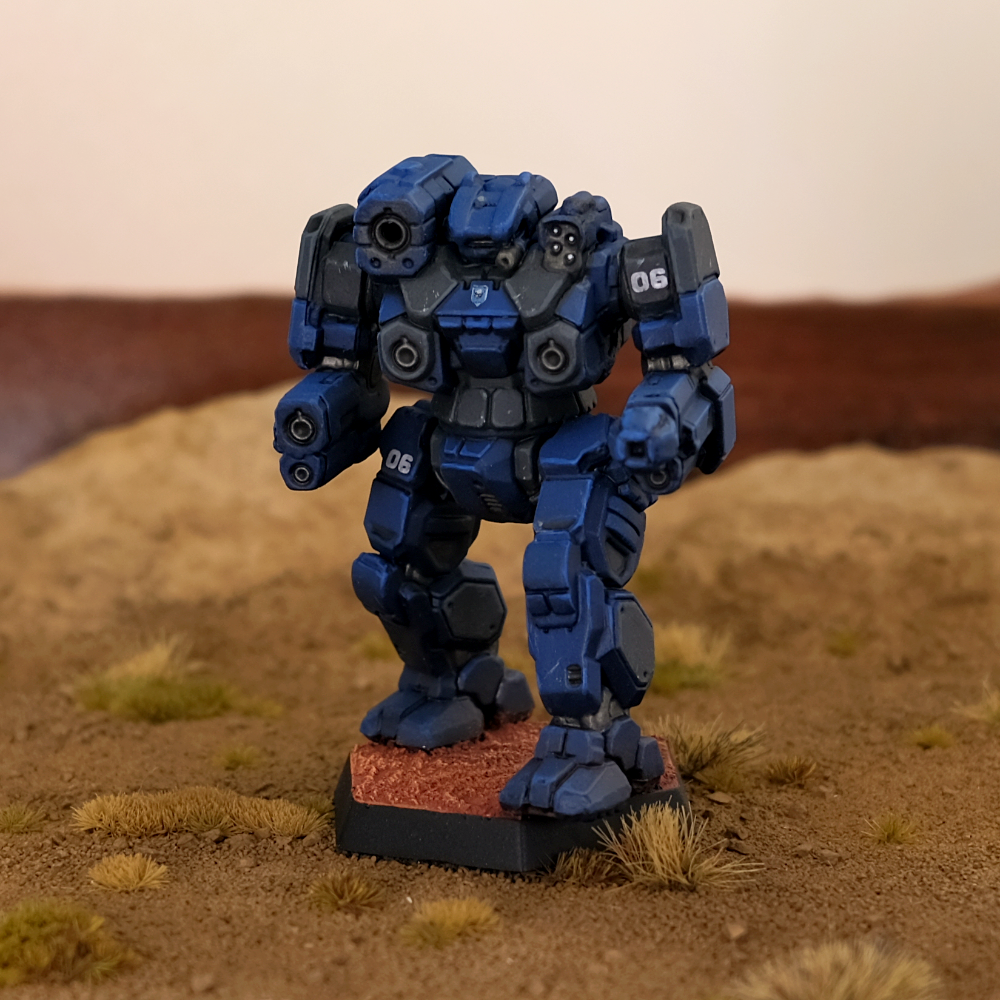 Duke Loren Hansen's Regent. Credit: Valk
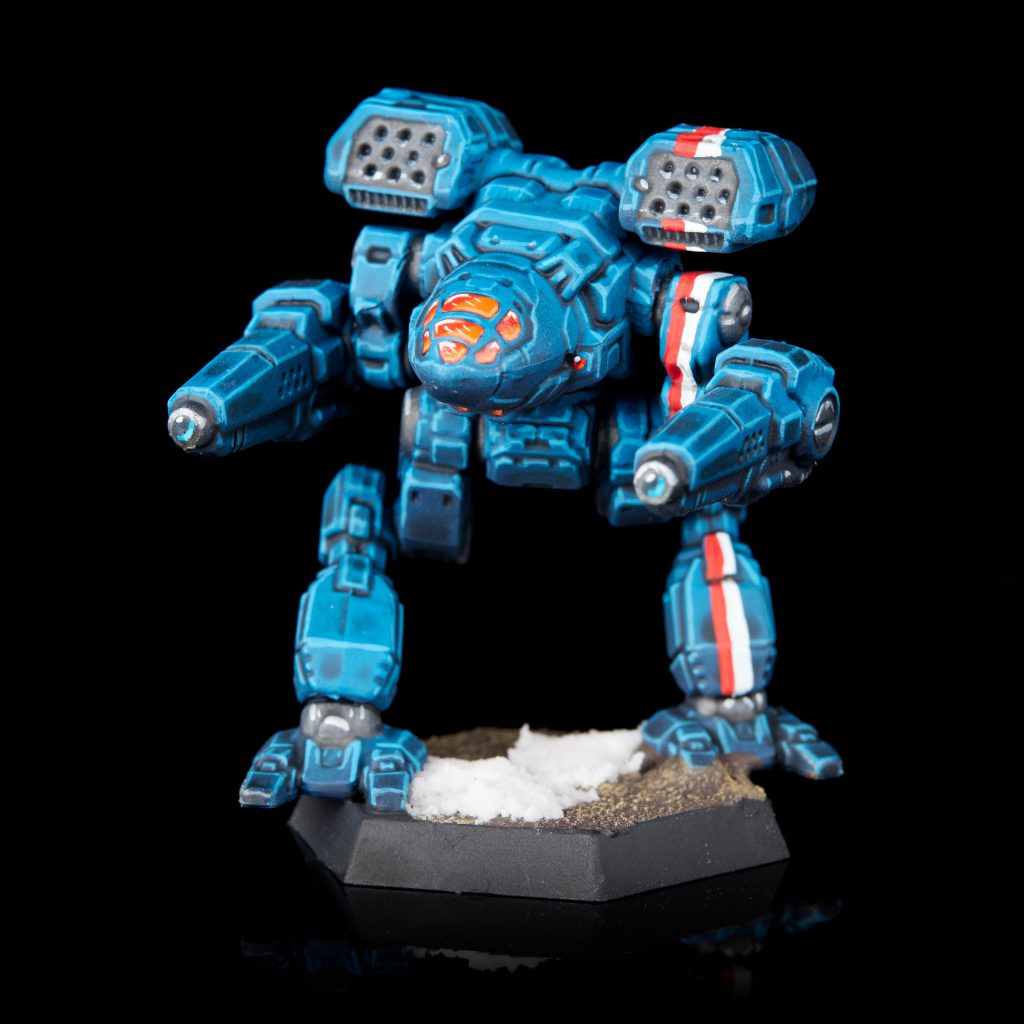 Davion Heavy Guards Savage Wolf. Credit: Jack Hunter

 Goonhammer Hobby Round-Up: March 2026
 Goonhammer Reviews: Tribal Conquest
 Conquest: Weaver Courts Gemred Knights and Scaile Dancers Model Review