I have a long-held love for strategy games. My first game ever was
Star Wars: Galactic Battlegrounds, a Star Wars-themed
Age of Empires II clone. My second game was
StarCraft.
Dawn of War,
Command and Conquer,
Company of Heroes, and
XCOM were foundational childhood experiences for me. So consider me bummed after seeing strategy and tactics games fall from the mainstream to niche status. Many of the strategy titles that did survive, did so by sheltering in small-scale tactics gameplay – a more action-oriented and 'streamable' lineage.
Turn-based tactics games have clung to relevance via a core group of devoted players who've played every relevant title in the range. I'm talking about
XCOM,
Darkest Dungeon, and
BattleTech players. It's not always easy when the engrossing gameplay we crave is relegated to under-resourced indie developers and smaller settings.
XCOM has carried the banner since
Enemy Unknown, but it hasn't innovated enough in a changing landscape. Other entries like
Gears Tactics and
BattleTech are over a bit too soon. There are good
40K entries, but even
the best among them leave me wanting more.
But I think the wait for an excellent turn-based tactics game is about to turn a corner. It's arrives via
Menace, a game by the people behind
another niche turn-based tactics game
Battle Brothers. It's not even in early access yet. Just a
free Steam demo, but
boy is it great.
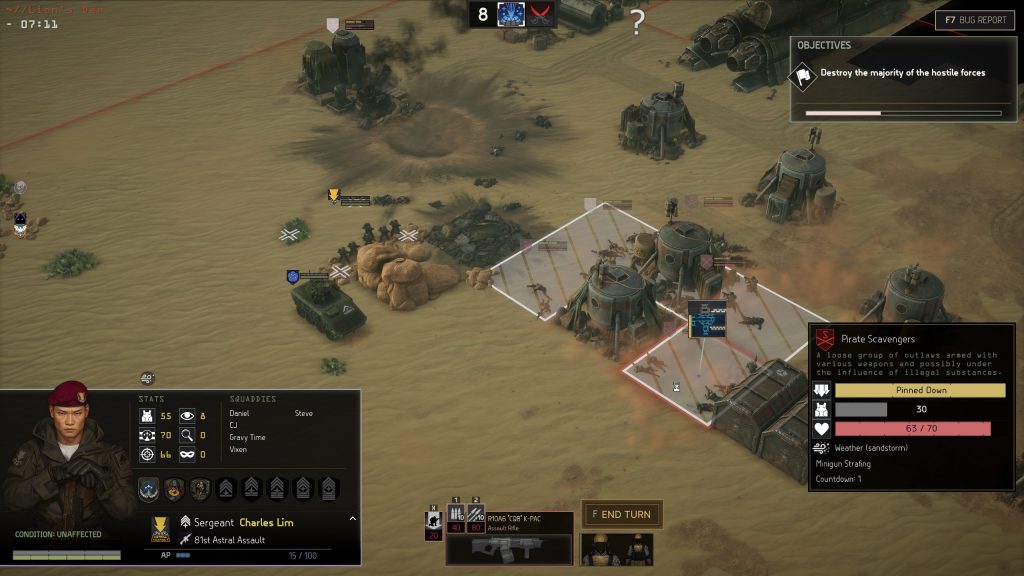 Despite being a compact demo, Menace already has rock-solid foundations.
Where the Terran Congressional Republic Treads
I'll get the keyword spam out of the way first.
Menace is a military sci-fi game with turn-based tactical combat and a strategic management layer. The combat is squad-based, takes place at platoon-scale and up, and will feature conventional and alien enemies. It draws most of its influence from combat unit management games like
XCOM,
BattleTech,
Jagged Alliance, and
Dawn of War II. It's cut from a robust pedigree and you can't miss the inspiration.
The game is set in an isolated solar system called the Wayback. You command a warship of the Terran Congressional Republic that's been stranded here. You must nonetheless pacify the system against pirates, military turncoats, and more insidious threats – the titular Menace.
You've got tools though! Your warship is a self-sustaining expeditionary unit and most importantly, it has a complement of space marines. Not
Space Marines, but
space Marines. The United States Marine Corps in space. Picture an attitude and visual design
">straight out of Aliens transplanted to a dusty backwater. Real Tough Guy types with guns, vehicle support, and the violence of action to make it all work. You'll also be picking up ship upgrades and new talent along the way to bolster the strike force (or replace losses).
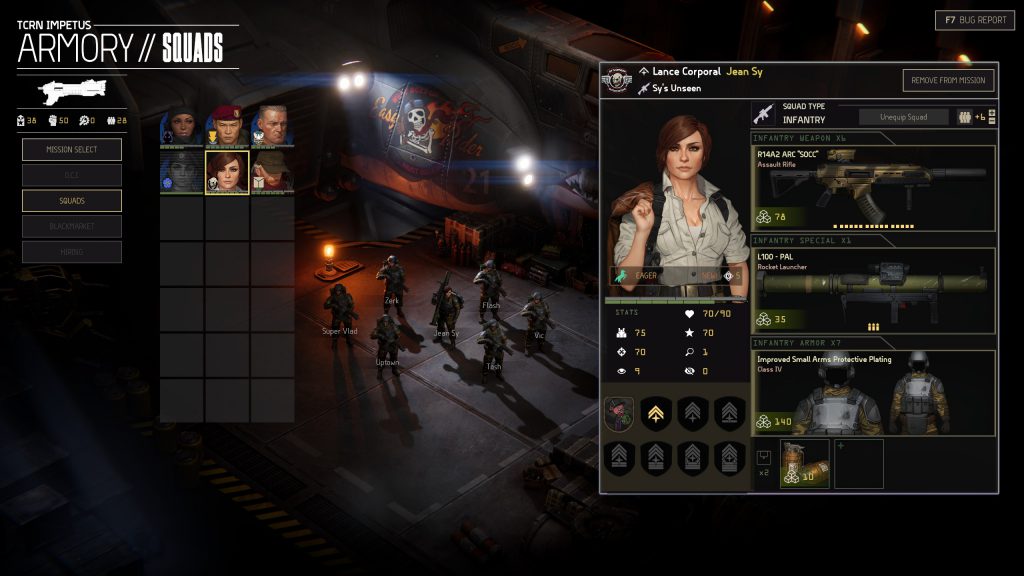 The game's visual design bears tasteful resemblance to Aliens.
The full game will have a strategic layer where you resource-manage your way out of your interplanetary pickle. Deal with crew events.
Upgrade systems to support ground operations. Accept operations and bandage your wounds afterward.
XCOM and BattleTech players will feel right at home. That's all slated for Early Access in February 2026. What I want to talk about is the
demo. The demo is already
out on Steam and playable for free. I'd rather spend my time on concrete facts that are already here, even if they're incomplete.
And what a demo it is.
Shock and Awe
I'll be direct: I have never spent this much time playing a demo in my life. The
Menace demo has taken up more of my gaming time than any complete release in my library these last two weeks. It has a complete, albeit miniaturized gameplay loop built in. It has
shocking replayability. The demo is receiving content updates, the
most recent of which effectively doubled the amount of gameplay variety. I'm starting to convince myself that Overhype Studios has forgotten the purpose of a demo and is treating it like an actual release.
The
Menace demo is a show of the force-building and tactical combat aspects of this game. It doesn't have an in-game tutorial yet. The game links you to a
">10-minute YouTube video on how to play and then pitches you into the deep end. I went in blind and did not regret it, but I've got hundreds of hours in
Battle Brothers and felt right at home.
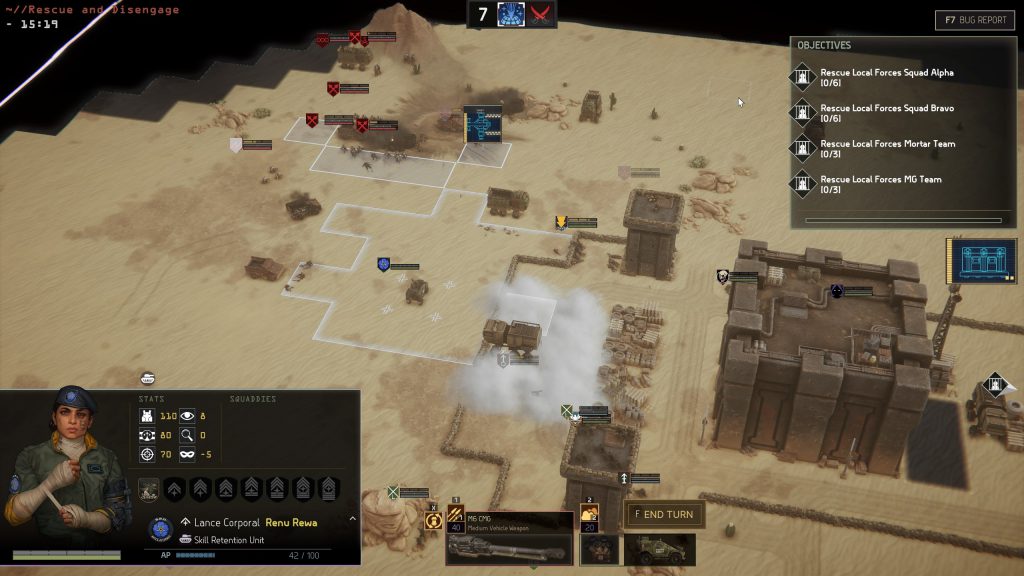 Smoke, close-air support, vehicles, and suppressiono make for harsh bedfellows out in the Wayback.
Upon launching a new game, you're shown the mission structure of
Menace: The operation. Unlike other games in the genre, a combat deployment in
Menace is a chain of linked missions combined into an operation with an overarching goal. The mission objectives and rewards in a given operation vary. Some rewards are tactical and only apply to this operation (extra resource drops, friendly field support). Others are permanent fixtures that stay with you. Each mission must be completed to succeed in the operation.
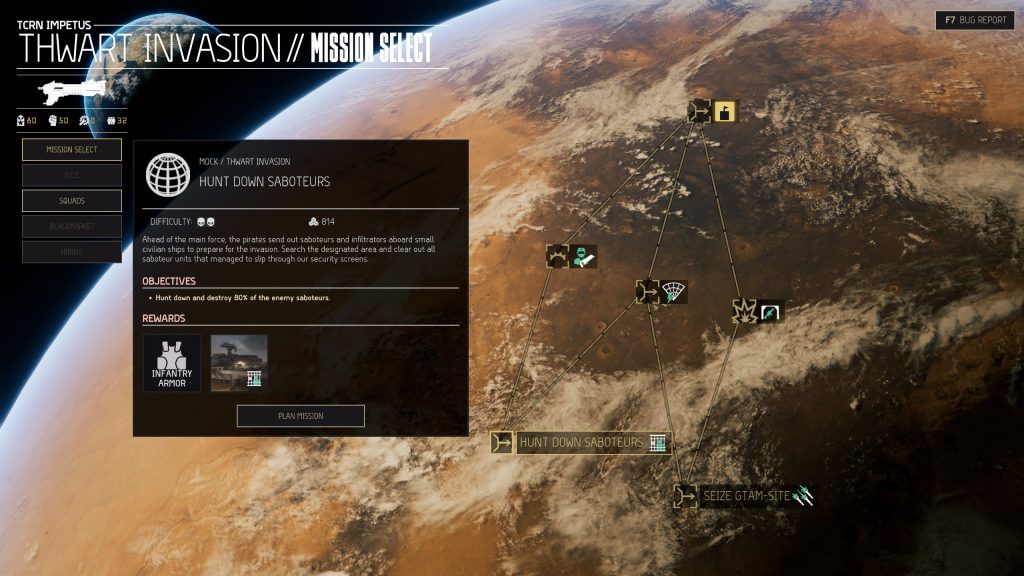 The default use of branching mission chains makes each engagement more meaningful.
This is a game about planning and it's
proud of that fact. Chaining missions into operations forces players to consider each tactical battle a part of the larger whole. Unlike
Mechanicus or
XCOM, most of your deployments in
Menace aren't one-off resource-management puzzles. Here, casualties and injuries persist between missions. Vehicles that suffer damage retain it until they're repaired. A critical support reward (like reinforcements) can carry you through the next mission. The branching paths appear simple, but conceal a thoughtful gameplay loop unto themselves.
Mission Planning All the Way Down
After picking a mission, you get to do
more planning. Pre-mission planning is inspired by 40K list-building (the devs include avowed 40K fans) and is familiar to anyone who spent the 2010s building elaborate lists in BattleScribe. No tactics game is complete without a pre-mission screen. But there's a twist: intel. Have any other
XCOM players always wondered why a multinational agency with the best intelligence-gathering tools on Earth just blind-drops a 6-person squad into urban combat with no context? Barely an inkling of intel – just that there are aliens and you're attacking them in a forest. Mostly. In hindsight, that's
awful tactical planning.
Menace addresses that by presenting you a map display with all known intel about your mission alongside the equipment interface. The fact that the map takes up as much space as your equipment window should clue you into the idea that
these things work together. Each mission in
Menace has clear objectives marked on this map. The map also presents known data about terrain, conditions, enemy composition and approximate location. This is all keyed to your Intel Level, a stat that represents the sum of your intel-gathering on this mission. In the demo, Intel is locked at Level 2, which gives a decent idea of terrain and enemy position, but not exactly
what's there. In the full game, your Intel can be much better or worse. To take a 40K analogy, good intel means you'll be list tailoring with total knowledge of the board and enemy force. Bad intel leaves you deploying ass-blind and hoping for the best. It feels palpably real and gives the pre-mission screen so much life beyond gear choices. It immediately makes you feel like you're commanding a crew of professionals who are invested in success.
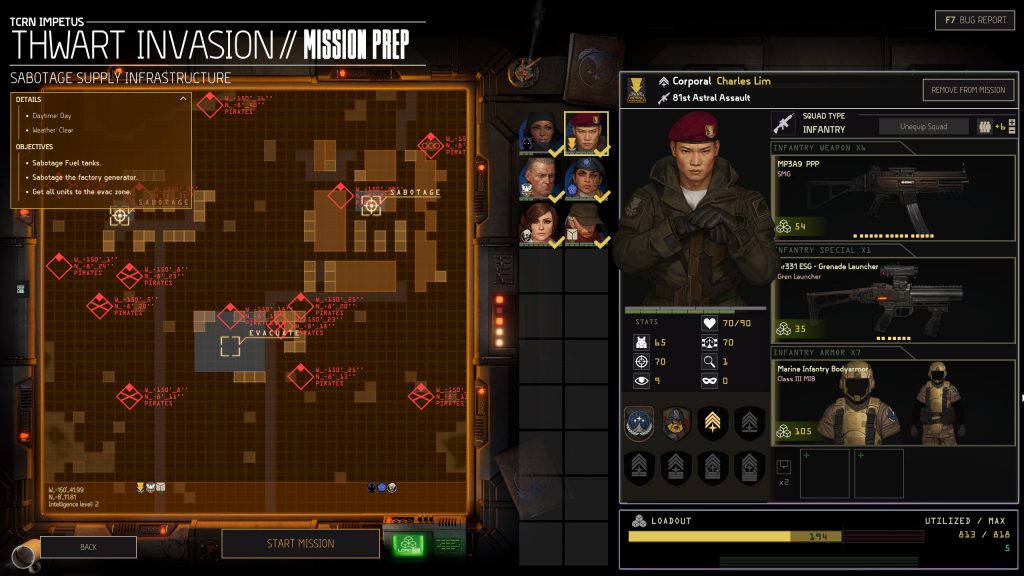 The combination of useful intel and comprehensive outfitting makes mission prep a nerd's dream.
The combination of mission objectives, terrain, and enemy composition shapes a battle before it starts. The Secure Repair Depot mission calls for defending a facility against pirate attack. It provides a bonus that repairs your vehicles between missions during this operation. Take Out Bombmaker is a raid where the objective is to kill priority enemies and extract quickly. Rescue and Disengage entails relieving friendly forces under fire and covering their withdrawal. Some of their troops will join you for the remainder of the operation. Each mission calls for a different playstyle, loadout, and team composition. Everyone has value and this will only expand as they skill up.
Unlike similar games where most missions are addressed with a take-all-comers deployment of your best available troops,
Menace forces you to plan. You need to plan for the objective, terrain, and enemies. An aggressive raid mission calls for mobility and firepower above static durability. Assaulting a prepared position justifies bringing a vehicle and heavier body armour. If you're rescuing friendlies, do you want a fast vehicle to rush ahead and support them sooner, or bring a larger force and hope they hang on? What if the vehicle you wanted to bring was damaged in a previous mission? What if your squad leader with a skillset for mobile fire support was wounded in another mission? What's your plan if the recon squad leader you needed for two missions gets wounded after the first? Each decision is weighty. It's not as binary as coming back alive, wounded, or dead with loot.
The next stage of planning is every 40K fan's fave: Point costs. All missions have a point cap that reflects your deployment capability. Events and rewards can impact the number of points you have for a given drop. You use these points to build a force tailored to the upcoming mission. And
everything costs points. Generic soldiers (affectionately dubbed
squaddies) cost points. Body armour costs points. So do primary weapons, special weapons, and accessories. Each body you add to a squad also pays for the gear they're carrying. A squad in body armour rated for assault rifle rounds and carrying high end rifles, plus a reusable anti-tank rocket launcher adds up fast.
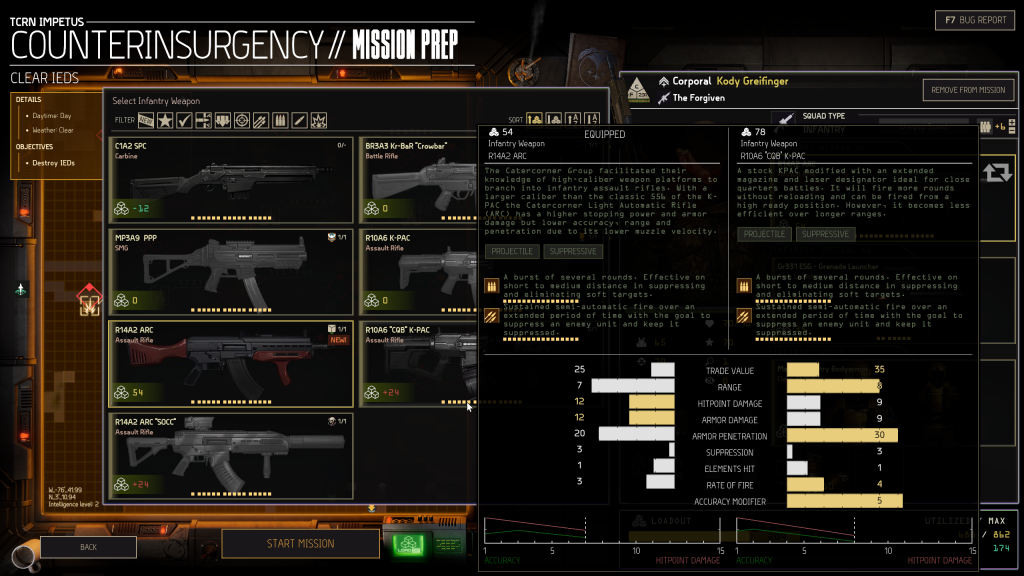 Every single item has a point cost. Every weapon has a breakdown of usage, stats, and even effective range graphs. This is a planner's dream.
I spent my first few playthroughs dumping points into a few jacked-up superheavy squads with the best armour and weaponry. This worked to a point. My squads were
beefy and impossible to shift once they got into position. But they were also permanently outnumbered 4-to-1 and got outplayed in action economy and mobility. I wasn't playing to mission prep's strengths, which is the ability to tailor
everything. The granularity of the points system is a thing to behold. It's not as finicky as 'mech fitting in BattleTech/MechWarrior games (no stain on that, I love it), but it's much more detailed than a basic slot layout like
XCOM: Enemy Unknown.
Your squads are defined by a Squad Leader (SL). SLs are named and voiced characters with backstory, character interactions, and perk trees. Charles Lim is an ambitious, brash marine who favors mobile aggression. Jane Darby is collected under fire and her perks are tailored to accuracy and stealth – a natural pick for sharpshooting. Each SL's skillset lends itself to particular weapons and roles, but there's room to flex. I've had great success running Jane in a minimum-size squad with no armour and a bolt-action rifle as a cheap sniper team. Edwin Pike (a by-the-book veteran) handles himself well leading a 3-man machinegun team. Meanwhile, my Charles Lim loadout is mid-sized, totes SMGs and a grenade launcher. Their face-kicking loadout is completed with
armour rated for SMG fire.
Every squad is customizable in a way that calls back to previous 40K editions. The same goes for vehicles.
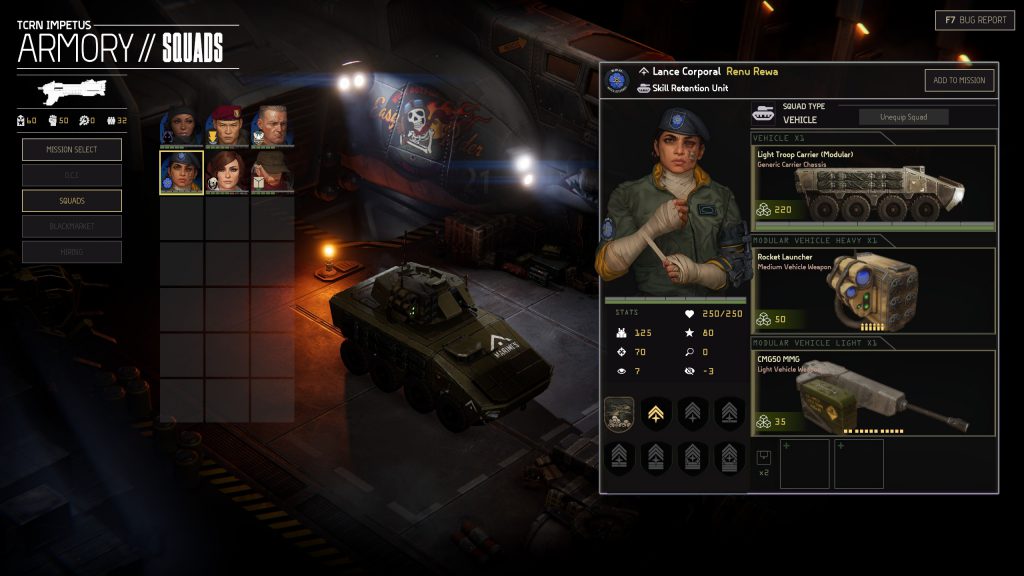 Renu Rewa's vehicle proficiency will quickly become your best friend.
Right, vehicles.
Menace breaks from tradition by ramping the scale of engagements up from individual squads to platoons. The demo caps out at five squads and a vehicle per deployment, but the full game promises more leeway. That's a much larger allocation than squad-oriented frontrunners like
XCOM 2,
Gears Tactics or
Jagged Alliance 3. Vehicles are treated like squads. A vehicle is one unit and you get a vehicle commander in lieu of squad leaders. They get a perk tree. The only vehicle commander in the demo is Renu Rewa, who has PTSD-related anger issues and
should be receiving treatment in a mental health facility. But they put her behind the wheel of an APC with autocannons instead. Good call.
Even the pared down deployments in the demo feel fresh compared to games that lean on individual people.
Menace has done an impressive job of drastically increasing the game's scale without compromising on individuality. Sure, you're deploying upwards of two dozen bodies per mission, but each SL's face and voice lines keep things characterful. Your generic squaddies are named and you will feel it when they die. Especially since they're a limited resource that must be replenished in the full game.
Boots on the Ground
The game's tactical combat is excellent. Like everything else
Menace does, it draws inspiration from the classics but adds new twists. You've got a few of the usual suspects: grid-based movement, line of sight, RNG-based hit chance, and the zero-light-heavy cover spectrum. After the
Aliens-esque dropship dusts off, you're left staring at your platoon of certified Tough Guys.
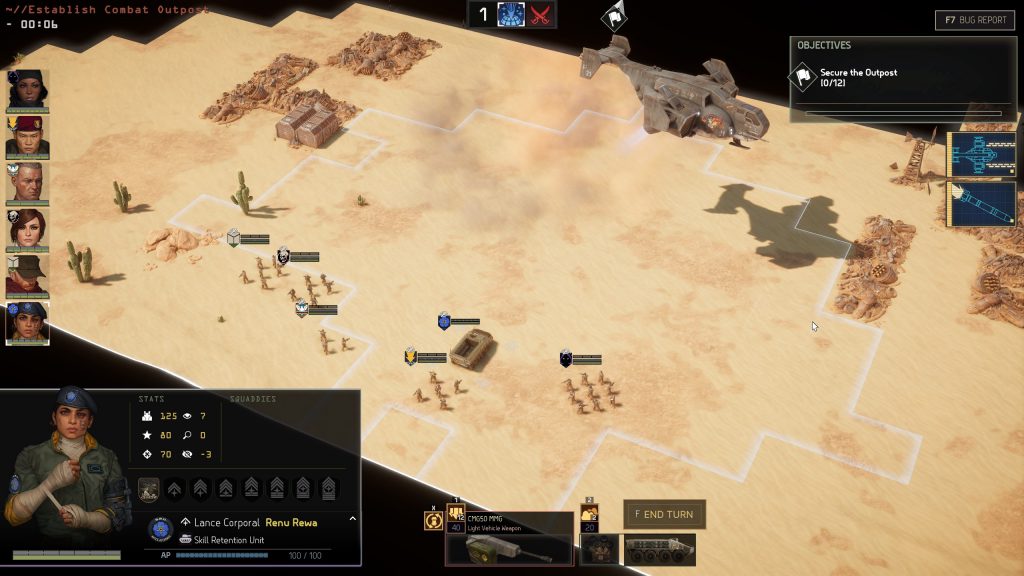 Platoon-scale deployments are a welcome break in a genre defined by individual teammates.
After a couple engagements, you'll find out that things are
real different in the Wayback.
Menace is an abstraction of real world infantry tactics. The fundamental consideration in infantry engagements is Suppression. Suppression is a bad thing that is applied to infantry whenever they're attacked. It rises faster when they receive large volumes of fire, hits, or casualties. Your infantry start off fully functional. Becoming
Suppressed reduces their Action Point (AP) pool and makes them crouch, which reduces their effectiveness but makes them harder to hit. The next stage is being
Pinned. A Pinned unit goes to ground for a massive defense boost, loses all AP and at best, can crawl pitifully for cover. Unlike other games in the genre, you do not win firefights in
Menace solely by applying your APs to the systematic deletion of enemy units. You establish effective fields of fire and target prioritization first. Then you allocate your action economy into suppressing and disabling the enemy. The enemy are not fools and will go to ground in the safest direction relative to incoming fire, so suppressive fire is usually not lethal fire. That's when you set up a maneuver element that flanks and destroys the enemy.
A basic firefight in
Menace exemplifies contemporary infantry tactics:
Find, Fix, Flank, Fuck Finish. These fundamentals are baked into the game mechanics and adjusting to them is part of the learning curve. Other key differentiators are the game's larger unit sizes, low lethality, and alternating activations. These systems discourage leafblowing enemies on contact as you would in
XCOM. Instead, they reward methodical play and adapting to each fight under pressure. You can
sometimes delete a whole squad with one attack, but those are usually the result of excellent positioning and tactics rather than a norm.
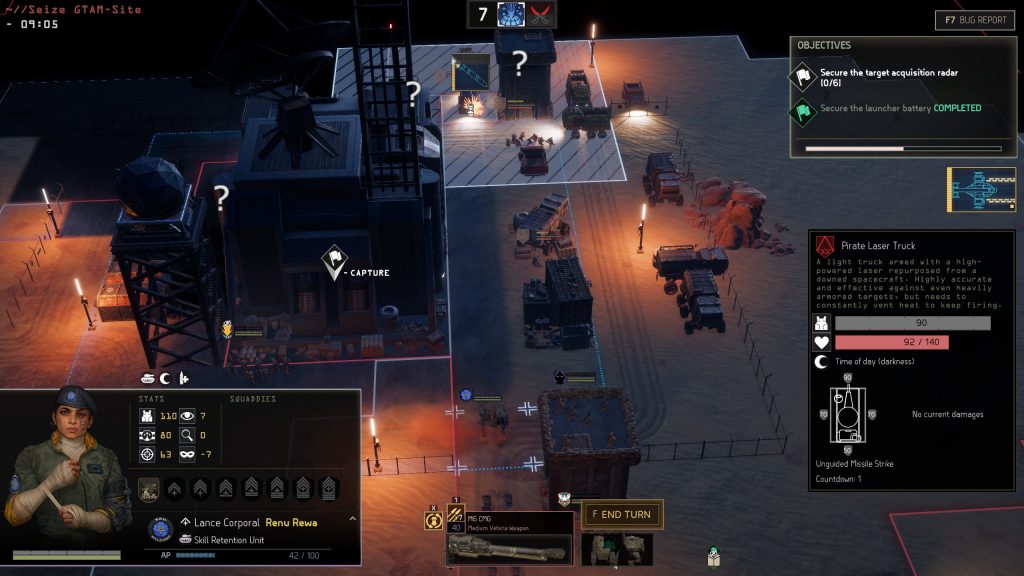 The game's learning curve is noticeable, but veterans of the tactics genre will adapt quickly.
The vehicles provide extra seasoning. This often-missed aspect of the tactics genre is here in force. The demo starts you with your choice of a scout car, APC, and light mech. Every vehicle is lovingly detailed with
all possible weapon variants. Your APC can be a bare-bones thing that just ferries Charles Lim (try him in the APC with the Berserk and Mobile Infantry perks) into combat. When I feel spendy, I deck the APC out with an anti-tank rocket launcher and an MMG for some take-all-comers fun. Vehicles have variable armour on different sides and suffer critical effects when damaged. Those of us who started 40K in 6th Edition will start having flashbacks right about now. Your enemies have them too. Pirates love their ramshackle technicals and repurposed transport trucks. Even if you don't bring vehicles, you need a plan to deal with them. It's in the game's DNA.
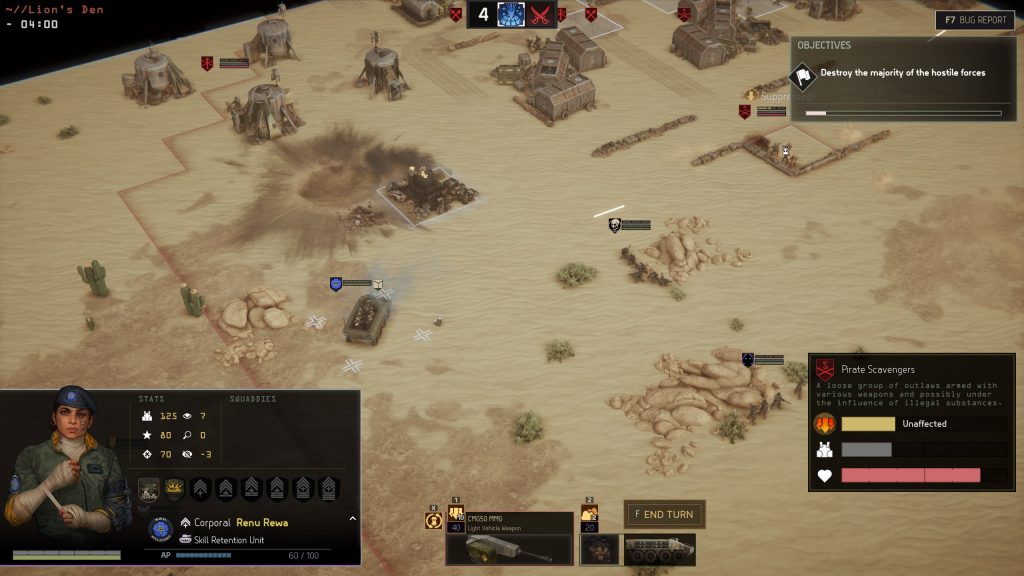 Vehicular gameplay is a welcome addition to the modern battlefield (in space!)
All of these interlocking systems come together shockingly well for a product still half a year from Early Access. Each firefight in the demo's pirate faction enemies feels tense, but RNG doesn't swing things aggressively in one or the other direction. Overhype Studios have struck a good balance between including RNG but not allowing missions to be defined by it.
XCOM players know the horror of missing a 97% chance shot and leaving an enemy alive. Right before that enemy bulldozes two squaddies and costs you the mission. At the opposite end of the spectrum,
Mechanicus did away with to-hit rolls entirely and had very little weapon damage variability.
Mechanicus' approach turned the game into raw arithmetic without the unpredictability that makes combat interesting. I think it was an overcorrection, but I'm sure an actual Tech-Priest Logis loves it.
Menace does it differently to both of these ancestors.
Menace does have RNG. It has RNG to-hit rolls, RNG damage, and lots of secondary RNG sprinkled on top. Shots can miss targets to strike other squares. An anti-armour weapon can land a sub-standard damage roll. Suppressed units are less accurate. All of that RNG could be a recipe for disaster, but the game is tuned to make the Law of Averages dominate. An infantry squad's rifle fire is not a single burst or shot. Every available rifle fires a burst, and
every bullet has individual to-hit rolls and destinations. A 40% shot in
XCOM is disastrous. A 40% shot in
Menace isn't bad. Your R10A6 KPAC assault rifle fires a 3-round burst and there are 5 shooters. That's 15 individually rolled shots. If the target squad doesn't have body armor, they're
screwed. A sub-standard damage roll on an anti-tank rocket will probably still score a critical effect and bust it down to the last 25% HP. Shots that miss the primary target and land in adjacent squares still generate Suppression on the intended target. A medium machinegun firing into a cluster of enemies makes a
lot of people put their heads down.
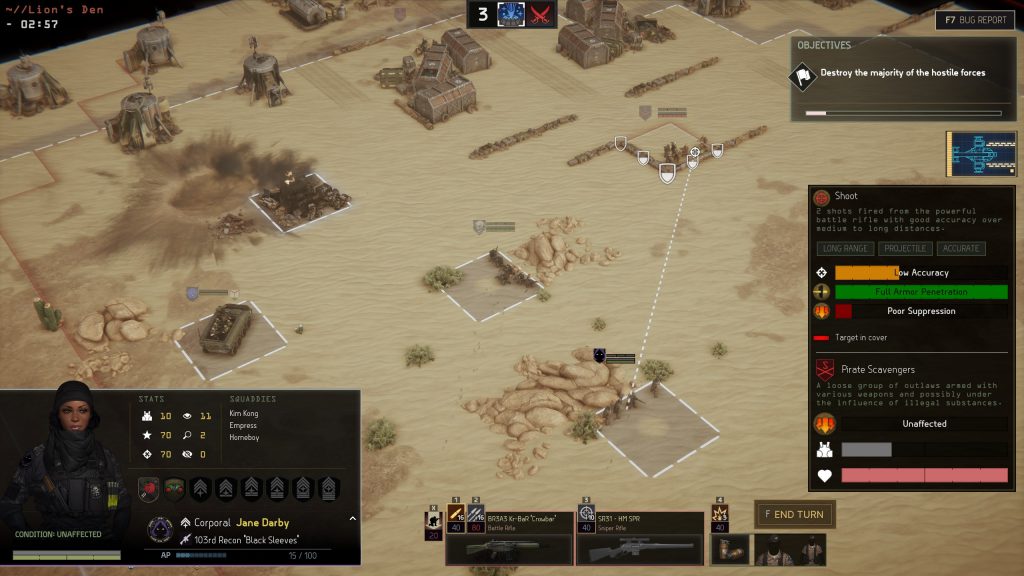 The UI still gives you plenty of tools to manage RNG.
Menace
The UI still gives you plenty of tools to manage RNG.
Menace has RNG and it's noticeable. But it's presented in an intuitive way that fits the abstract form of infantry combat they're going for. I rarely became frustrated when my squads flubbed their shots because I understood
why it happened. The firing squad was suppressed. The target was deployed in light cover. The weapon was outside of its effective range. And even with all of those maluses, bullets are still scary and the target took some extra suppression.
Combat in
Menace is further accessorised by complex, but intuitive secondary systems. Different terrain types impose different AP requirements to cross. Terrain is destructible. A heavy rocket leaves a crater that provides cover. A wrecked building still provides limited protection. Dust storms make the entire battlefield more hostile. Nighttime reduces everyone's vision radius and concealment – unless you have night-vision gear. A trail of fire left by a damaged flamethrower truck is hazardous to infantry well-being. Any of these concepts warrants a long Reddit post about coping and turning it to your advantage. But once you make contact, it's just part of the game. The battlefield develops (and collapses) as combat drags on and it's on
you to adapt.
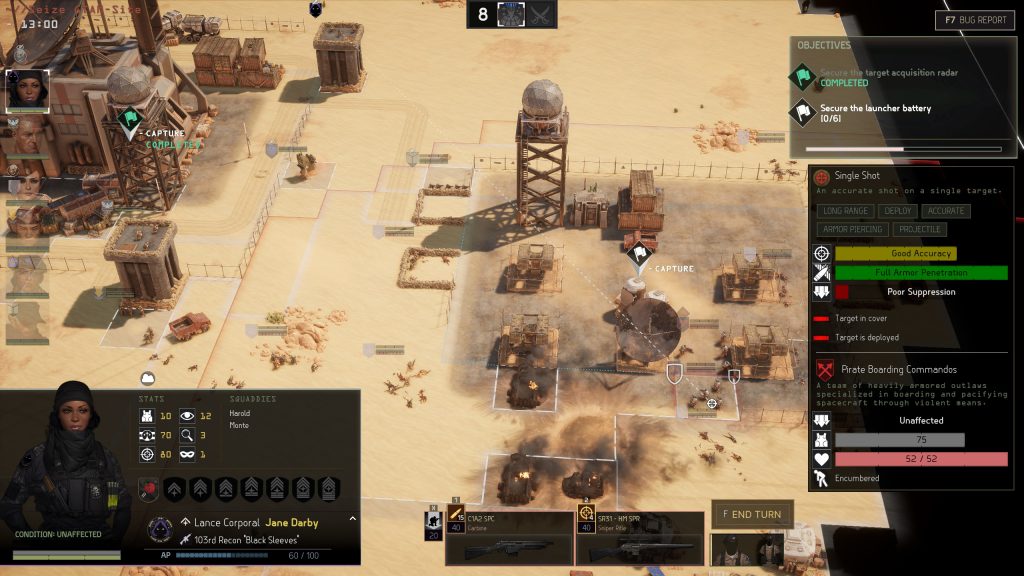 The increased scale of Menace is visible in everything from combat ranges to map size.
The Future of the Wayback
The demo isn't entirely flawless. There's no tutorial and a lot of the writing is clearly first-draft. There are bugs (that the devs are actively fixing). Some of the mechanics still need adjustment and enemy balance can be hit-or-miss. But the skeleton and musculature of a truly outstanding game is already here. This tactical combat and squad loadout demo has more cohesive artistic and mechanical vision than some full releases (see:
Company of Heroes 3,
Dawn of War III) The lead-up to
Menace's Early Access release will be agonising for me.
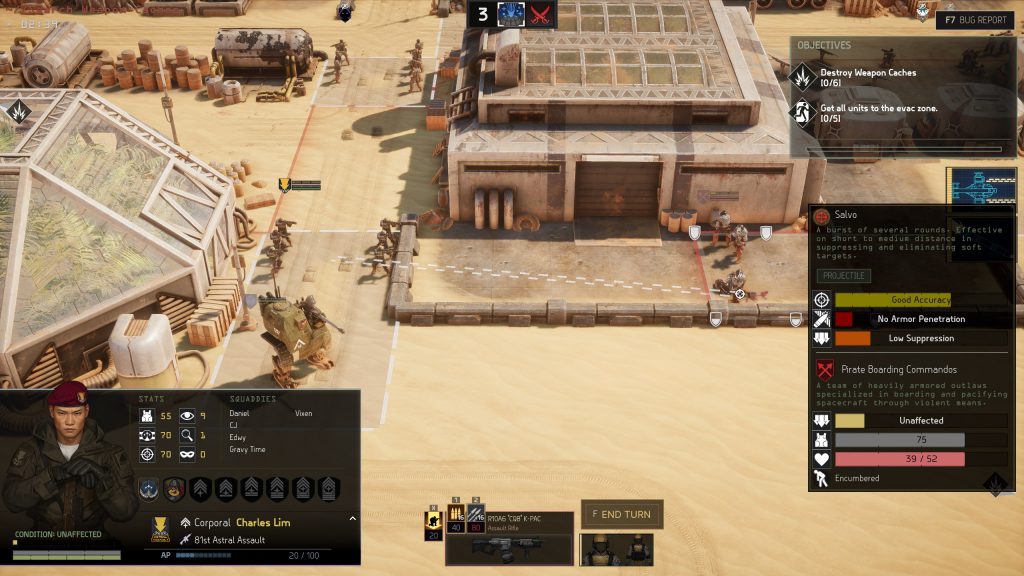 Mechanized walkers add decency to what would otherwise be a disorganized brawl.
I think it'll be great. A whole solar system to fight through. A plot that starts with counter-insurgency and turns into a disaster as you start facing deadly unknown threats. Strategic resource management from your ship. Balancing a whole roster of conflicting squad leader personalities and piles of inventory. It's everything the
XCOM and
Battletech nerd in me could ever ask for. I can't wait.
If it sounds like I put a lot of trust in Overhype Studios… It's because I do.
Battle Brothers was their first game and it is excellent. One of my favorite mercenary management games ever. I love it more than
Wartales and
MechWarrior 5: Mercenaries. I may one day love it as much as
Battletech.
Battle Brothers proved that Overhype Studios has an excellent grasp on robust core mechanics and how to build a fun game around it. Even better,
Battle Brothers suffered from
Stardew Valley syndrome. The developers just kept delivering more content long after they said they were finished. They
kept giving us DLC and free content and patches long after declaring the game complete. If that spirit remains intact for
Menace, I'm confident that this will be a new hall-of-famer in the genre. And if you're interested but unsure,
just try the demo. It's free. You can verify my claims about the game's mechanical excellence and work-in-progress nature yourself. There's no better way to find out if the game's a good fit for you.
Have any questions or feedback? Drop us a note in the comments below or email us at contact@goonhammer.com. Want articles like this linked in your inbox every Monday morning? Sign up for our newsletter. And don’t forget that you can support us on Patreon for backer rewards like early video content, Administratum access, an ad-free experience on our website and more.Thank you for being a friend.
 This website uses cookies. Learn more.

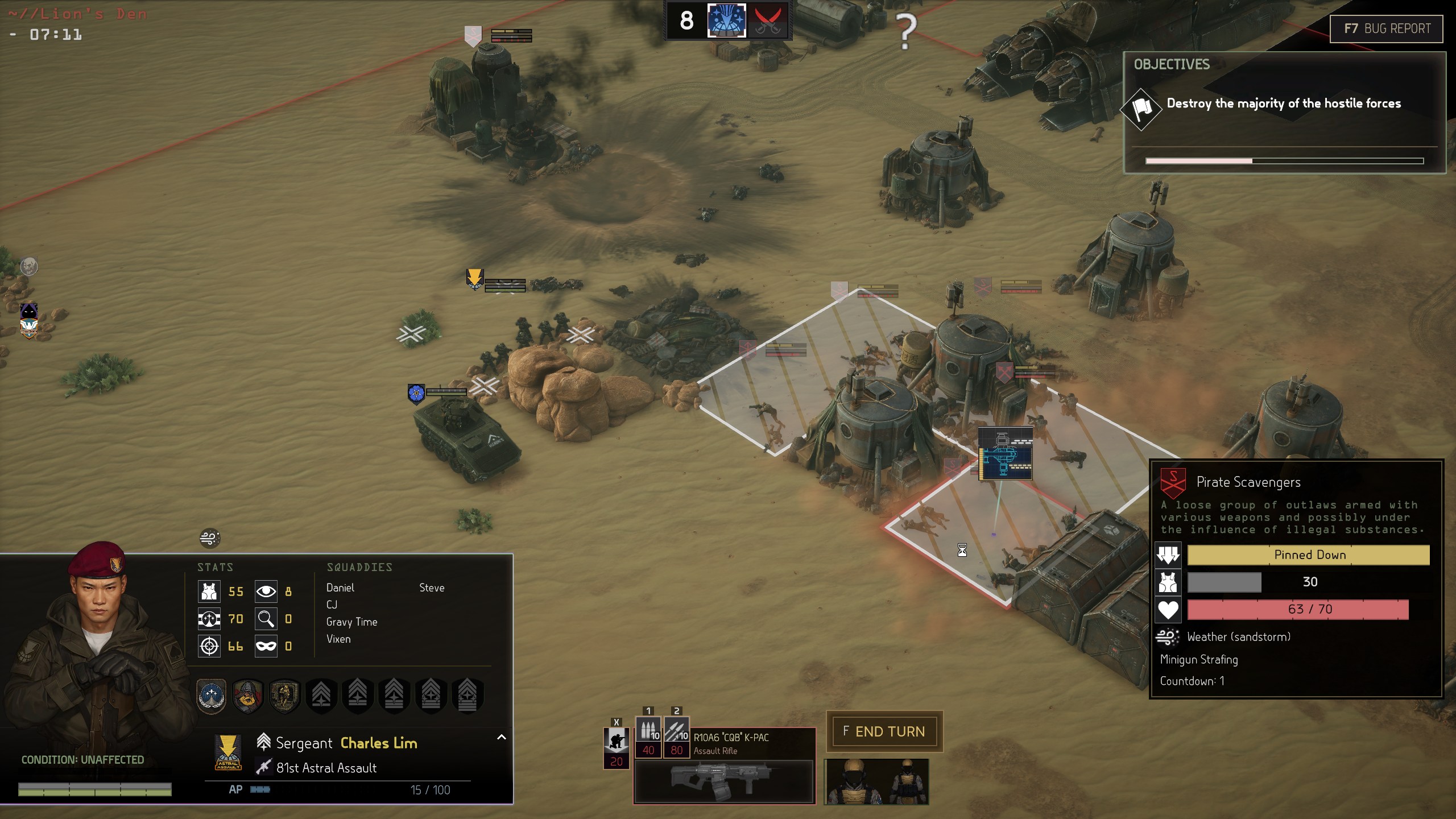 Despite being a compact demo, Menace already has rock-solid foundations.
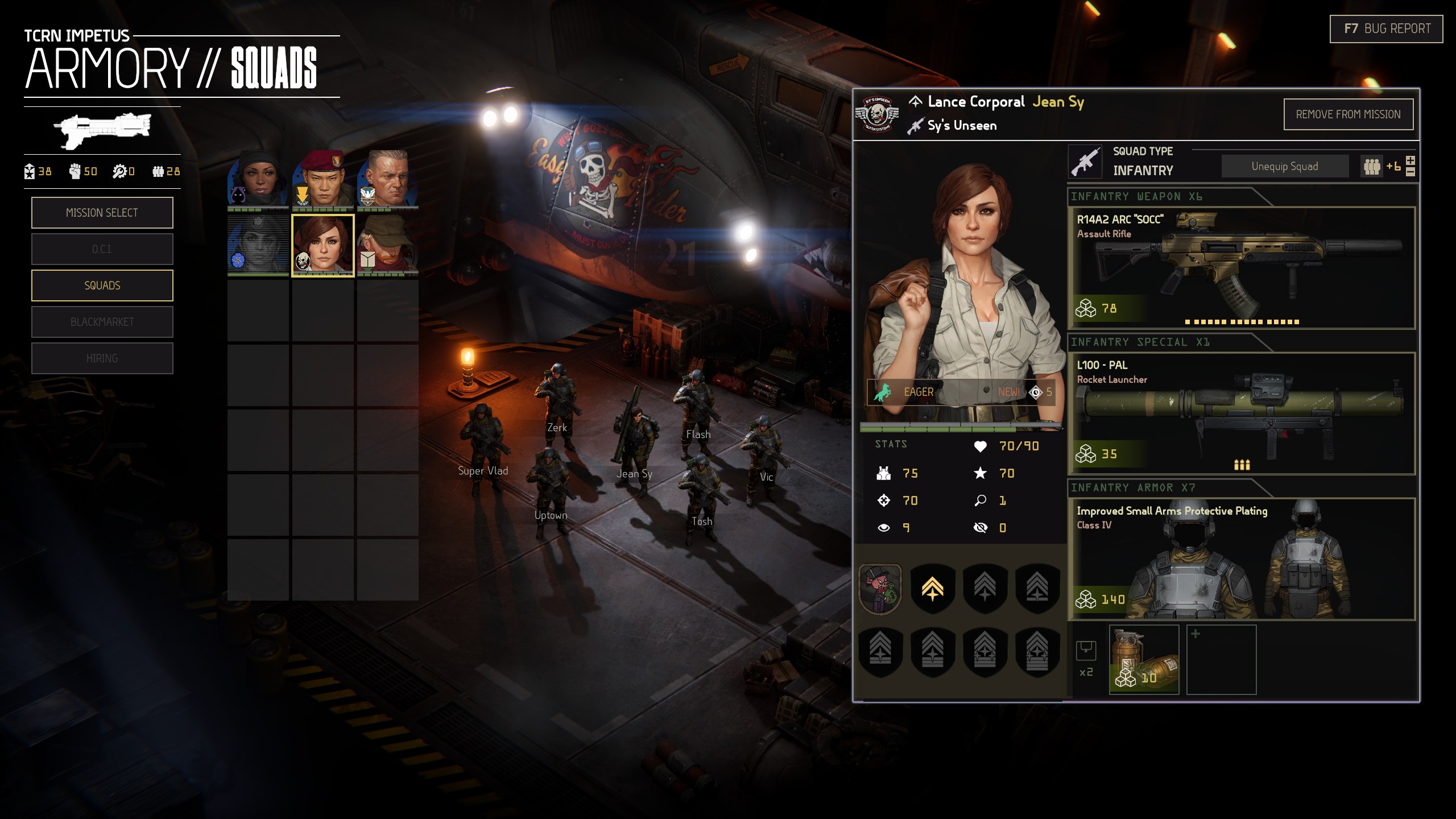 The game's visual design bears tasteful resemblance to Aliens.
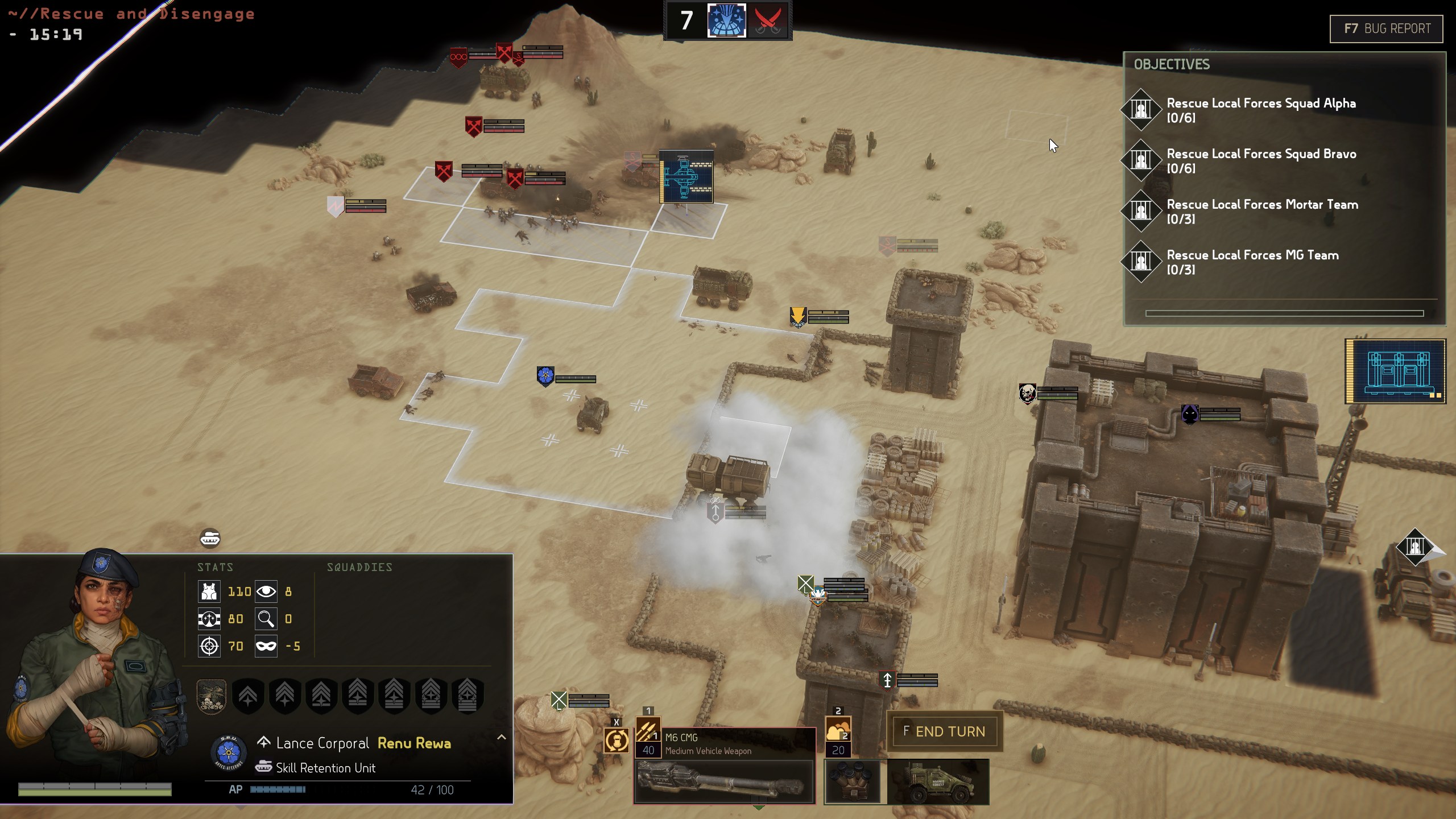 Smoke, close-air support, vehicles, and suppressiono make for harsh bedfellows out in the Wayback.
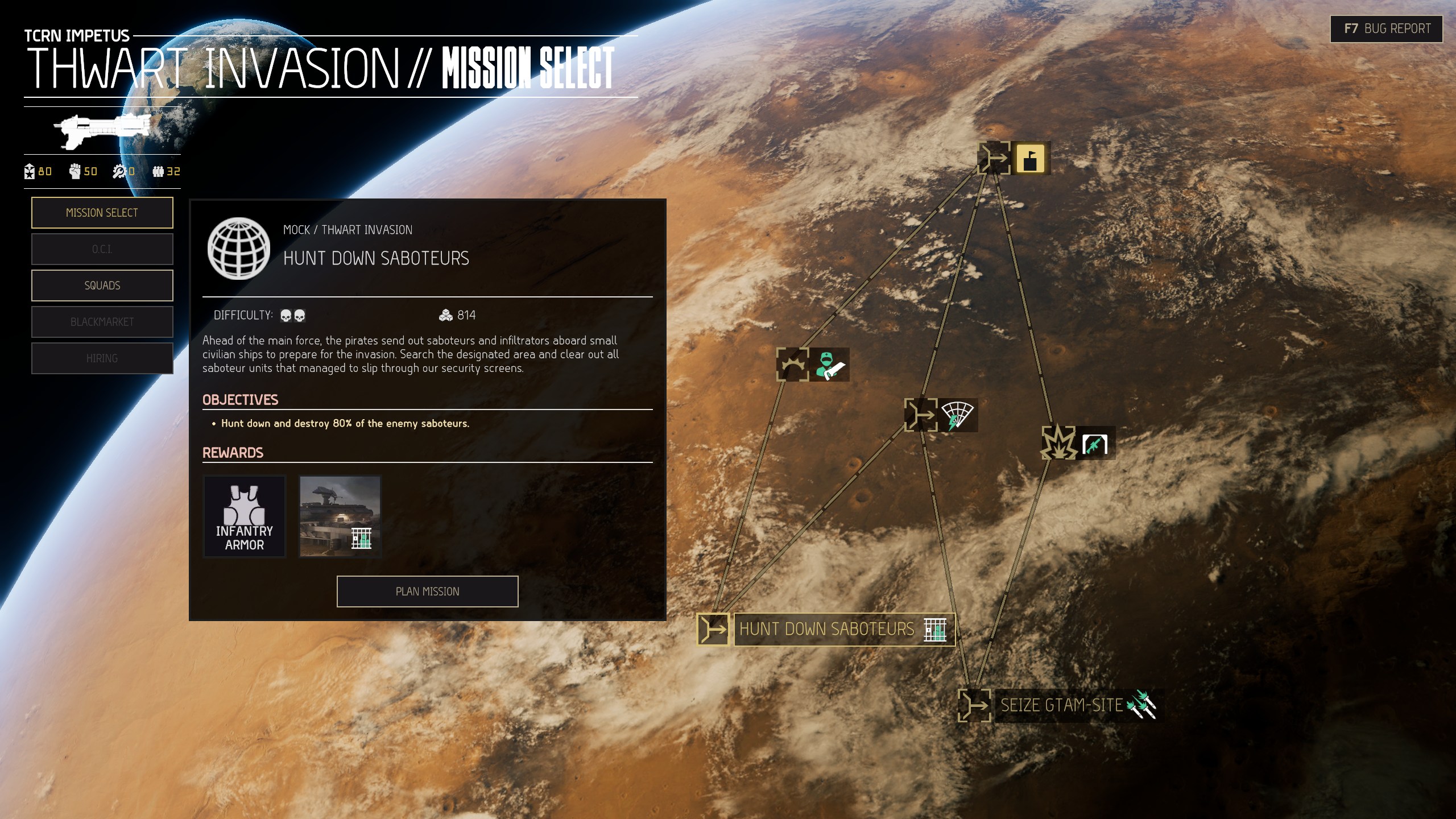 The default use of branching mission chains makes each engagement more meaningful.
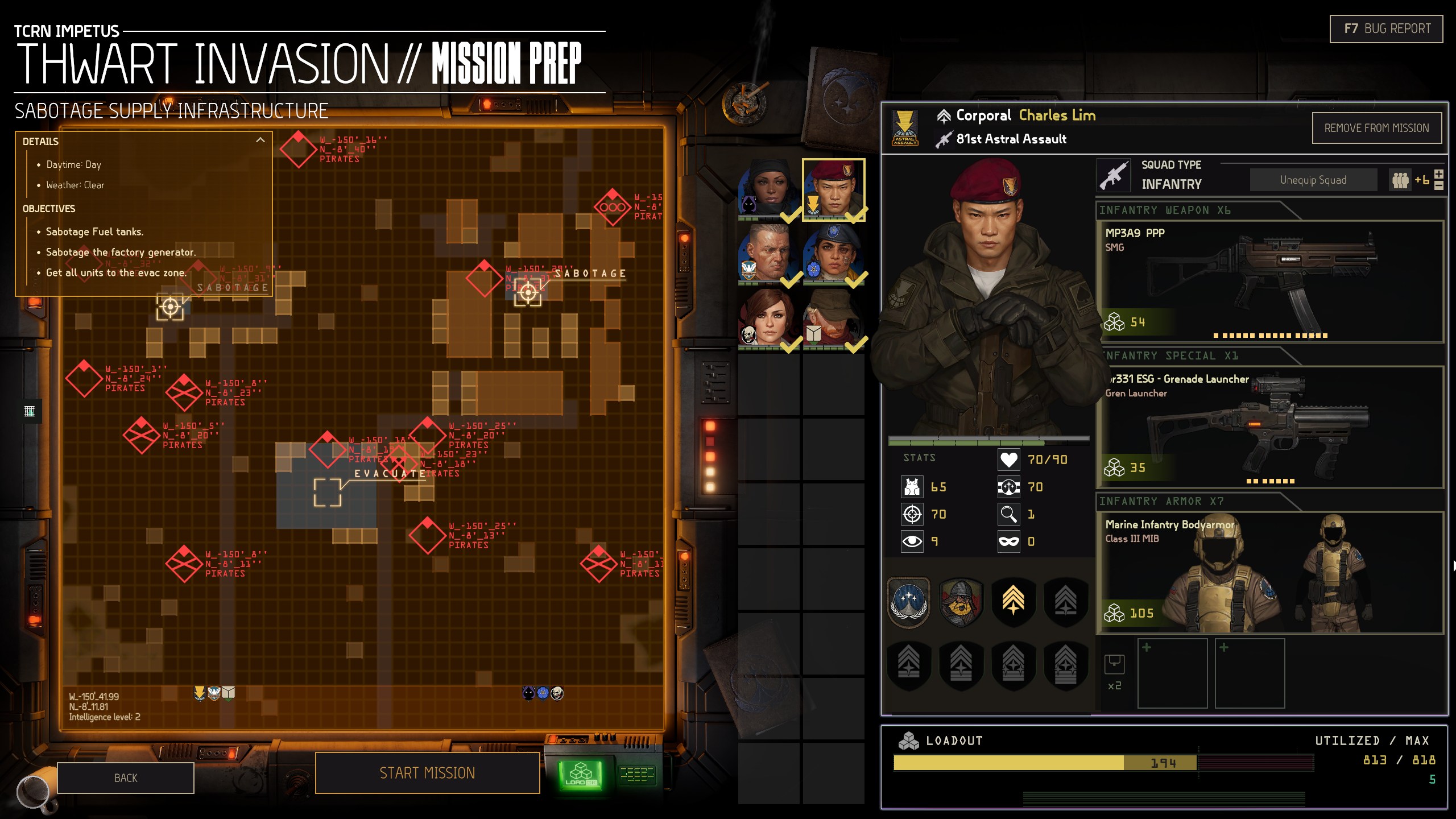 The combination of useful intel and comprehensive outfitting makes mission prep a nerd's dream.
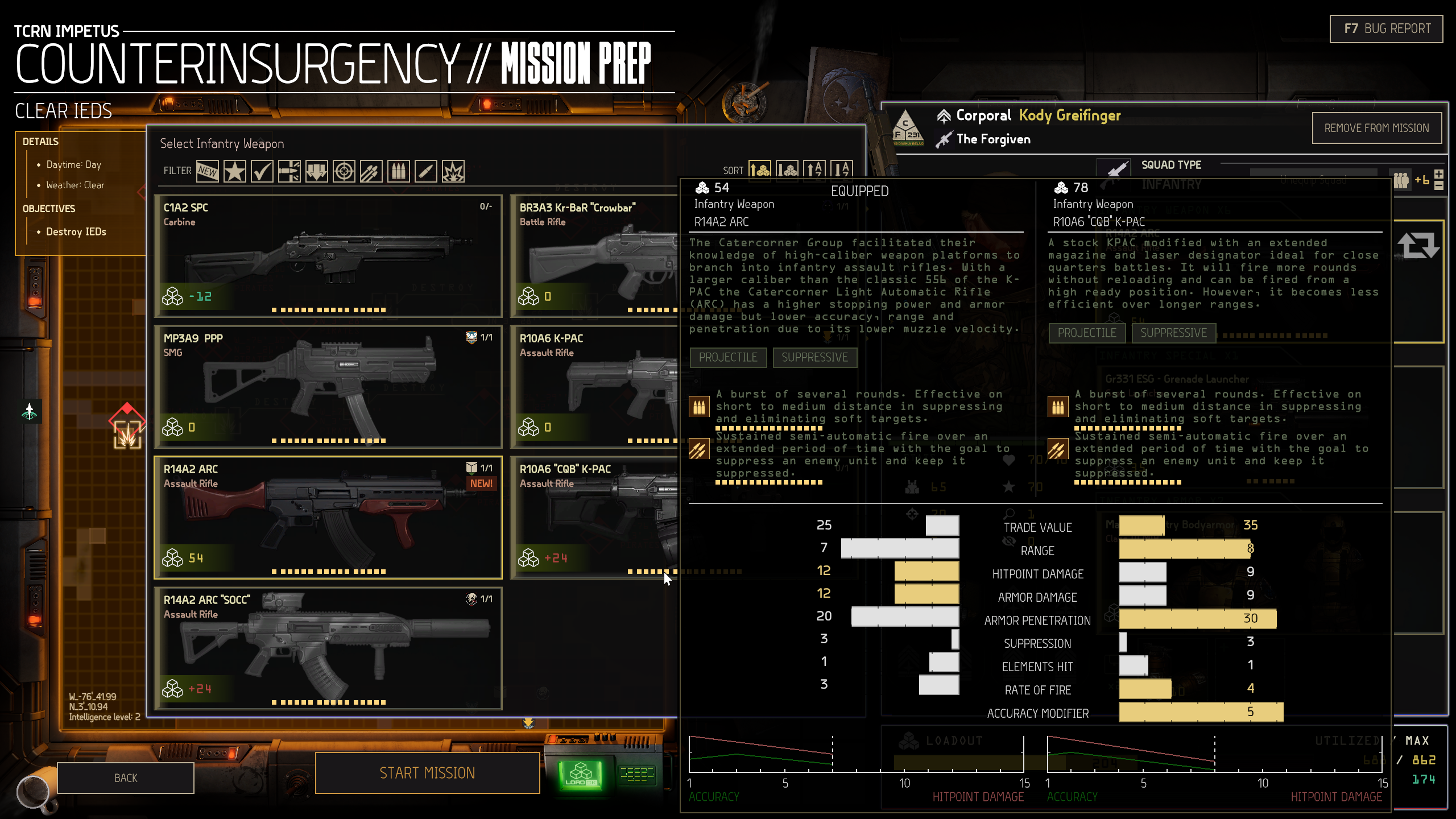 Every single item has a point cost. Every weapon has a breakdown of usage, stats, and even effective range graphs. This is a planner's dream.
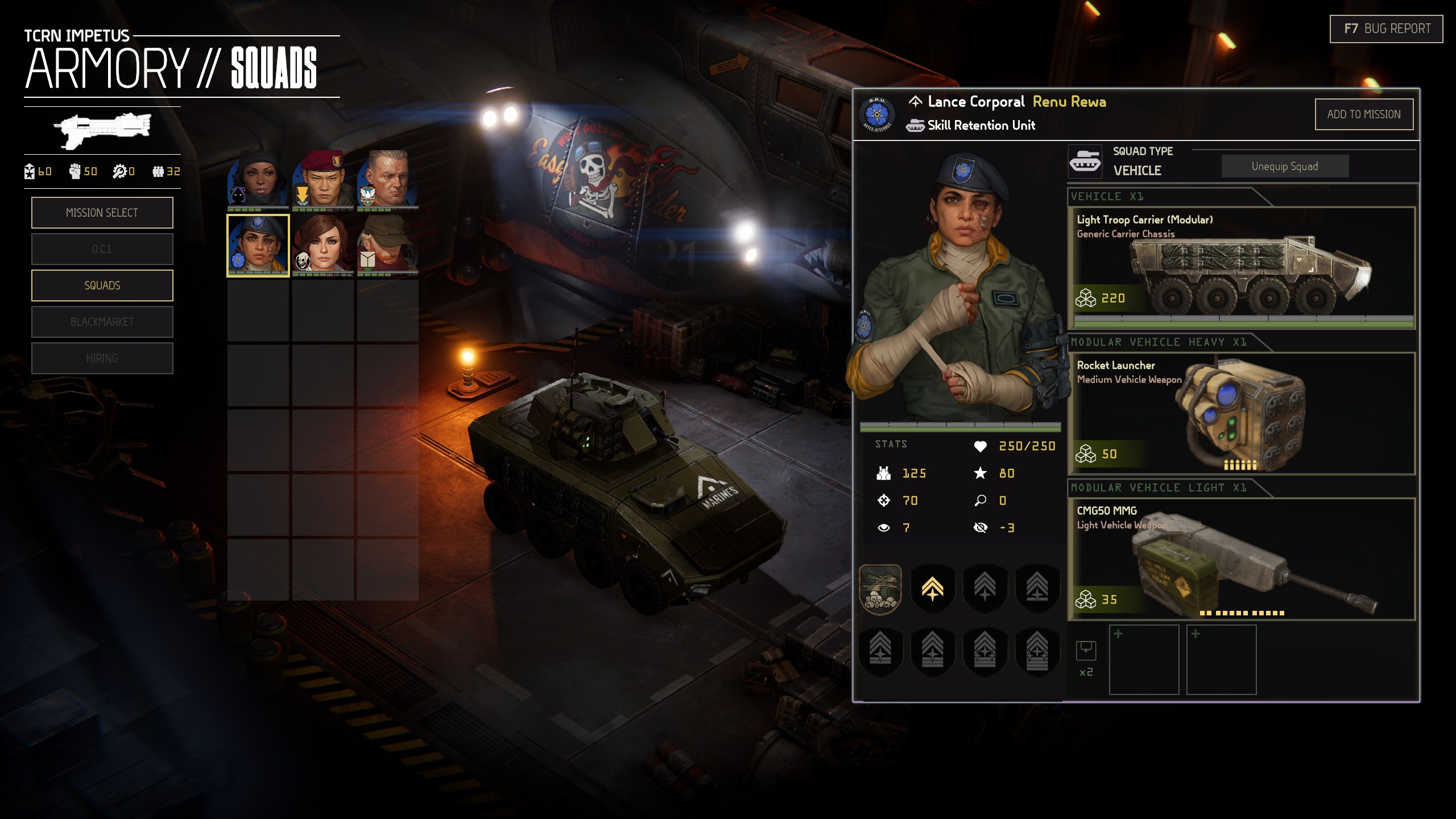 Renu Rewa's vehicle proficiency will quickly become your best friend.
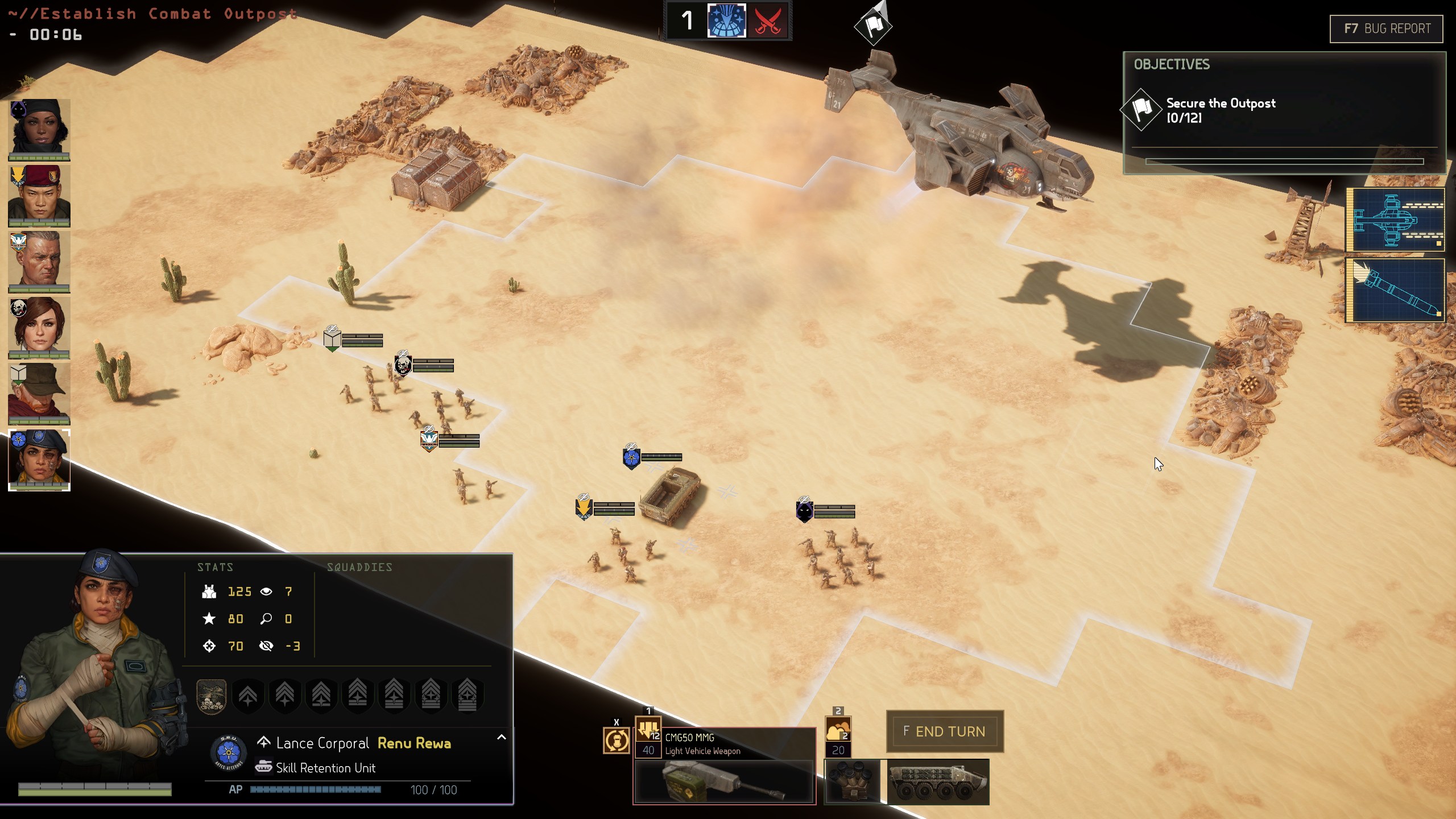 Platoon-scale deployments are a welcome break in a genre defined by individual teammates.
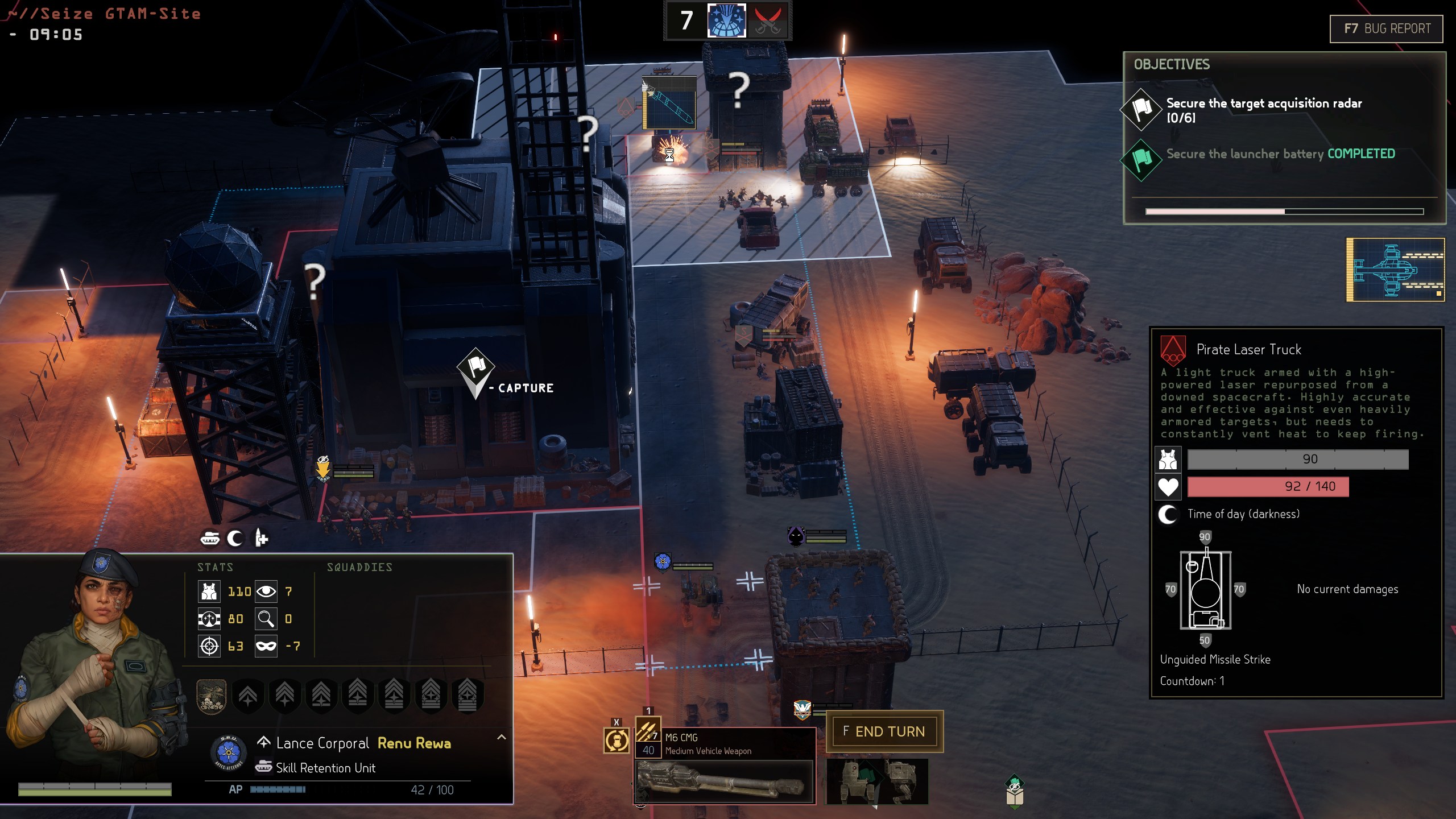 The game's learning curve is noticeable, but veterans of the tactics genre will adapt quickly.
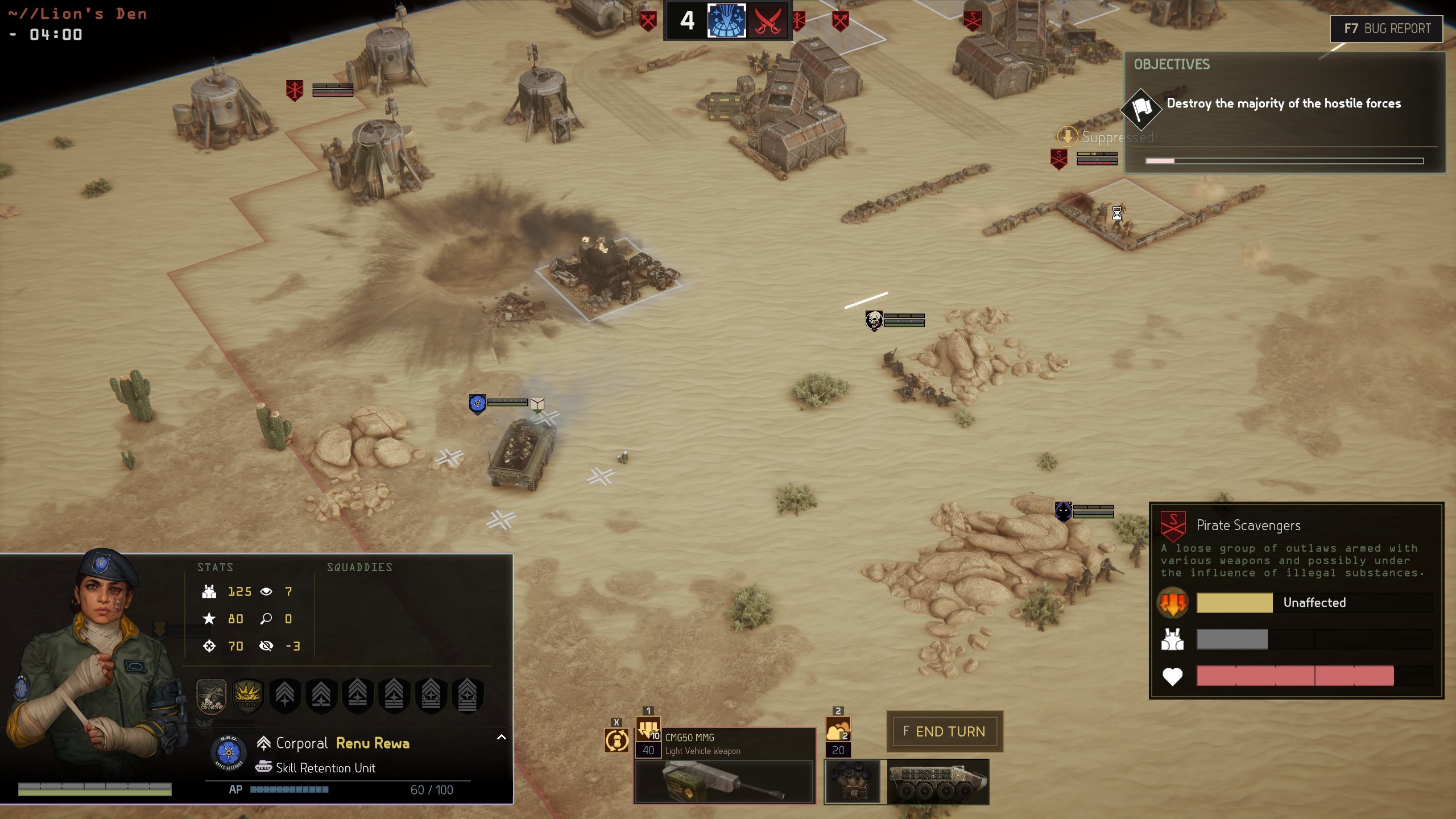 Vehicular gameplay is a welcome addition to the modern battlefield (in space!)
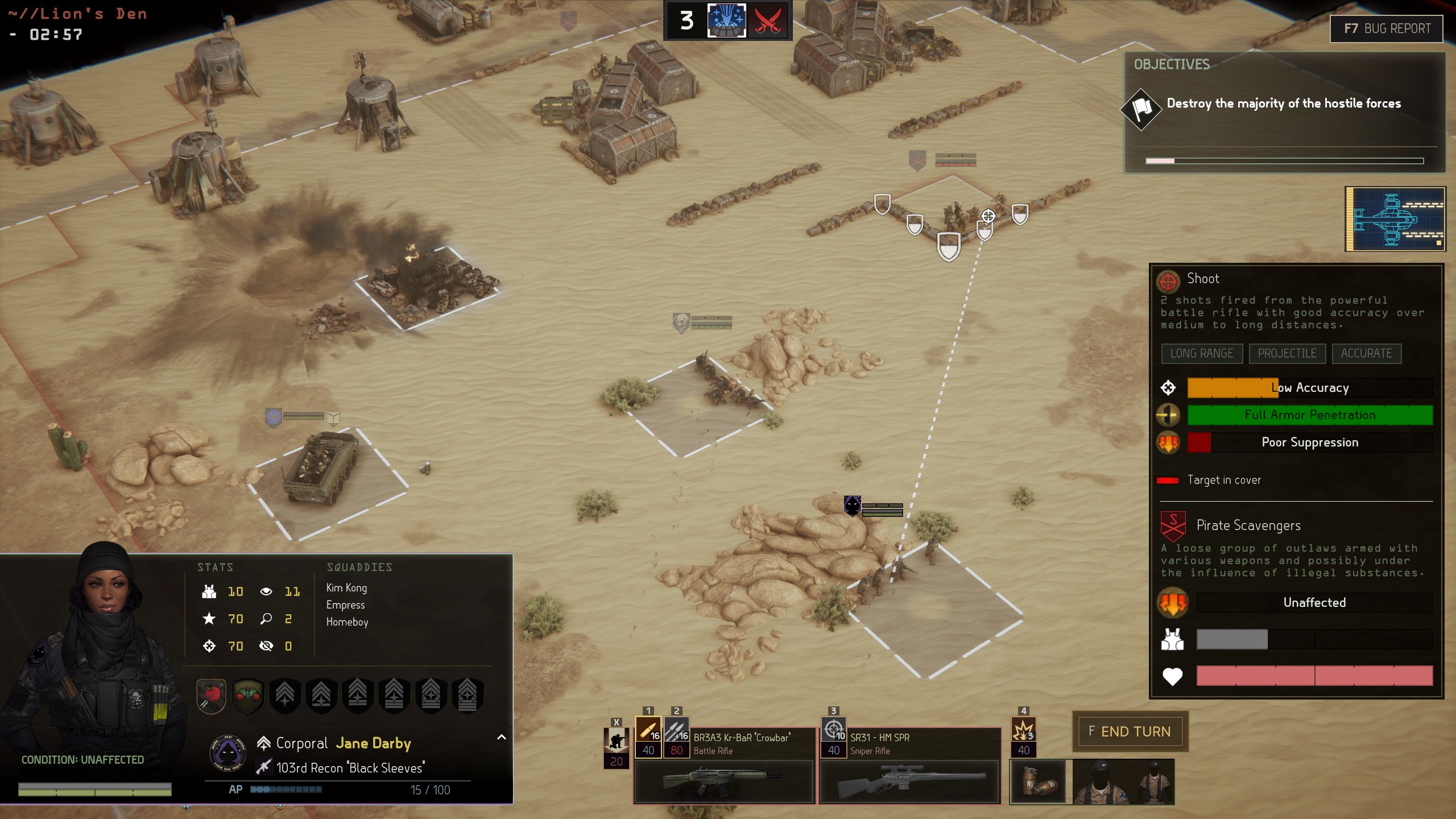 The UI still gives you plenty of tools to manage RNG.
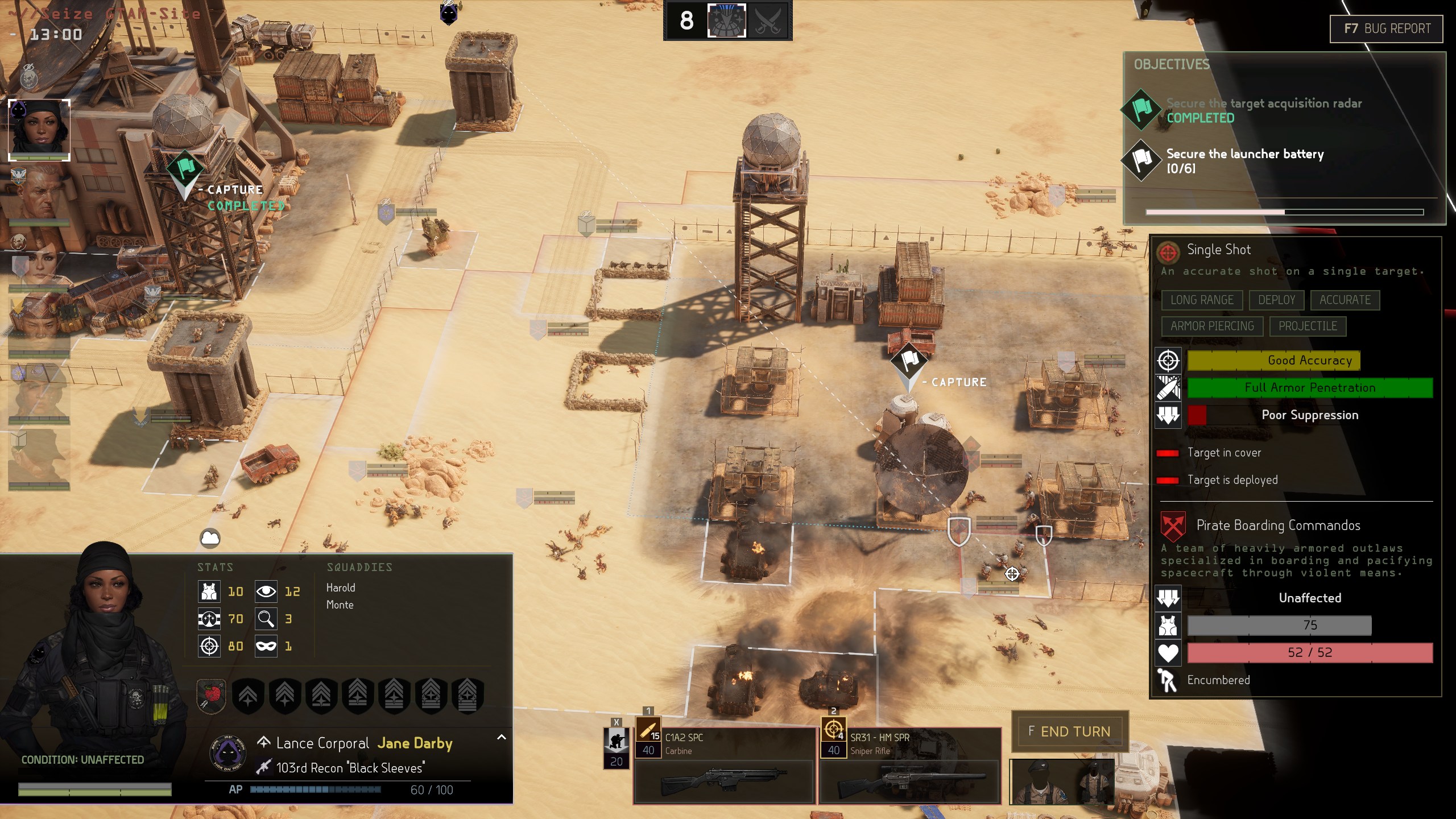 The increased scale of Menace is visible in everything from combat ranges to map size.
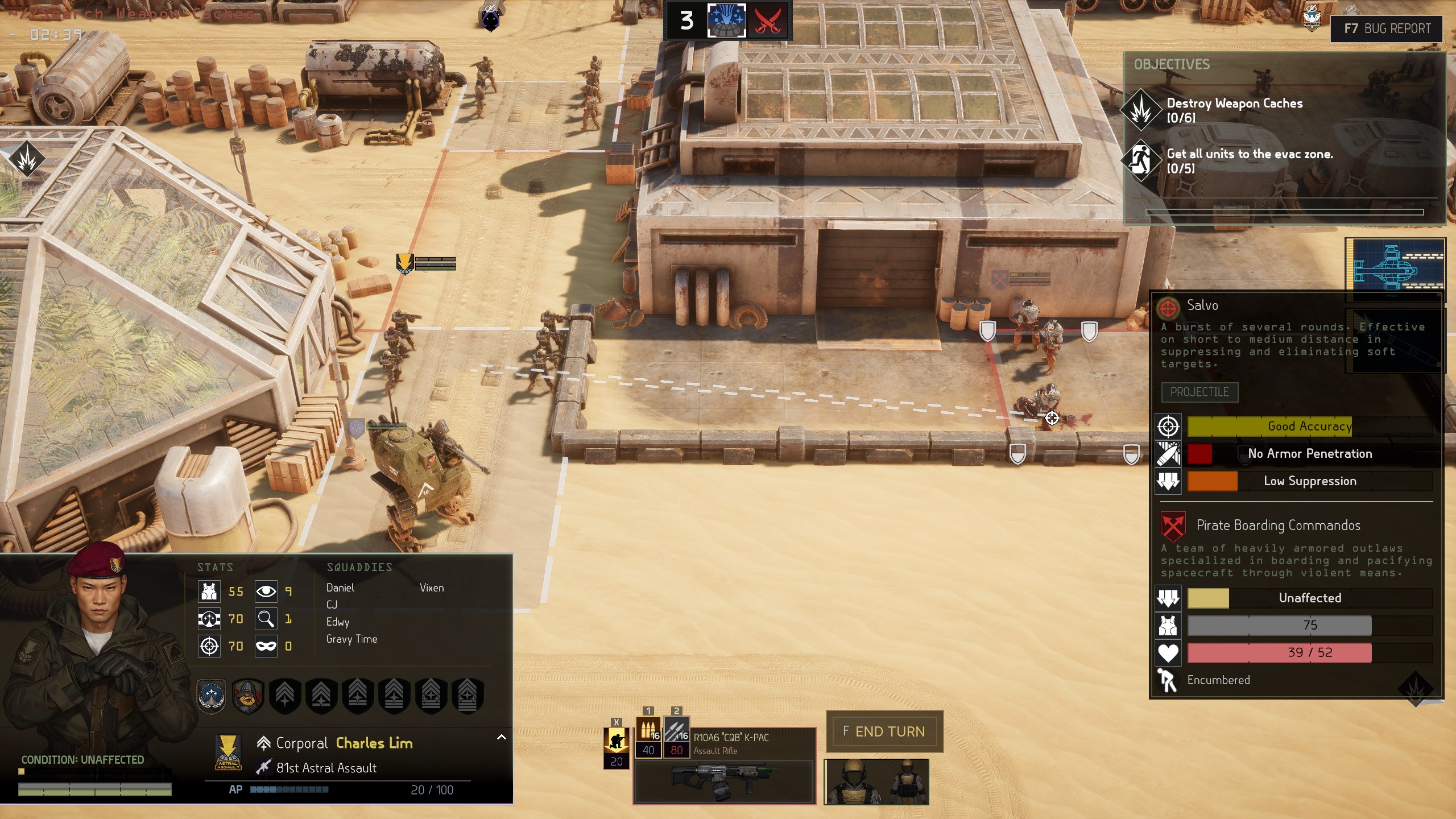 Mechanized walkers add decency to what would otherwise be a disorganized brawl.

 Infinity N5 First Principles: Understanding the Outcomes of Face to Face Rolls
 Tactical Feedback: Timing the Go-Turn
 SRM's Roundabout to Adepticon 2026: Curd Is the Word