Howdy ristars and welcome to BattleTechnical, your source for high level strategy and low level mechanics so you can get the most out of your mechs. The majority of our BattleTech content here on Goonhammer is centered pretty heavily about the hardware. Mechs, Battle Armor, the very occasional tank or complaint about how Planes work. What we don’t talk about much is the actual playing of the game, what you need to do with your brain meat after you have picked units that don’t suck. How are you supposed to use all of these wonderful toys?
Today in this inaugural instance we are going to start out with what is the core, fundamental Goonhammer Patented philosophy towards the game and how you can, much like our tournament winning man-monster Liberty, just end up doing more with the same BV as your opponent.
Liberty: Heyooooo! That’s me!
Theory
BattleTech is, at its heart, a game of math. This doesn’t mean that you need a steel mind of clocks and gears, most BattleTech math is addition and subtraction, but it is still math. The fundamental truth of the game is that if you have easier to hit numbers than your opponent, you win more often than you won’t. Most of being good at BattleTech is being able to find lines to move into hexes that give you better to hit numbers into your intended target, while giving worse to hit numbers to things that might want to target your units. To understand why, let's go in to how BattleTech generates those to-hit numbers, and what they mean.
BattleTech is a 2d6 game, nearly every relevant roll in the game is made on 2d6. 2d6 is a very different type of probability to 1d6, 1d10, or 1d20. The bell curve nature of 2d6 means that as the number gets higher, your odds fall *rapidly* compared to other dice systems. This means that modifiers mean a whole hell of a lot when you are expecting your shots to be on the higher end, and a lot less when you are expecting them to be low to begin with. For a refresher on the specific odds of rolling any given number or better on 2d6, here is a fun graphic that I am absolutely not stealing from Rob.
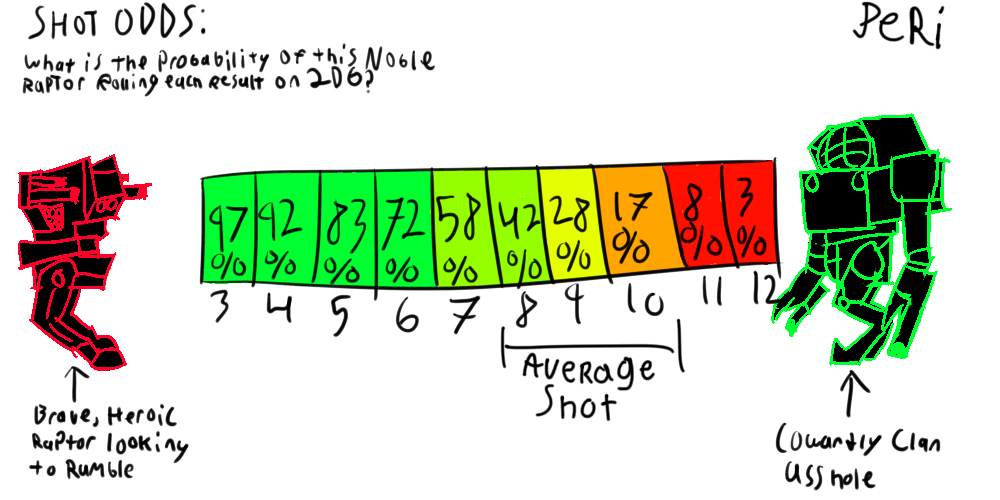 2d6 Odds, BattleTech style. Credit: Perigrin
On Average, the median BattleTech shot is, most often, either 8 or 10 on 2d6, sometimes a 9. To get to that number, if you take a 4 gunnery pilot (as we usually recommend), add +2 for your run, and +2 TMM for the enemy. Two TMM is far and away the most common amount for mainliners, 3 TMM tends to be more common on lighter assets, dedicated cavalry assets, or fiddly 5/8/0 mechs that need to set up their movement for most of the game at a time to keep that TMM rolling. Four TMM functionally just removes the medium range bracket from your opponent, they have to get to short range or have some form of to hit bonus to make it possible to hit you.
That gives an 8 to hit at short range, and a 10 to hit at medium. As this would put a long range shot on 12s, which is very unlikely to ever actually hit, we can safely ignore those shots.
The jump between an 8+ and a 10+ is huge, with a 10+ shot only hitting about 17% of the time compared to 42% of the time. That is a 60% increase in evasiveness, and that’s terrible. If you can get yourself a shot on 8s while putting your opponent on 10s, you will land more than twice as many hits in an average game. Even just putting your opponent on 9s compared to your 8s is a huge cut, they will hit about 33% less often than you can.
If you have noticed that we tend to be extremely harsh to to hit penalties and go absolutely nuts for to hit bonuses in our Overviews, this is why. Even a +1 or -1 can make a titanic difference on the average shot. Basic heavy lasers, MRMs (until the new core book takes away that penalty), and other +1 hit penalty weapons will, on average, inflict 33-60% less hits than a normal weapon. All the damage numbers in the world mean absolutely nothing if you never actually roll them because you missed the shot.
2d6 Odds, BattleTech style. Credit: Perigrin
On Average, the median BattleTech shot is, most often, either 8 or 10 on 2d6, sometimes a 9. To get to that number, if you take a 4 gunnery pilot (as we usually recommend), add +2 for your run, and +2 TMM for the enemy. Two TMM is far and away the most common amount for mainliners, 3 TMM tends to be more common on lighter assets, dedicated cavalry assets, or fiddly 5/8/0 mechs that need to set up their movement for most of the game at a time to keep that TMM rolling. Four TMM functionally just removes the medium range bracket from your opponent, they have to get to short range or have some form of to hit bonus to make it possible to hit you.
That gives an 8 to hit at short range, and a 10 to hit at medium. As this would put a long range shot on 12s, which is very unlikely to ever actually hit, we can safely ignore those shots.
The jump between an 8+ and a 10+ is huge, with a 10+ shot only hitting about 17% of the time compared to 42% of the time. That is a 60% increase in evasiveness, and that’s terrible. If you can get yourself a shot on 8s while putting your opponent on 10s, you will land more than twice as many hits in an average game. Even just putting your opponent on 9s compared to your 8s is a huge cut, they will hit about 33% less often than you can.
If you have noticed that we tend to be extremely harsh to to hit penalties and go absolutely nuts for to hit bonuses in our Overviews, this is why. Even a +1 or -1 can make a titanic difference on the average shot. Basic heavy lasers, MRMs (until the new core book takes away that penalty), and other +1 hit penalty weapons will, on average, inflict 33-60% less hits than a normal weapon. All the damage numbers in the world mean absolutely nothing if you never actually roll them because you missed the shot.
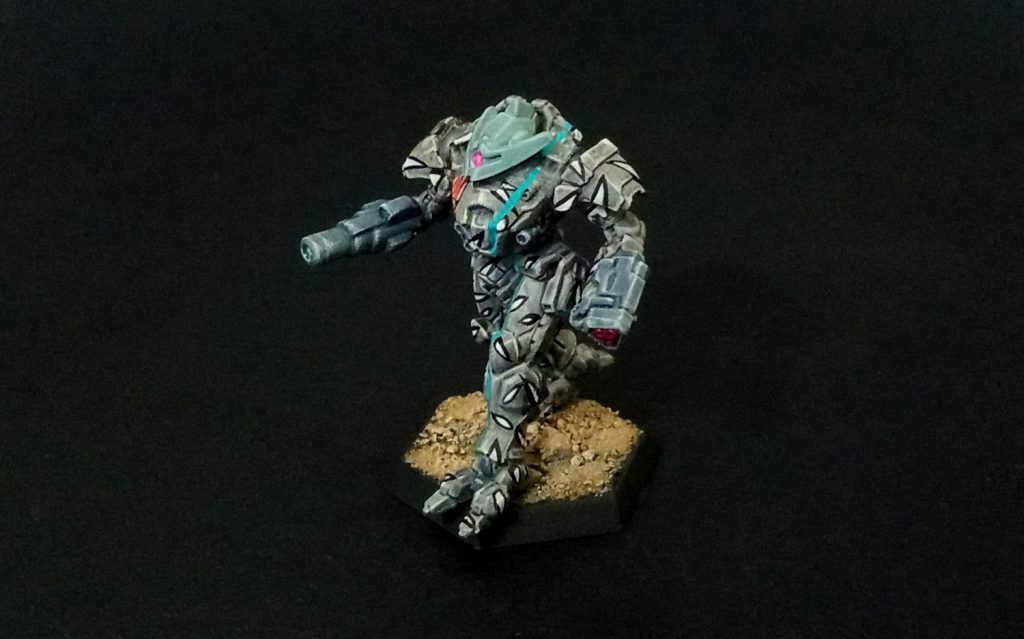 Vapor Eagle of Clan Smoke Jaguar (Photo courtesy of Musterkrux)
Pulse Lasers, then, can take a mediocre shot at medium range and turn it into a pretty good shot at (effectively) close range, or a good shot at close to a fantastic shot in the party zone. -2 to hit effectively doubles your expected hits if you are looking at one of those median 8+, 9+, or 10+ shots. It also gives you nearly 6x as many expected hits if you had one of those dismal long range 12+ shots that it converts into a 10+. Even Pulse Lasers with crappy range like the ISMPL still benefit from this doubling compared to a lot of weapons at a lot of ranges, and pulse lasers with good ranges like the CLPL, LXPL, or CMPL can feel like you are getting scammed.
By comparison, something with a -1 like a Targeting Computer, RE laser, ERPL, or ART V, is a bit more sensitive, still giving a substantial increase to to-hit odds on those median shots but not quite doubling your expected value. Any sort of to hit bonus is just so insanely strong, even if it is expensive or attached to a somewhat crappy gun/unit.
The effects of this 2d6 median shot math ripple over the whole game and should be influencing every decision you make. Every +1 you give your opponent over those median shots is a substantial decrease to their output, and every -1 you can pull out of them is a substantial increase in your output, way more than you would think coming from, say, DND. +1 in DND is nice, -1 in BattleTech is game changing. Treating a +1 or -1 as a minor change or bonus is a sure fire way to lose games of BattleTech to someone who knows when to stand still, when to walk instead of running, when to pull into terrain, and when to grug out and run directly to 1 hex range like a cave man.
If you want to get better at BattleTech, the first step is to start thinking about how you can either make your shot better, or how to equalize your numbers with your opponents if that isn’t possible. Trading even is better than trading into someone who can expect twice as many hits as you, after all!
Liberty:
Vapor Eagle of Clan Smoke Jaguar (Photo courtesy of Musterkrux)
Pulse Lasers, then, can take a mediocre shot at medium range and turn it into a pretty good shot at (effectively) close range, or a good shot at close to a fantastic shot in the party zone. -2 to hit effectively doubles your expected hits if you are looking at one of those median 8+, 9+, or 10+ shots. It also gives you nearly 6x as many expected hits if you had one of those dismal long range 12+ shots that it converts into a 10+. Even Pulse Lasers with crappy range like the ISMPL still benefit from this doubling compared to a lot of weapons at a lot of ranges, and pulse lasers with good ranges like the CLPL, LXPL, or CMPL can feel like you are getting scammed.
By comparison, something with a -1 like a Targeting Computer, RE laser, ERPL, or ART V, is a bit more sensitive, still giving a substantial increase to to-hit odds on those median shots but not quite doubling your expected value. Any sort of to hit bonus is just so insanely strong, even if it is expensive or attached to a somewhat crappy gun/unit.
The effects of this 2d6 median shot math ripple over the whole game and should be influencing every decision you make. Every +1 you give your opponent over those median shots is a substantial decrease to their output, and every -1 you can pull out of them is a substantial increase in your output, way more than you would think coming from, say, DND. +1 in DND is nice, -1 in BattleTech is game changing. Treating a +1 or -1 as a minor change or bonus is a sure fire way to lose games of BattleTech to someone who knows when to stand still, when to walk instead of running, when to pull into terrain, and when to grug out and run directly to 1 hex range like a cave man.
If you want to get better at BattleTech, the first step is to start thinking about how you can either make your shot better, or how to equalize your numbers with your opponents if that isn’t possible. Trading even is better than trading into someone who can expect twice as many hits as you, after all!
Liberty: If you know how to set your shots well and the opponent doesn’t then 9 times out of 10, even if the other guy has ‘mechs that are largely better, you’re going to do better just on the laws of statistics. Much of my wins in tournaments is attributed more to gaming out the possible shots and prioritizing something that has the best
overall value to hit with more units than it is dice luck. Pouring a pillar of fire onto something that you have gamed acceptable numbers on is far better than just spreading the fire of your force across everything that gives them their best
individual numbers. If you're shooting them on six, sevens, and eights and they're shooting you on 9s then the deck is loaded and you're the one dealing out the cards.
Endeavor to be the one dealing the cards.
Remember, BT is, more than anything else, a game about doing math better than the other guy and planning around that math. Planning your possible equations based on what the enemy
could do ahead of time will rapidly make it so that you’re prepped and ready to pounce on the chance to the best of your ability; no matter what ‘mech is in your hand. Pulse and precision can help prop up a bad player but they can’t fix their game sense nor their ability to do addition, or subtraction.
Practice
So, how do we go about dealing the cards? Well, as Liberty somewhat arrogantly (mad he has the record to back this up) implied, just taking Pulse Lasers, Precision ammo, and other to hit bonuses is by far the easiest way to equalize your numbers. Assuming that the new BV rework puts the BV of pulse lasers somewhere around acceptable, they will still be worthwhile and have a niche for that. Pulse Lasers can functionally treat their medium range the same way most weapons treat their short range, and their short range becomes the "Party Zone" where you can expect vastly better numbers than the other guy, if you can get there. A Clan LPL has, functionally, a 14 hex short range, which is genuinely unmatched in the entire game and means that a mech carrying a pair of them will only have properly bad shots if you cataclysmically misplay.
The second set of equipment that can massively improve your average numbers without forcing you to change your play style are weapons with long short range brackets. In particular, the holy quartet of the various HAGs, Clan ER large laser, light gauss rifle, and snub nosed PPC. These weapons have a short range of 8 or 9, which is longer than the 6 or 7 hexes that are pretty common on "Main" weapons. This means that you have a few hexes of range to work with against most weapons, and as long as you can land yourself in those ranges you will have a better shot.
These weapons can also negate the CLPLs range dominance provided that you can get at 7, 8, or 9 hexes depending on the weapon. This is much harder to consistently pull off compared to just passively getting this sort of bonus from a to-hit bonus, but it is one of the primary bits of counterplay against pulse lasers. If you start taking these weapons and work on doing the math in your head to get better numbers by getting to your short, their medium, with an acceptable TMM, you will start winning way more games.
 McCarron's Armored Cavalry Tian-Zong. Credit: Jack Hunter
That is about it for equipment that can (practically) help you get better numbers. Stealth Armor tends to be a bit of a "Win More" instead of an actual practical tool. Turning a 10 into an 11 on a medium range shot is great, but seeing as everyone wants to get into short range in BattleTech anyway, it is only particularly useful on snipers and is easily countered by just closing in. Other pieces of niche/gimmick equipment can borderline help you, but now comes the issue of needing to change the way you play the game.
The first way to play for better numbers is to get yourself into terrain. While the +1 to be hit from light woods doesn't directly boost your output, if you can get into those woods with an acceptable amount of TMM, it can shift your opponent's numbers if everything else was already equal. It is really important to not just sit in woods all the time though. It can be tempting to get "Free" TN from woods, but a hex has to be generating a pretty ridiculous amount of TN (Heavy Woods + Partial Cover hexes being pretty infamous for this locally) to make it worth staying in and fully giving up the ability to control ranges into your opponent. Only park in woods if there is no way for you to get even or better numbers by moving somewhere and taking initiative in the game. A woods sitting turret mech is a predictable, counterplay-able mech. I cannot count the games I have lost because of spending too long with a Regent Prime staying in a hex of woods and fully giving up initiative instead of pushing forwards to proactively get better shots.
There are exceptions to this, if you are playing against something that can consistently generate 4 or more TMM, you need to park a lot of the time just to keep your to-hits on that 8-10 average instead of pushing them up to 11 or 12. If you are dealing with mechs like that, there is no shame in just finding a good position around an objective and parking. You are almost certainly going to get hit for doing it, but mechs with that much TMM tend to have way less firepower and armor than you will, so in a game of trades you will trade up.
Jack: In situations like this standing still is much better for you than your opponent. If you'd be generating 2 TMM (so shots are likely on 8s) and choose to stand still instead, they'll be hitting 71% more often (they're now hitting on 6s). In doing so, you've likely more than doubled how often you hit (from 17% of the time on 10s to 42% on 8s). Be careful though to not turn in place (one of the big risks of a 3/5 assault), as if you start moving you very much want to get as much TMM as you do AMM (or get cover from woods as well as TMM, just so long as you aren't putting yourself in a bad position by having lower defensive mods than your AMM).
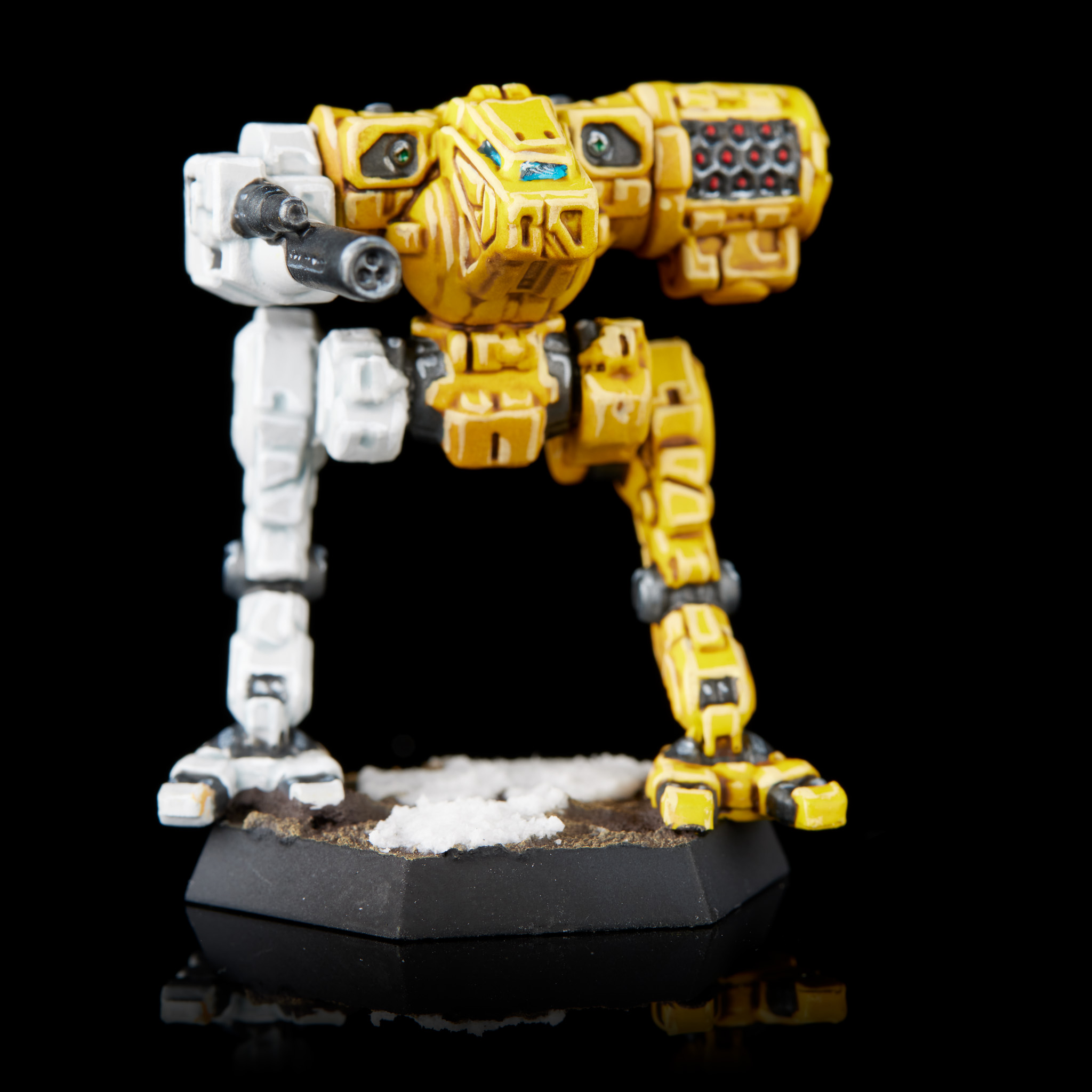
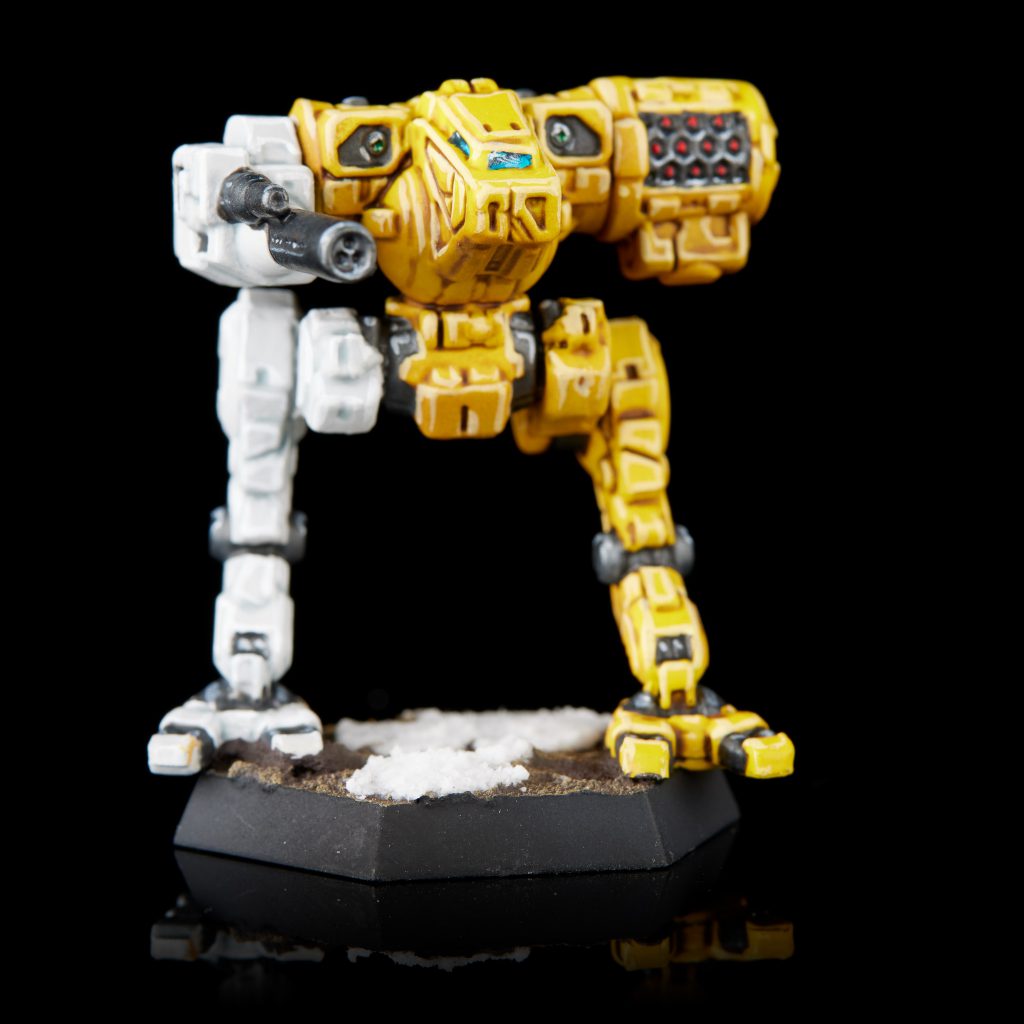 Dawn Guards Argus. Credit: Jack Hunter
Another easy way to equalize numbers is to just run directly into point blank range of your opponent and completely disregard range. Bringing high mobility, durable, close range focused assets like the Gargoyle G, Thunder 1L, Argus 6F, Stormcrow K, and others of that type and just sprinting straight under the opponent's guns to punch them in the jaw with cheap, high damage close ranged weapons will, frequently, win you games. If someone is camping a hill or woods hex, just get directly next to them and threaten to stand still and pummel some very easy 5-6+ shots into them next turn if they don't move right now. If, say, the enemy is a Rifleman IIC camping a heavy woods hex, standing still next to them means that they will hit you with all 40 damage, but if you are a mech that can output more than that (ATM mech, AC/20 mech, pile of ISMPLs or ISMLs as secondaries), your 6+ to hit is still a 72% chance and that is a real threat to an all-in pulse mech.
Building a list purely out of dumb bricks that run at people and beat them to death at point blank is extremely viable, because the 8 hex short range on a CERLL doesn't mean much when you are right next to them.
There are going to be situations where you are outranged and out-numbered by default, even if you aren't playing dedicated close range mechs like this. In those cases, even though it isn't plan A, running forwards and trying to lean on your armor to keep you alive while you get close enough to equalize the numbers is frequently your best strategy. Getting lit the hell up by a Rifleman IIC on the way in is going to suck, but most decent heavy/assault mechs will out DPS a CLPL boat once you get into short range.
You can also drop battle armor on them to get them out of the hex but that is outside the scope of this article.
Final Thoughts
This is just intended as a primer towards the math of BattleTech and a couple of easy ways to even out your shots if you keep finding that you are getting hit more than you hit your opponent. Even just trying to get to your short range as proactively as possible is a big deal. Medium Range shots are far, far worse on average than short range ones, way more than you would think from a +2 modifier. Casually getting more than double the expected hits just by running forwards into close range is huge, never settle for a medium range shot if there is any way to get even or better shots into your target by just pushing forwards. Aggression tends to be favored in BattleTech as a result, giving up the ability to control shot numbers by camping in place is very rarely the correct play.
If you have the mental bandwidth for it, beyond just trying to run into short range, doing some math on what the numbers would be from a given hex to the hex you expect your enemy to move into next turn can really help you plan out your moves to get the best possible shots next turn, and the turn after that. If you can consistently plan that out, you will start winning more often than you lose.
Cheers, have a good rest of your night, and dream of robot violence.
Have any questions or feedback? Drop us a note in the comments below or email us at contact@goonhammer.com. Want articles like this linked in your inbox every Monday morning? Sign up for our newsletter. And don’t forget that you can support us on Patreon for backer rewards like early video content, Administratum access, an ad-free experience on our website and more.
Thank you for being a friend.
 This website uses cookies. Learn more.

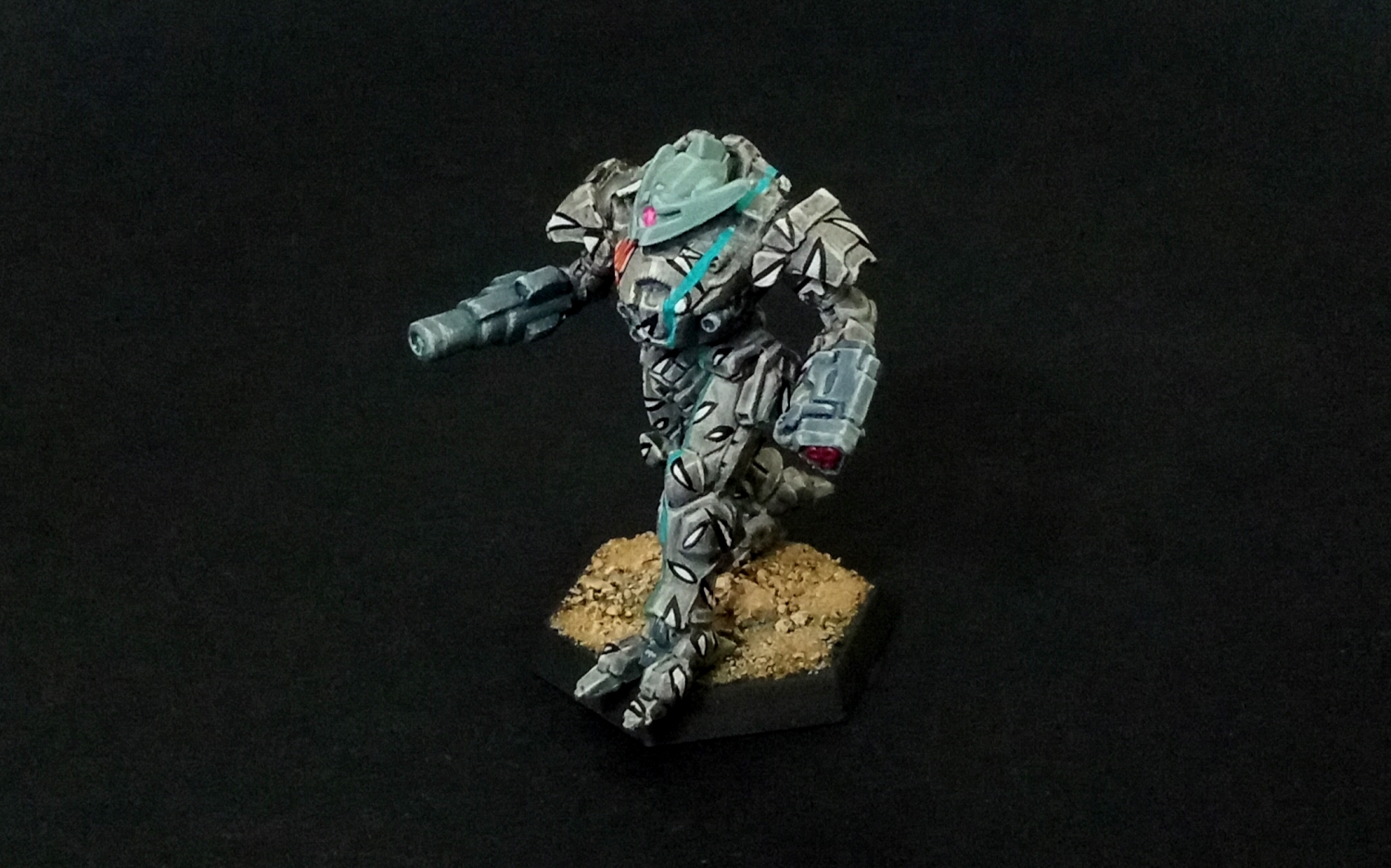 Vapor Eagle of Clan Smoke Jaguar (Photo courtesy of Musterkrux)
 McCarron's Armored Cavalry Tian-Zong. Credit: Jack Hunter
 Dawn Guards Argus. Credit: Jack Hunter

 Infinity N5 First Principles: Understanding the Outcomes of Face to Face Rolls
 Tactical Feedback: Timing the Go-Turn
 SRM's Roundabout to Adepticon 2026: Curd Is the Word