Hello MechWarriors! Welcome back to another BattleTech Fiction Focus, this time returning to the work of prolific,
Goonie-award-winning author Bryan Young. Today we're looking at last week's new release
Star-Crossed Warriors, the first novella in a sequence of four he's written covering the internecine conflict of the Dominion Civil War!
We'd like to thank Bryan for providing us with a copy of Star-Crossed Warriors
for our review.
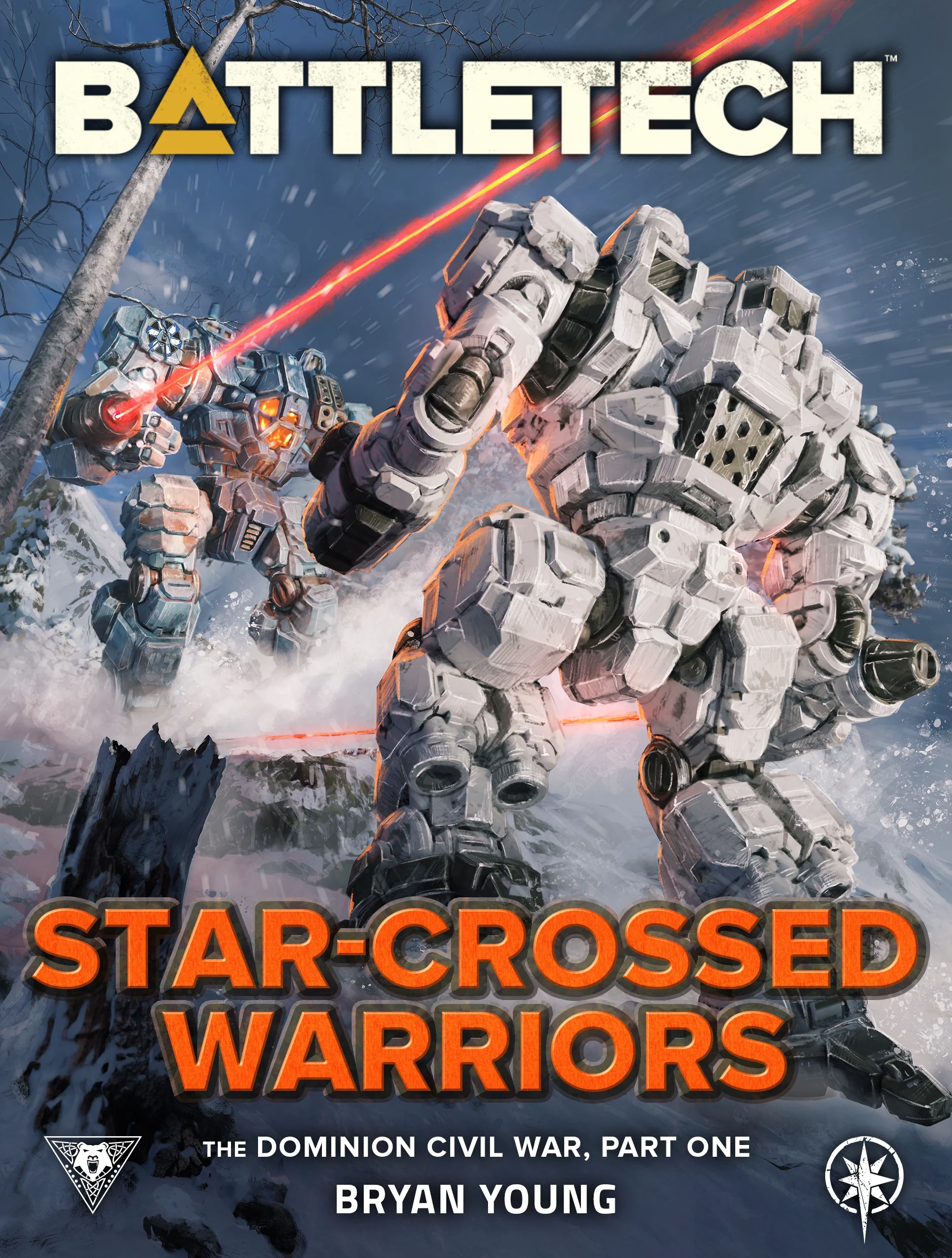 Credit: Catalyst Game Labs
Wait, Did You Say "Dominion Civil War"?
This book series, fleshing out the turmoil which wracked the Rasalhague Dominion in the wake of the ilClan Trial, the vote to join or deny the Third Star League, and Alaric Ward's rejection of the results of said vote, was originally announced as "The Ghost Bear Civil War." I'm glad that was revised prior to publication; even from just this first installment alone, it's very clear that the Joiner/Denier conflict divides Rasalhague natives as much as it does the Ghost Bears themselves.
So What About This Book?
As a quick note, while this review will not contain any major spoilers, I will be discussing the premise and themes of Star-Crossed Warriors in greater detail than the official synopsis. If you’re already planning to read the book and would prefer not to see that… go read the book! It’s good! But if you’re on the fence or you’d like to see me unpack my reactions, read on.
Star-Crossed Warriors uses the personal as a lens to examine the political. It focuses in on the perspectives of two
sibko cadets, Freeborn Strider and Trueborn Vespertine, as they test into the Ghost Bear
touman in a time of intensifying unrest within the Dominion. Interstitial sequences throughout the novella utilize snippets of news broadcasts, chatterweb posts, and the like to provide broader context, and we hear plenty of opinions from our leads' colleagues and (in Strider's case) family, but Strider and Vespertine are the only viewpoint characters.
Strider and Vesper have a juicy rivals-to-friends-to-lovers relationship (with the looming potential to become -to-enemies given the Civil War setting), but Young skims very quickly past their initial friction to the point where they're in a more-committed-than-is-normative-for-non-Bear-Clanners relationship with each other. This frankly disappointed me, as I'm an absolute sucker for "prickly overachiever warms up to pure-hearted protagonist" relationship arcs (shout out to Amity/Luz in
The Owl House and White Rose in
RWBY), but I recognize that the actual
romance of their relationship is a secondary concern for this narrative. They do feel like realistic and sympathetic characters, and they do have romantic chemistry, but this is a
novella, and it covers the ground between June 3146 and July 3151. There's not much space here for anything that doesn't directly further our understanding of the brewing conflict.
Strider's family are a great example of the craftsmanship on display in this novella. His mother is a Trueborn Ghost Bear who failed her Trial of Position and tested down to a civilian caste, his father is Rasalhagian but deeply devoted to his wife, and his great-grandmother is a Rasalhagian political activist who makes no secret of her anti-Clan leanings, simultaneously providing a relatable fractious-but-loving family dynamic and also providing efficient insight into three different civilian perspectives on the Dominion's political woes. With no real connection to the civilian population except through Strider, Vespertine is instead used to expand our access to Warrior perspectives, both through her own viewpoint and those of the members of her Star.
The political situation is deliciously complicated. Young avoids simple scenarios and easy answers. It's been easy for me, and I think many fans, to fall into the trap of viewing support for, or opposition to, the new Star League as support for, or opposition to, Alaric Ward, or the Wolves, or Clan Crusader ideology. Here it's made clear that there are many, many other issues on the mind of the Dominion which, whether fairly or not, get blended into the Join/Deny decision, from economic woes to endemic corruption to simmering Clan/Rasalhagian tensions, and more. Everyone brings some legitimate grievances and understandable viewpoints into the whole mess, with no clean-cut solutions. Strider is the most conventionally heroic figure in the book, but even he isn't unambiguously in the right, with the narrative inviting the question of whether his idealism might be too naive for the situation at hand.
Star-Crossed Warriors is very much the
set-up for a conflagration to come, winding the spring of tension throughout its page count without reaching the big release. I was perfectly happy with that, and its quiet-cliffhanger of an ending whetted my appetite for what's to come, but your mileage may vary. If you're just here for bloody sibkin-shooting-sibkin violence, you won't find it
yet in this first installment. Maybe wait and revisit this series after one or two more of these novellas have released.
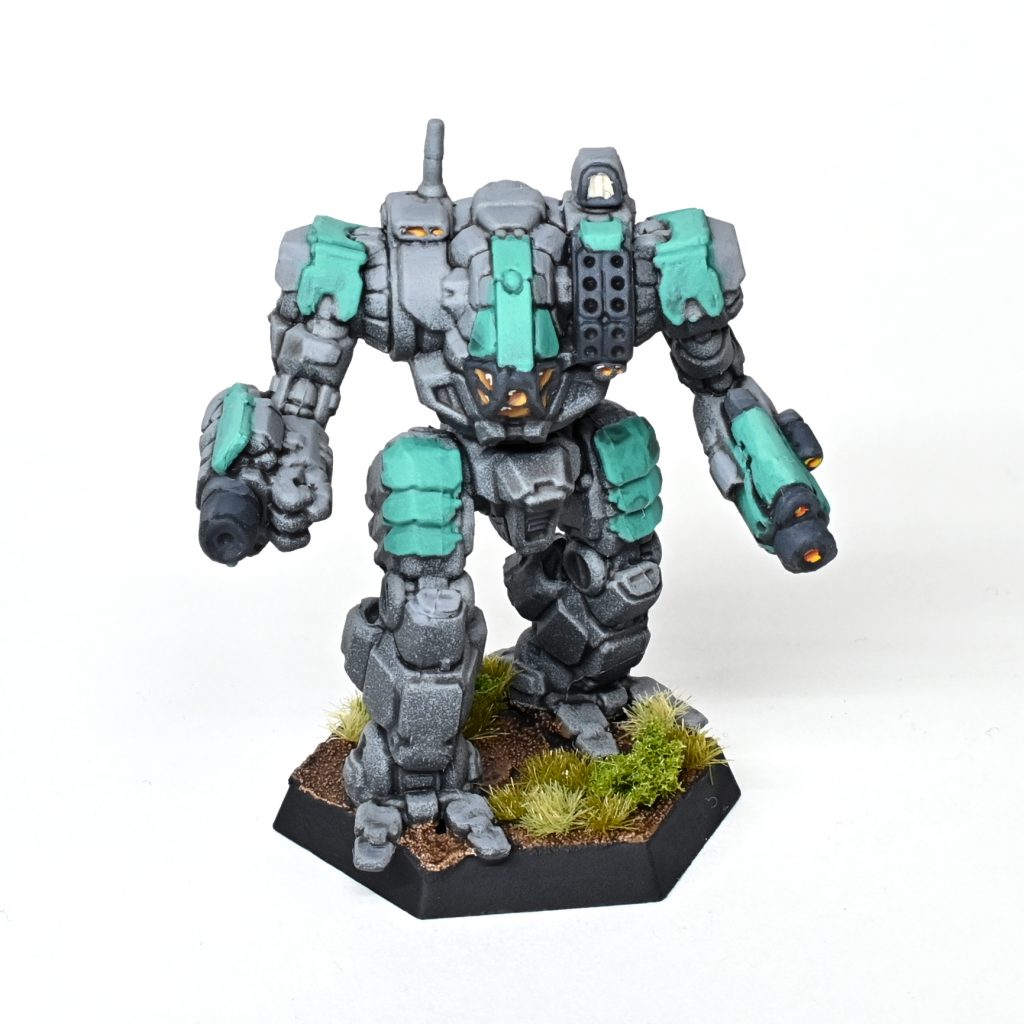 Grizzly. Credit: Rockfish
Final Thoughts
It's difficult to review the first quarter of a story, but I very much like the taste
Star-Crossed Warriors has given me of Young's take on the Dominion Civil War, and I'm eager to watch the rest of this story unfold across the rest of this (real-world) year. I know many fans had complaints with how the sourcebook
Dominions Divided introduced this conflict, but if you're in that camp of critics, I encourage you to check this book out. I think you'll likely find its ground-level reframing of the circumstances leading up to the war persuasive and engaging.
If anything,
Star-Crossed Warriors might be just a little
too believable for comfort. Many real-world countries stand at tense political inflection points of our own at the moment, and there's a lot in this book which feels very familiar to anyone who's been following global events within the last decade or so. Light escapism, this is not, but I do feel like there's something truly emotionally powerful in
relatability, in feeling a sense of solidarity with fictional characters' struggle.
The absurdities of BattleTech are a common topic of discussion among us fans: nonsense weapon ranges, baffling materials science, impossible economic and demographic figures, implausible logistics,
et cetera. Those are all details, though. Technobabble. Set dressing. I think what truly gives BattleTech a sense of verisimilitude is its
human heart. We don't have any all-consuming space bugs here, or beings of incarnate evil, or ancient terrors beyond mortal ken. The faults and foibles, the hopes and dreams, the triumphs and defeats of the Inner Sphere's inhabitants are all founded in the familiar madness of human nature.
Star-Crossed Warriors is the kind of book which really brings that aspect home and makes the most of it. Good stuff.
That's it for this article, but I'm not quite done talking about this book! Come back tomorrow to read an interview with the author, Bryan Young, and catch a glimpse of what's to come in the next installment of The Dominion Civil War,
A Plague on Rasalhague!
Have any questions or feedback? Drop us a note in the comments below or email us at contact@goonhammer.com. Want articles like this linked in your inbox every Monday morning? Sign up for our newsletter. And don't forget that you can support us on Patreon for backer rewards like early video content, Administratum access, an ad-free experience on our website, and subscriber-only content covering competitive Warhammer 40K!Thank you for being a friend.
 This website uses cookies. Learn more.


 Goonhammer Hobby Round-Up: March 2026
 Goonhammer Reviews: Tribal Conquest
 Conquest: Weaver Courts Gemred Knights and Scaile Dancers Model Review