I was fortunate to have the chance to speak with author Bryan Young shortly after the release of his novella Star-Crossed Warriors
last Friday. What follows is a lightly edited transcript of our conversation.
Lynn: Hello! Thank you for agreeing to speak with our readers, Bryan! I feel like I need to lead off with the most pressing question: How do you feel about (co-)winning the most prestigious literary award of your career (which was voted on by the readership of this website)?
Bryan: That was actually a great and truly unexpected honor. And I was delighted to share it with Rusty Zimmerman. Rusty is a terrific author of BattleTech and of Games Workshop fame, and I figured he would be a shoo-in. That we both earned enough votes to tie was a complete surprise. I'm grateful to the readers of Goonhammer and hope they continue in their growing interest in BattleTech. And maybe the folks at Games Workshop see that maybe it might be worth calling up more BattleTech writers to play in their sandbox. Granted, I haven't been up to date on 40k lore since I was a regular player in the mid-90s, but I can catch up. I'm a professional. That's what I do.
I certainly feel you'd have plenty to offer in the grim darkness of the far future!
You have a brand new novella out, the first in a four-part series covering the Dominion Civil War. It's no secret that the Dominion Civil War has been the subject of some vocal complaining from fans who felt that it seemed abrupt, underexplained, or violent enough to beggar belief. I feel like Star-Crossed Warriors, even as just a quarter of the story you're telling, does a fantastic job of contextualizing the conditions which led to the Civil War both within in-universe Rasalhagian history and within political conditions which will be very, very familiar to anyone who's lived through the past decade of real-world news.
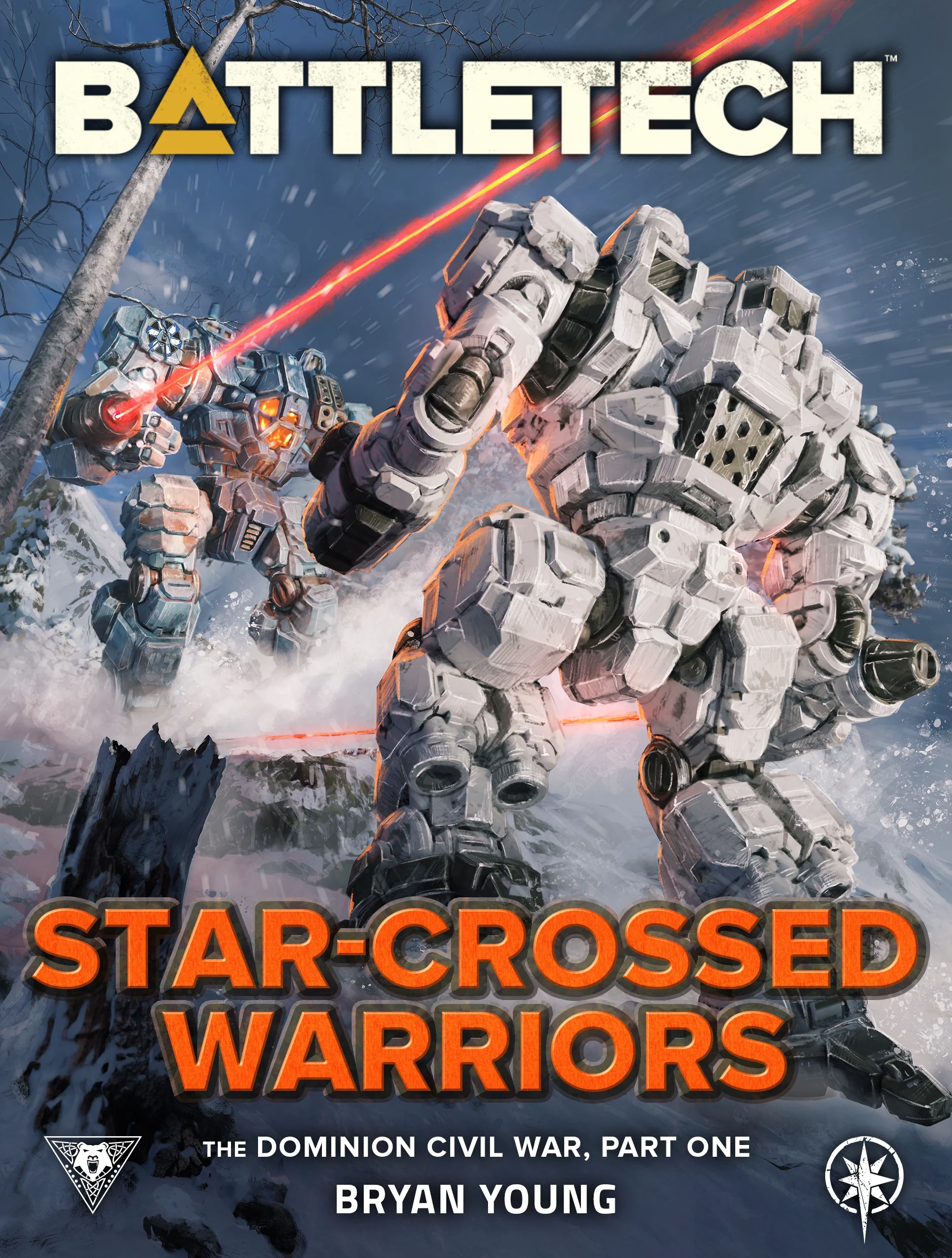 Credit: Catalyst Game Labs
I'm curious, if you're at liberty to say: To what extent is your novella cycle a response to criticisms of the lore presented in Dominions Divided, or to what extent is it the realization of plans which have been in place since before the sourcebook’s release, and maybe just didn't have the page count to breathe prior to this?
Credit: Catalyst Game Labs
I'm curious, if you're at liberty to say: To what extent is your novella cycle a response to criticisms of the lore presented in Dominions Divided, or to what extent is it the realization of plans which have been in place since before the sourcebook’s release, and maybe just didn't have the page count to breathe prior to this?
I don't look at this as a response to any of the criticisms, but a flow of the story that's been in the works for a long time. If you look at the beginning of my work with the civil war in the Dominion, it started with
A Question of Survival, which was released before
Dominions Divided. So it's something that Ray Arrastia, the line developer at Catalyst, and John Helfers, the executive editor of fiction, had been interested in seeing me tackle going back to 2021 or so when they asked me to write that initial book in the first place. Even then, I think we all had the sense that the story would need more space to breathe than just the sourcebook. But if you look to the history of BattleTech, the story has always taken a life beyond the sourcebooks--they’re never the full story.
I would hesitate to say that the messy politics of the Dominion are a response to anything other than the messy history of the Dominion itself. Even more than
Dominions Divided, the chief sourcebook that really helped me unlock the nuance of what was really going on was one I think that might have slipped under the radar called
BattleTech: Historical: Wars of the Republic Era, and it documents so much of the strife that marked the stress fractures that marked the foundation of the Dominion across the last hundred years. Taking that and my love of history, my fascination with strong characters, and the help and guidance of the fantastic team at Catalyst, I was able blend all of it into a story that I hope adds depth, nuance, and an emotional core to the events of
Dominions Divided. Sourcebooks are great for the overview, but for my taste they're always lacking just a smidge of context and characters, which are the two things fiction provides best. The other thing about sourcebooks is that they're just a touch fallible. They're often written with a point of view, and events in them are not set in stone, they might have been misinterpreted or purposely obscured. Take
IlKhan's Eyes Only for example. Yes, it paints a rosy picture of Clan Wolf, but consider that it's really elegantly written from the perspective of Spurlock Connors, the head of Clan Wolf's Watch apparatus. Connors is writing a report to ilKhan Alaric Ward, giving him an unrealistically charitable perspective of events designed to not make Alaric Ward angry. Of
course it's going to favor the Wolves, that doesn't mean that everything that happened in it is the gospel truth. Or even true at all. It's as true as Spurlock Connors understands it and is willing to present it to Alaric Ward at that specific point in time. And the book functions to give players a place to set their games, and it does an excellent job of that. I think
Dominions Divided does the same thing.
For my series of novellas about the Dominion Civil War, one thing we've delved into significantly is the media landscape in the Dominion and the place propaganda has on influencing people and how it can sway votes, something that's happened historically. Its been fascinating to see how some of the issues in the novellas have accelerated since I sat down and wrote them in mid-2024 as well. I’d caution folks against believing they’re a response to current events in that regard, they really are borne of the situations from the sourcebooks themselves and situations ripped from history.
You mention in the afterword to Star-Crossed Warriors that the political conditions leading to the Dominion Civil War were inspired by many periods of real-world history, and you touched on that in your previous answer as well, but there are definitely aspects of the book which feel extremely of-the-current-moment. I particularly got a laugh out of “Kodiak News” as the Fox-analogue anti-Clan propaganda channel. Were there any moments while you were crafting this story where your editors said “Woah, this is getting too real,” or asked you to dial back on the politics?
I think civil wars are inherently political, so that was sort of baked into the assignment, right? I wasn't asked to dial anything back or press anything specific. There wasn't any agenda other than to tell the best story we could. Kodiak News was less Fox News and more just blustering talk radio and podcasts sorts of personalities that have a tendency to proclaim their conspiracy theories as fact, but the name just felt right in that context. Like with
A Question of Survival I wanted both sides of the debate about whether or not the Dominion should join the Star League--and all of the other issues that the vote became representative of--were understandable to readers and no one said, "This doesn't make sense, those people are fools."
I wanted every side of these debates to feel competently represented, even in the context of a slanted, in-universe media landscape. I
think I accomplished that but ultimately that's up to the readers to decide.
I certainly noticed the nuance with which you presented Joiner and Denier viewpoints, and Clan and civilian viewpoints, with all groups bringing some reasonable grievances and arguments to the table. Was this motivated more by an interest in the common humanity uniting each faction, or by an interest in keeping both Joiners and Deniers potentially sympathetic to BattleTech players who might game out their conflict?
All of the above, I think. I wanted to make sure that everything was represented, but I also wanted readers to understand that this cut across all sectors of Dominion society and I wanted them to understand it wasn't just Clans versus civilians. That wasn't my reading of the situation and I don't think that was ever the intention. I also don't think there was any way for the civil war to be believable if it was cut across Dominion Society that way. If the issue was simply, "Do we or don't we join the Star League?” I don’t think anyone would believe they would erupt into a civil war. It had to be about dozens of issues that people attached to that vote, making it emblematic of other things.
I think it's more interesting that way, and I think it's more real that way. We often assign other feelings and emotions to issues, even if they aren't actually there.
That makes a lot of sense, and I particularly liked how you grounded the issue partly in economics... always a common flashpoint for conflict, no matter how much anyone rolls their eyes at Star Wars: Episode One!
Something I’ve noticed across ilClan fiction is that the supporters of the nascent Third Star League aren't always the people you'd expect to be pro-Wolf. That's particularly visible here, with Rasalhague’s anti-Clan hardliners pushing the Joiner position, in part simply to divert the Ghost Bears’ attention elsewhere. Does that come down to individual writers’ decisions, or is there a broader consensus among the ilClan era’s guiding authors to try to differentiate Pro-Star-League/Anti-Star-League perspectives from Pro-Wolf/Anti-Wolf, or even Pro-Clan/Anti-Clan, perspectives?
I mean,
The Phantom Menace is one of my favorite
Star Wars films. On the other hand, whichever
Star Wars film I'm watching is my favorite
Star Wars movie, so maybe that's not the best barometer.
As far as the question about pro and anti-Wolf or Clan, I think it's a mix of our individual tastes in how we present it, and a broader guiding hand in our overall editorial direction. We had a big summit with a number of writers, myself included, a few years ago where we set the overall direction under the guidance of Ray [Arrastia] and John [Helfers], as well as Loren Coleman and Randall Bills. We talk a lot, too, at conventions like AdeptiCon and Gen Con, so we communicate frequently about what's going on and how we portray things. At least I try to. I can't speak to the experience of all the writers, maybe it's different for others, but that's been my experience.
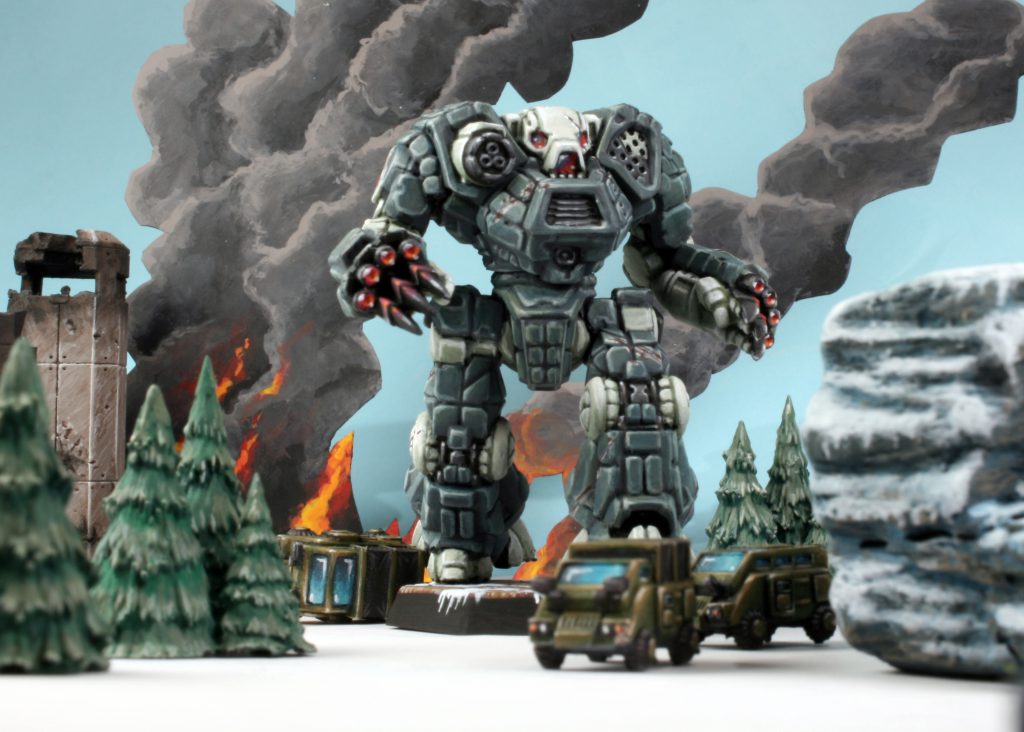 Kodiak. Credit: porble
I thought Star-Crossed Warriors' use of interstitial news broadcasts to fill in broader context happening beyond our viewpoint characters’ immediate experience was a really inspired touch. How did you land on that technique in your writing? Was there ever a draft with the viewpoint characters spread more broadly for a more “traditional” BattleTech approach, or was this always meant to be a very personal story set amidst the Dominion’s broader conflicts?
Kodiak. Credit: porble
I thought Star-Crossed Warriors' use of interstitial news broadcasts to fill in broader context happening beyond our viewpoint characters’ immediate experience was a really inspired touch. How did you land on that technique in your writing? Was there ever a draft with the viewpoint characters spread more broadly for a more “traditional” BattleTech approach, or was this always meant to be a very personal story set amidst the Dominion’s broader conflicts?
It was always this way from the very first draft. Even before that, actually. When we were in the outlining process, Ray [Arrastia] and I talked about what that would add and help us compress and communicate information in the narrative in a way that would be really interesting and brief that was conducive to the serial novella format. It was compact and impactful and I think it works and you'll be seeing it throughout the series.
I was really inspired also by Alan Moore's use of newspapers and The Black Freighter in
Watchmen, how it can reflect and change and add context to the story from a different place. I just love that sort of thing.
It certainly worked for me! I'm an absolute sucker for little blurbs of different in-universe perspectives ("Voices of the Sphere" is probably my favorite recurring feature in Shrapnel), and it's great to get something like that within the context of a developing narrative.
Love, inclusive of romantic love, has been a recurring element in your books, from Alexis's close relationships with Sophie and Thomasin in the Question novels to Arkee and Evan’s marital drama in Lone Wolf and Fox to Dexter and Rhiannon’s complicated emotions in Outfoxed. While Star-Crossed Warriors isn't the BattleTech Romance novel originally announced for a mid-February release, the relationship between Strider and Vespertine is more central to the brewing drama than romance has been in your previous books. Obviously human connections are a huge driving force for our emotions and actions, but they rarely get much attention in the world of wargaming tie-in fiction, and often not in licensed fiction more broadly. How do you feel about the place of less violent themes in fiction written to tie in with wargaming?
I think they're necessary, to be honest. If we're not fighting for less violent things, our human connections and the people we care about, what would we be fighting for? I think about the earliest
BattleTech novels, the
Grey Death Legion and Mike Stackpole's initial trilogies and you have relationships and love
central to the stories, whether that's Hanse Davion's wedding to Melissa Steiner in the
Warrior Trilogy or Phelan Kell's relationships (and ensuing jealousy) in the
Blood of Kerensky trilogy. I think in BattleTech, it's always been a core driving force. And In licensed fiction more broadly, it's even more prominent. I think back to
The Courtship of Princess Leia or what might be one of my favorite
Star Wars books ever, Claudia Gray's
Lost Stars, it seems part and parcel to what makes great tie-in fiction for me. I've read it in
Star Trek, I've read it in
Pathfinder and
Dungeons & Dragons, I've read it in
BattleTech and
Shadowrun. So I would say licensed tie-in fiction, wargaming or otherwise, that
doesn't have romance or emotional relationships between characters would be the exception not the rule. I'd find stories that are absent that element are probably missing something, whether I realized it on first blush or not.
I can say, for my part, that I always find it refreshing when Warhammer novels remember that positive human emotions also exist! Even in the midst of unrelenting misery, humans cling to each other and to whatever spark of hope they can preserve, that's how we endure.
You’ve been open about the role of therapy and mental health in Outfoxed being inspired by personal experience. The intergenerational family squabbles of Strider’s household are another emotional through-line which will hit close to home for many readers. Was their kitchen table also drawn in part from your personal life?
You know, not really. That really came from the desire to put different viewpoints of different generations in the book, pressing on the main characters and make them personal and close to home. Also it was intended to show first hand how blended the Dominion had become. It served half a dozen story purposes and felt like an elegant way of doing it.
Makes sense!
From the title of the next novella announced for this series (A Plague on Rasalhague), it seems like the Romeo & Juliet-inspired titles are a continuing theme for this story, but the actual plot we’ve seen so far bears very little resemblance to Shakespeare’s tragedy. Can you speak to how these novellas found their titles?
I really like the feeling of Shakespeare for titles. Whether it's Bradbury's
Something Wicked This Way Comes or Green’s
The Fault in Our Stars or Huxley’s
Brave New World and I thought it felt fitting here.
Romeo & Juliet to me feels very much about two houses, both alike, divided. And it really has much more to do with that than the love story in my head in this context, to be honest. To me, that's the tragedy of the civil war for the Dominion. That Strider and Vespertine find themselves in a relationship is tangential to that. The titles are not about them, but about the Dominion itself. And I really like Shakespeare. If that makes sense.
Makes sense, yeah.
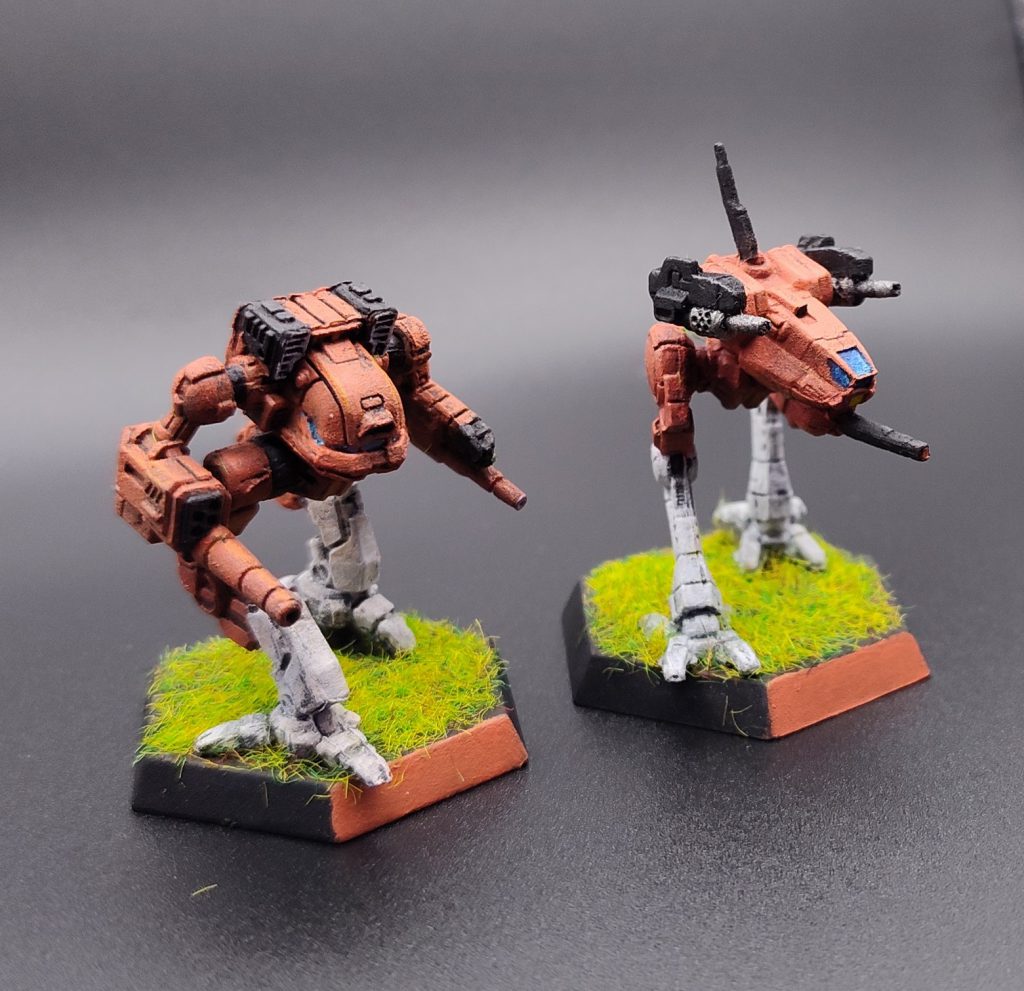 Fox Patrol Kit Fox and Locust. Credit: Lynn B.
I don't want to keep you or our readers too long, but I’d like to ask one question about your Goonie-winning novel, Outfoxed. While I loved the book, as my review would suggest, I’ve struggled a little in talking about it. I want to celebrate that story’s serious themes and strong emotional arcs, but I don't want to repudiate the lighter tone of most previous Fox Patrol stories in the process. I think it's possible to say that Outfoxed’s emotional maturity is a good and necessary step forward for the Fox Patrol, while still holding a heart for the sincere optimism of Katie's journey to get to that point, but it seems difficult to express that nuance. How have you approached that aspect of the conversation around the book?
Fox Patrol Kit Fox and Locust. Credit: Lynn B.
I don't want to keep you or our readers too long, but I’d like to ask one question about your Goonie-winning novel, Outfoxed. While I loved the book, as my review would suggest, I’ve struggled a little in talking about it. I want to celebrate that story’s serious themes and strong emotional arcs, but I don't want to repudiate the lighter tone of most previous Fox Patrol stories in the process. I think it's possible to say that Outfoxed’s emotional maturity is a good and necessary step forward for the Fox Patrol, while still holding a heart for the sincere optimism of Katie's journey to get to that point, but it seems difficult to express that nuance. How have you approached that aspect of the conversation around the book?
For me, it's really about the tight-rope of Katie learning to maintain her optimism but remember that she works in a field that asks her to do violence for money. Part of that is having people do violence to her and her family. It's a struggle that she never quite comprehended in its totality before. I wanted to explore it sooner than I had, but I never felt it was appropriate to do in a format smaller than a novel. With
Outfoxed, I was finally able to have the runway to give that conundrum justice for her. I haven't talked about it at much more depth than that online, but I've talked in person plenty. I did a signing at a game store and found myself surrounded by military veterans and LGBTQ folks, all die-hard BattleTech fans. They spent time sharing with me stories about their trauma and how therapists had helped them in their military experience and how meaningful the book had been to them. We talked a lot about the role of Dr. McPeak and about his sessions with Dex and with Katie and their arcs through the book. It was great to talk to folks who really saw what I was trying to do, but seemed affected positively about it. I hope folks are having those conversations like that whether or not I'm there. Maybe licensed tie-in fiction isn't high art, though we do try, and we
can aim higher, and maybe it
can make a difference for folks.
I'm really glad you had that experience! While I don't have your audience, I've also experienced how reactions in person can take a different (and often more positive) tenor from conversations online. I fully agree that tie-in fiction can have meaningful impact, and I admire authors who aspire to write good fiction regardless of what universe it might take place in.
Is there anything you'd like to say to anygoon who may have clicked on this article out of curiosity without having read your work?
I would invite them to check out my work if they seem even half-way interested in it. They can get signed copies from
my website, but if they've got an Audible account with credits to burn, they can also listen to
A Question of Survival which has won some other awards (none as prestigious as the Goonhammer fiction award, obviously) and its sequel,
Without Question, which are a perfect introduction to the BattleTech universe and my work. But I'd also thank Goonhammer readers for reading this far if they haven't read my work, I hope this might have interested them.
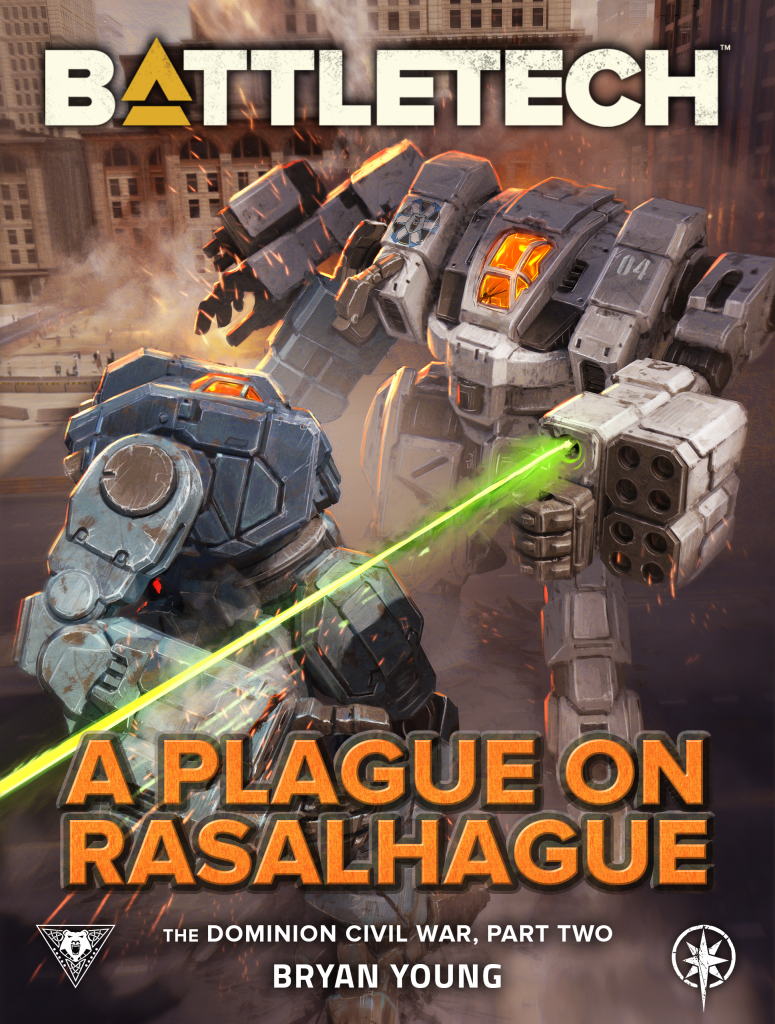 Credit: Catalyst Game Labs
Lastly, is there anything you'd like to share about your other current and future projects, either within or beyond BattleTech?
Credit: Catalyst Game Labs
Lastly, is there anything you'd like to share about your other current and future projects, either within or beyond BattleTech?
Obviously the next part of the Dominion Civil War,
A Plague on Rasalhague comes out on April 10th. In May, my next full length novel in the BattleTech universe,
The Ghosts of Timkovichi comes out. In the realms outside of BattleTech, I recently completed a serial novel that's currently available for free via Michael A. Stackpole's Chain Story project that tells the story of the last of the great Catriders, a mouse knight named
Pip Strongpaw. And if you're interested in Star Wars at all, I do a weekly podcast that's been running for almost 15 years called Full of Sith they can find at
www.fullofsith.com. And if there are aspiring writers out there, Mike Stackpole and I are both teaching in an online writer’s workshop called World of Wordcraft that still has open slots that will yield you one-on-one critique and small group class time. (
https://22literary.com/workshops) But I'm also
always working on something, so if folks sign up for my newsletter they will always be up to date.
Thank you again, so much, for taking the time to talk with us, and for writing such enjoyable fiction!
Have any questions or feedback? Drop us a note in the comments below or email us at contact@goonhammer.com. Want articles like this linked in your inbox every Monday morning? Sign up for our newsletter. And don't forget that you can support us on Patreon for backer rewards like early video content, Administratum access, an ad-free experience on our website, and subscriber-only content covering competitive Warhammer 40K!
Thank you for being a friend.
 This website uses cookies. Learn more.


 Goonhammer Hobby Round-Up: March 2026
 Goonhammer Reviews: Tribal Conquest
 Conquest: Weaver Courts Gemred Knights and Scaile Dancers Model Review