 Image credit: Games Workshop
I can't think of a book this past year that did more to throw the divide between Warhammer 30/40K and Age of Sigmar into stark contrast than the recent
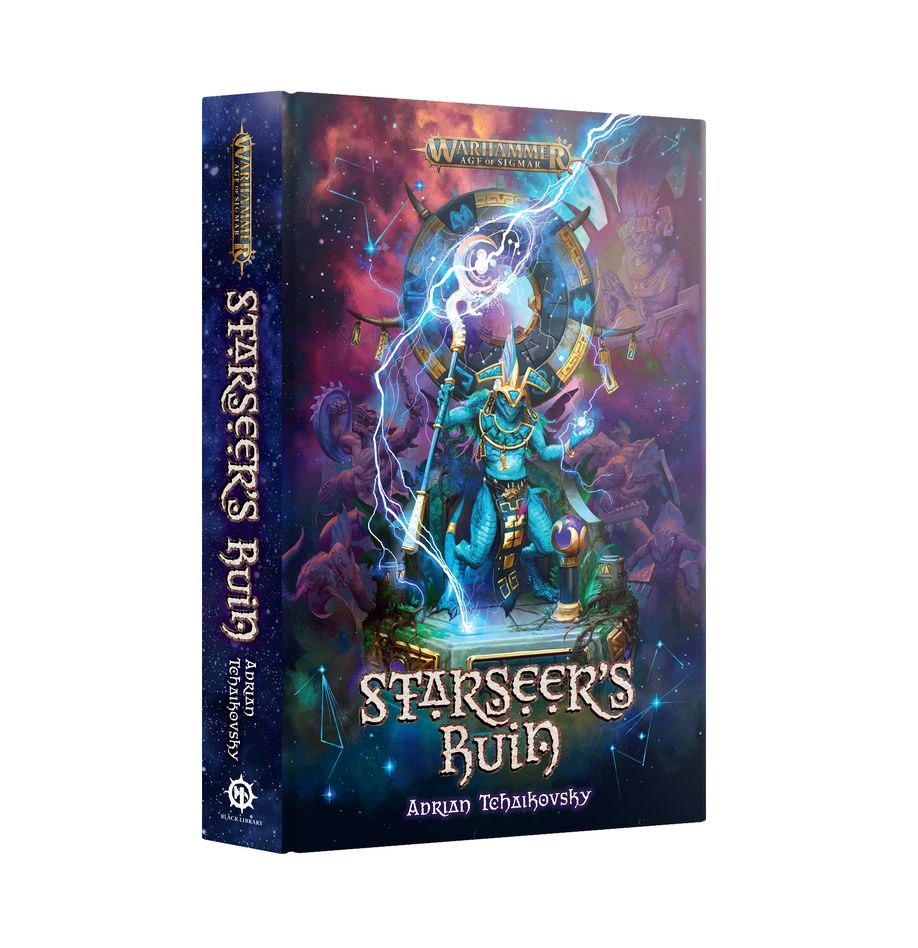
Starseer's Ruin by
Adrian Tchaikovsky (my review
here).
It's hardly a secret that there's a substantial readership imbalance between Warhammer's two properties (sci-fi and fantasy). While Games Workshop managed to revive interest in the fantasy half by, essentially, nuking their old setting (Warhammer Fantasy) and replacing it with a new one (Age of Sigmar), it still remains the suffering sister when compared to the allure of the grim, dark future.
That's not necessarily problematic on its own (different properties have different fandoms, film at eleven
1), when competitions throw them both into the same pit Age of Sigmar tends to get shaded out. The last time an AoS novel charted in the top ten of the Black Library Book of the Year competition was in 2022, when
Soulslayer by Darius Hinks came in eighth
2.
But when an absolute all-star of a book comes along in the Age of Sigmar setting, the lack of recognition for it can border on criminal. In
my 2025 retrospective I awarded Tchaikovsky's latest my AoS Book of the Year, and it's right behind John French's Dropsite Massacre as my overall Black Library Book of the Year.
Not only is it good, but one of the best things about it is how accessible it is. Never read any Age of Sigmar? This is a great place to start.
I had the opportunity to do a bit of a deep dive on the book with Adrian, who very graciously extended his time during the holidays. Because we're looking so closely at a single work, I'd strongly encourage folks to read the book before proceeding, though spoilers won't be too bad.
 Image credit: Games Workshop
GH: Although The Long and Hungry Road saw publication this year in March’s Blood of the Imperium anthology, it was originally published in 2023 and was your last Warhammer 40,000 story. Since then, you’ve stuck to the Mortal Realms. Was this down to preference, or just happenstance and opportunity?
AT:
Image credit: Games Workshop
GH: Although The Long and Hungry Road saw publication this year in March’s Blood of the Imperium anthology, it was originally published in 2023 and was your last Warhammer 40,000 story. Since then, you’ve stuck to the Mortal Realms. Was this down to preference, or just happenstance and opportunity?
AT: Partly I really like the AoS setting, because I don’t get to work in that kind of high magic craziness as much as I’d like. Also, though, you go where you’re sent and [the Black Library] asked if I was interested in, initially, a Cities of Sigmar pitch. I’d already fallen in love with the Fusilier/Ogor miniature after its reveal a short while before, so it was a perfect conflux of factors.
[Note: Adrian's previous work in the setting was the superb novella On the Shoulders of Giants, which featured a wonderfully-portrayed Fusilier and Ogor partnership (reviewed here).)
GH: What are the themes and elements you find most interesting or resonant between Warhammer 40K and Age of Sigmar? What types of characters do you prefer to explore in each?
AT: I think both Warhammer settings have a huge strength in their range of factions. Whilst Space Marines/Militarum/Stormcast tend to get the spotlight a lot, the basic setup of the games creates an enormous idea-space for every faction, because each of those factions is
someone’s favourite army. Just as there are “no good guys”, there are also “no bad guys” because each culture and cult and Imperial division is the protagonist of someone’s game. Orks/Orogs, Chaos, Skaven, Ogors, even Tyranids can have stories focusing them, rather than just have them as antagonists for valiant human champions.
GH: How do you find the process for writing Warhammer different from your own, original work? Obviously here you’re playing in an established sandbox, do you have to tread a bit more carefully or is it just a matter of putting on a different thinking cap?
AT: This was my first ever shot at writing within a (long) established existing universe. It was quite the wrench at first. The editing process for my first Warhammer short,
Raised in Darkness, involved a lot of steering on how to fit within an existing setting. Not just the big stuff, like what’s a Space Marine, but living details you don’t necessarily think about.
The story is set on a dismal mushroom-farming agricultural world and at one point I had the protagonist note it was a far cry from the golden fields of agri-worlds he’d seen. The editors came back with "none of the planets in this universe are in any way nice" which remains my favourite editorial comment to this day. After that, it’s a matter of absorbing the material that exists and finding the interesting gaps that are implied, or that there’s room for, then pitching based on that and hoping it doesn’t contradict something already out there.
GH: Where did the idea for Starseer’s Ruin originate? Was it inspired by Written in Stars, or did it begin as a separate concept that later tied into that narrative?
AT: Written in Stars actually came later – I was asked to do an Advent story based on the book which had just been submitted, and it allowed me to give Irixi a bit of a backstory, given she was noted as having dealt with humans before.
Starseer’s Ruin came about after Black Library asked if I wanted to try a full-length novel for the AoS setting. I’d already collected and painted up a bunch of Seraphon and they have a really unique feel to them – how they relate to the rest of the Mortal Realms, and the other powers of Order. There was plainly a great deal of potential not just in seeing the world through their eyes, but in them striking sparks of their nominal 'allies' against chaos.
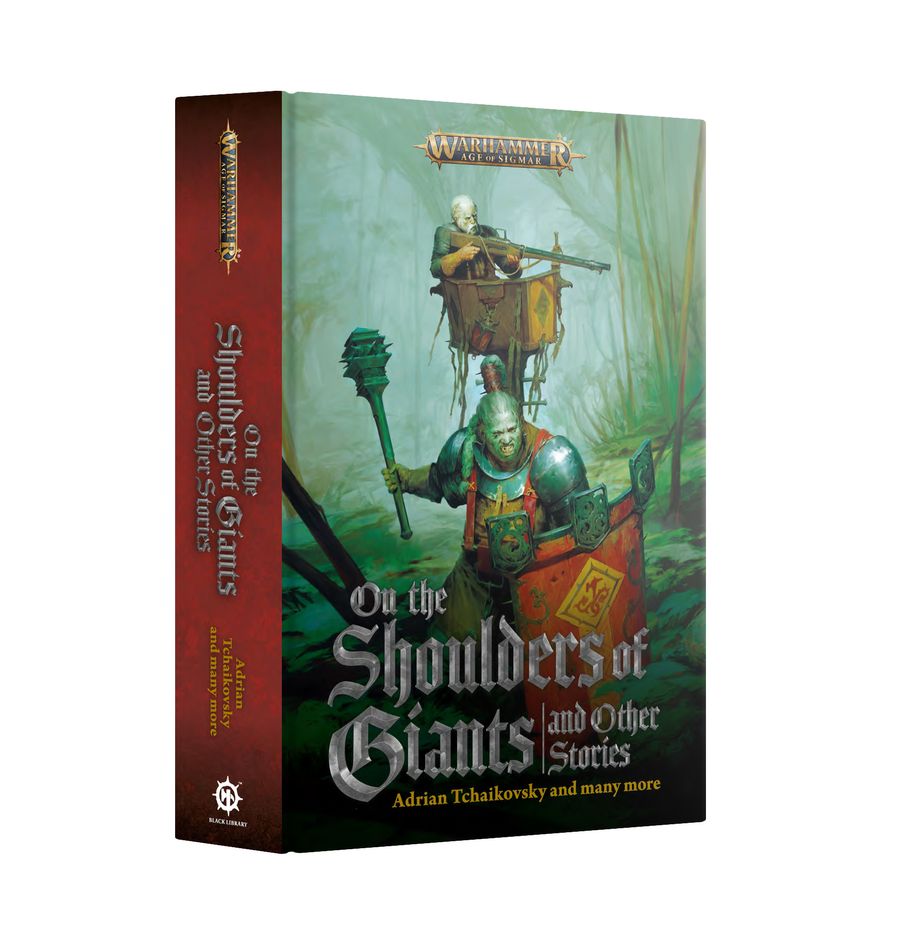 Image credit: Games Workshop
GH: Were there any lessons from Day of Ascension or On the Shoulders of Giants that informed your writing of Starseer’s Ruin?
AT:
Image credit: Games Workshop
GH: Were there any lessons from Day of Ascension or On the Shoulders of Giants that informed your writing of Starseer’s Ruin?
AT: I think all these works, and the shorts I’ve done, are my slowly expanding my range into the wider Warhammer settings. In particular it’s working out where those fascinating spaces are that allow very different creatures to interact at a level that’s not simply violence (although obviously there’s also a great deal of violence!). Hence the peculiar interactions between the Genestealers/Tyranids and humanity that create the Cult, and that Cult’s place within wider humanity (because they’re still partly human); hence
[On the Shoulders of Giants'] Slobda and Rosforth’s carefully negotiated relationship, and hence all the different ways that Humans, Stormcast and Seraphon mix in
Starseer’s Ruin.
GH: What changed during the writing process- whether through edits, discussions with Black Library, or your own evolving ideas- that significantly shaped the final book?
AT: We had an interesting hitch regarding Seraphon gender. I’d completely misunderstood that they’re not creatures with a natural lifespan, being magically engendered in pools, and hence also genderless. I ended up writing them all as "it"
3, which is linguistically complex, as they were also referring to humans as "it". In going through the manuscript and altering the sentence structure for clarity, it actually gave the Seraphon sections a sort of gravitas and dignity, where things were stated in more careful ways, and titles were used a lot more, so I think the book gained something from the shift.
GH: Was there a moment or sequence in Starseer’s Ruin that challenged you as a writer, or that ended up stronger (or different) than you originally planned?
AT: There’s a sequence about 2/3 of the way through where one of the characters, who’s been battling trauma throughout, has a complete breakdown, and you get a lot from his perspective where what he’s experiencing doesn’t map onto the real world at all, and that is always the sort of sequence you’ve got to take care with, to avoid losing the reader. On the other hand I think it’s also a very powerful point in the book, the climax of what felt like a unique relationship to write.
4
GH: In Starseer’s Ruin, multiple factions converge on the ruins of an ancient temple-ship. How did you balance these perspectives without letting the narrative become unwieldy?
AT: Honestly that’s the sort of thing where your subconscious does a lot of heavy lifting. I started out as an epic fantasy writer juggling casts of thousands, and after a while you have a sense of each point-of-view character as a plate you keep spinning, and when you feel them start to wobble for lack of attention you come back to them and give it another turn.
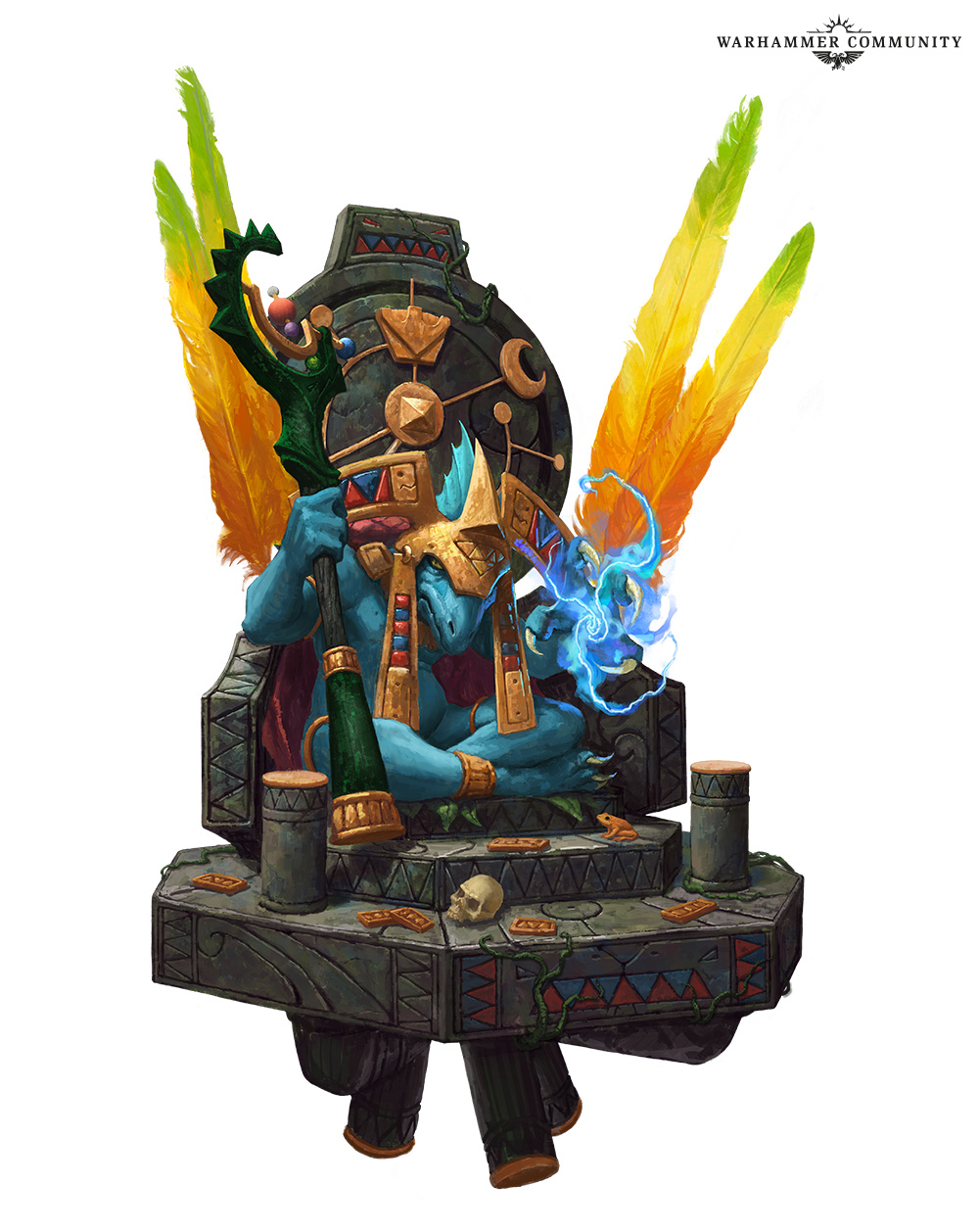 Image credit: Games Workshop
GH: I’d like to talk a little more about your interest in nonhuman protagonists and Warhammer. Day of Ascension was an unusually sympathetic telling of a Genestealer Cults story. In On the Shoulders of Giants you very convincingly portrayed Slobda the Ogor as a "child of a different god," and here of course in Starseer’s Ruin we have Irixi (and Gokumet).
A lot of Starseer’s Ruin is told from that nonhuman perspective, including the main narrative arc that drives the story. This echoes some of your other works, such as the arachnid civilization in Children of Time. What methods do you use to escape overly-anthropocentric thinking when building those viewpoints?
AT:
Image credit: Games Workshop
GH: I’d like to talk a little more about your interest in nonhuman protagonists and Warhammer. Day of Ascension was an unusually sympathetic telling of a Genestealer Cults story. In On the Shoulders of Giants you very convincingly portrayed Slobda the Ogor as a "child of a different god," and here of course in Starseer’s Ruin we have Irixi (and Gokumet).
A lot of Starseer’s Ruin is told from that nonhuman perspective, including the main narrative arc that drives the story. This echoes some of your other works, such as the arachnid civilization in Children of Time. What methods do you use to escape overly-anthropocentric thinking when building those viewpoints?
AT: I always said that Day of Ascension was book about a predatory ideology that sets human life and naught and perpetuates itself through the constantly devouring of lives, and that’s just the Imperium! Whilst there’s a real challenge in making the Cult anything like heroic, the Imperium (and the AdMech) are definitely doing a lot of the heavy lifting. Honestly, as a writer I’m always interested in going places that others haven’t yet explored, and that tends to mean leaving the traditional hero figures behind. Having something really
different as your protagonist is just inherently more interesting to me. Whether it’s uplifted spiders, bioengineered dogs and bears, the Cult or the Seraphon. In Warhammer in particular there’s so much fertile idea-space created by all of these weird species and cultures and civilizations.
GH: As a reader there was one small narrative choice I disagreed with in Starseer’s Ruin. At the end of the book in the final chapter that featured Perlo’s POV, she’s wrestling with the path of her future that’s been revealed to her by the Seraphon and there’s this terrific tension between who has the right of it.
Is the Great Plan of the Seraphon truly unalterable, or is there some desperate hope left for Perlo as she rages against her fate? That seemed a great place to leave it, with that hanging ambiguity, but you chose to resolve it with the words “and she knew that she was lost” after Chaos whispers to her. Was it important to remove any doubt as to her ultimate destiny?
AT: It was a tough call. I think it
could have been left open, but closing the door (in the traditionally grim Warhammer way) felt more satisfying. And besides, we
know it has to happen. We’ve seen it in the prophecy. And apparently her falling to Chaos is part of a chain of events that leads to… eventual good things, from the perspective of the Slann. So Perlo’s fall is a sort of poison chalice for Chaos, perhaps.
GH: Finally, what would you want readers to notice about the craft of Starseer’s Ruin that they might miss on a first read—whether it’s foreshadowing, structural choices, or subtle character beats?
AT: Honestly there is a basic conceit very deeply buried in the story, which is “How the Slann Solve Small Problems.” In this case, Irixi’s master has basically forgotten a small note he previously made, and to him the absolute simplest way to get past this little bout of bad memory is what leads to all the utter madness and colossal magical ritual of the back end of the book. I was just having an enormous amount of fun with the idea of creatures whose minds were so big and spread out that just doing anything in a simple, straightforward manner would never occur to them.
Image credit: Games Workshop
Many thanks again to Adrian Tchaikovsky for taking the time (over the holidays, no less!) to connect with us about
Starseer's Ruin. It's always fascinating to see the author's thoughts around the crafting of a book, and while we sadly didn't get a Special or Limited Edition of this one, we can always hope for the next!
Footnotes
- Yes, I'm old.
- I chewed this bone enough in a recent Black Library Weekly column, so I'm not gonna go into it here as much.
- The sharp-eyed reader will note that in a previous question, Tchaikovsky refers to Irixi as "she." Whether that's a tell as to what gender Irixi was before the de-gendering he mentions here, or a simple typo is a question we'll leave for Freud to answer.
- Since I already warned about spoilers, I'll note that he's talking about Vael, the Stormcast Eternal. The segments in this book about Vael and his desperate efforts to cling to the last shred of his memory of himself is one of the book's most poignant arcs.
Have any questions or feedback? Drop us a note in the comments below or email us at contact@goonhammer.com. Want articles like this linked in your inbox every Monday morning? Sign up for our newsletter. And don't forget that you can support us on Patreon for backer rewards like early video content, Administratum access, an ad-free experience on our website and more.
Thank you for being a friend.
 This website uses cookies. Learn more.


 Goonhammer Hobby Round-Up: March 2026
 Goonhammer Reviews: Tribal Conquest
 Conquest: Weaver Courts Gemred Knights and Scaile Dancers Model Review