With the year coming to a close and events seeing their typical slow-down as the more sane players among us do baffling things like “spending time with their families” while the real sickos retool their lists in preparation for January’s events, we thought it might be a good time to take a look back at the state of competitive play in Warhammer 40k this year. Tenth edition finally hit its prophesied endpoint this year with the release of a whopping thirteen Codexes/Supplements to ensure that every army in the game would have its book by the time of the World Championships in November. And while you’d think that would be more than enough to shake things up, new detachments and dataslates and emergency balance updates were also in the mix to keep things interesting.
Note: We are aware that there actually were some GT-sized events at the weekend. You monsters. We’ll cover them on Friday.
January
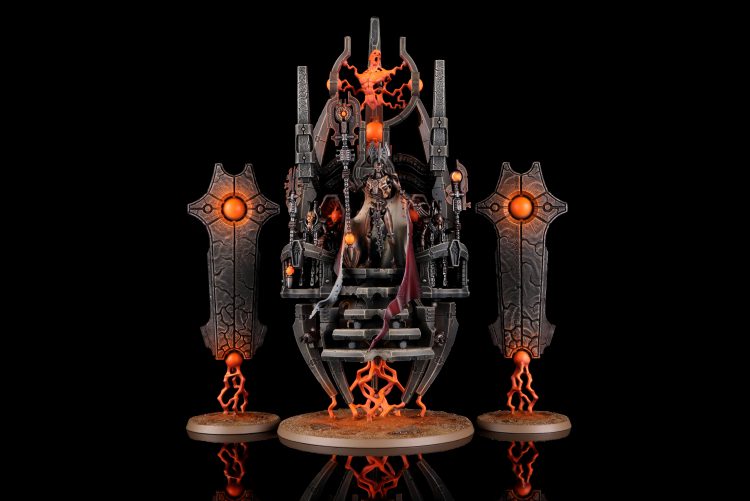 The Silent King. Credit: Pendulin
It’s easy to forget that just one month prior Games Workshop had dropped an unprecedented amount of rules updates to the game, releasing a whopping 30 new Detachments across every faction in the game. Most of the impact of these wouldn’t be felt until early January, thanks to the typical end-of-year slowdown in events. The other big change? Super Oaths, which gave “vanilla” marines +1 to wound when attacking their Oath target. This turned out to be a powerful addition which would help keep marines on top of the meta for most of the year.
- The Grotmas 2024 hangover hits, with Legion of Excess Daemons, Bridgehead Strike, Starshatter Necrons, Warpbane Task Force and Taktikal Brigade making the biggest splashes, and Creations/Solar Spearhead also notable.
Rob: Plague Legion few under the radar here despite strong early showings and more or less continued to do so for the entire year. And pour one out for Librarius Conclave, which had strong initial results but would end up just being another casualty in the “Not Good Enough to Compete with Gladius” category. And the new Deathwatch Index deserves an honorable mention here, since it was brutally efficient early in the year.
Lowest of Men: Reaper’s Wager also did the Lord’s work and kept things fun and interesting for Drukhari players, and grew into competitive play as more egregious detachments were toned down.
- Astra MIlitarum Codex releases - solidly all-rounder, but most exciting for adding Dorn Commanders as a building block for Combined Arms lists.
- Codex: Aeldari releases. This made a lot of people very angry and has been widely regarded as a bad move.
- Bloodless Angels. Enterprising competitive perverts (we’re looking at you, Innes) figured out pretty quickly that you could pair non-Codex-Compliant Chapter Detachments like Liberator Assault Group with the new super Oaths rule so long as you didn’t bring any BLOOD ANGELS units, and it turns out that getting +2 Strength and +1 to wound on the charge is very, very good! This was a pretty dominant strategy until it was shut down in the Q1 Dataslate.
Curie: I really wish they’d taken this as a hint that maybe +1 to wound wasn’t the way to buff codex-compliant marines and looked at other options.
February
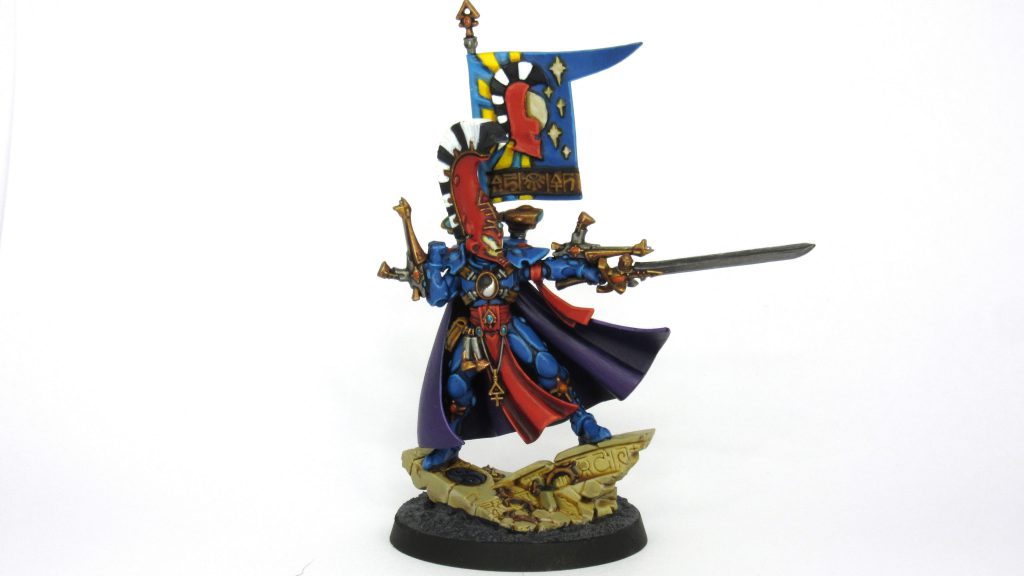 Asurmen. Credit: Wings
The weather outside may have cooled but things were heating up for competitive play as the Aeldari joined the mix of powerful Grotmas Detachments.
- Bridgehead goes from strength to strength in the early parts of the month, alongside Chaos Daemons, Blood Angels and Necrons.
- Aeldari Make a Splash. The Aeldari Codex kicks into gear in the back half, as Ynnari and Aspect Host begin to flex their muscles.
Lowest of Men: The Aeldari book was phenomenal on release, and it is a testament to how mind-bendingly strong release Ynnari was that it completely overshadowed entirely legitimate and deadly Phoenix Lord based builds in Aspect and Warhost for months.
- Imperial Knights climb up the rankings as people catch on to just how efficient Armiger-heavy builds are.
March
 Credit: Robert "TheChirurgeon" Jones
The Q1 dataslate
Credit: Robert "TheChirurgeon" Jones
The Q1 dataslate hit in March, giving us not just a balance pass but an additional three new Detachments for existing armies and an entire new index.
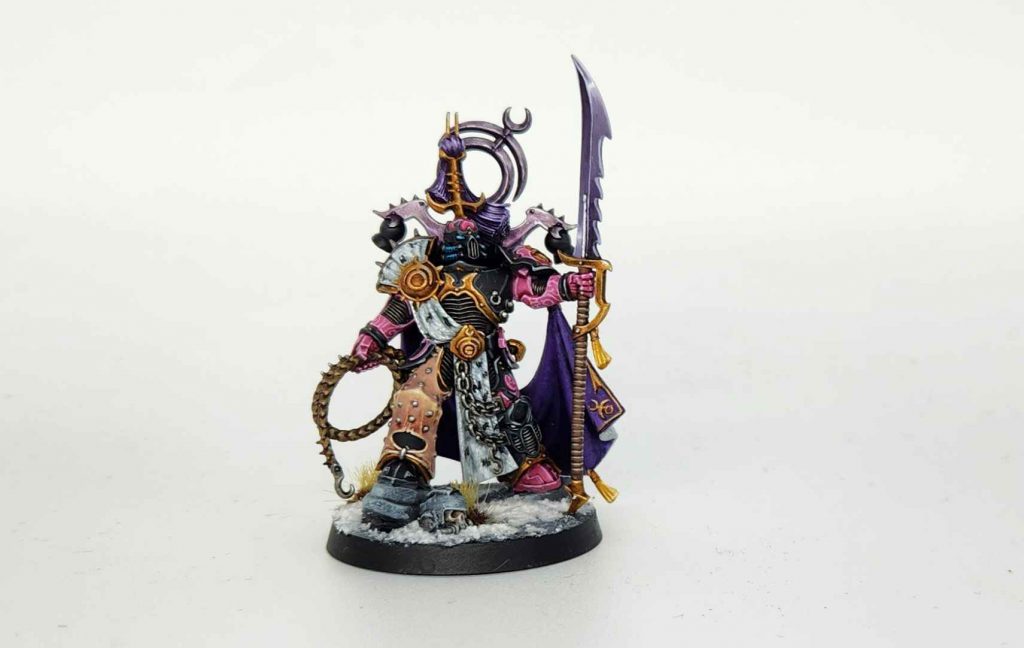
- Codex: Emperor’s Children arrived, completing the quartet of cult chaos marine books started back in seventh edition with Thousand Sons. The book provided a strong core of datasheets (Winged Daemon Princes, Infractors, Lords Exultant, Noise Marines) which powers high-speed pressure builds to this day (despite two rounds of nerfs to the Princes). There aren’t a lot of datasheets in the book, but the ones it has are strong.
Lowest of Men: The historian in me demands that we recognise that a great many had written off the overall competitive viability of Emperor’s Children after a few months, before John Lennon murdered more or less everybody at WTC and revived wider interest in the faction with a vengeance. It has been a competitive staple ever since.
- The first Dataslate of the year arrives, with the most notable changes being:
- A completely revamped Index Daemons, with a new Shadow Legion detachment and a bunch of Datasheet rewrites. This was great news for everyone except Slaanesh, who paid for their Grotmas crimes with substantial nerfs, from which they’d never really recover.
- A new hyper-potent Ork Detachment, the notorious More Dakka. More on that in April.
- A conspicuous lack of changes to Ynnari.
- More Dakka immediately explodes onto the top tables at the end of the month, taking all three undefeated podium spots at the 200+ player Rocky Mountain Open.
April
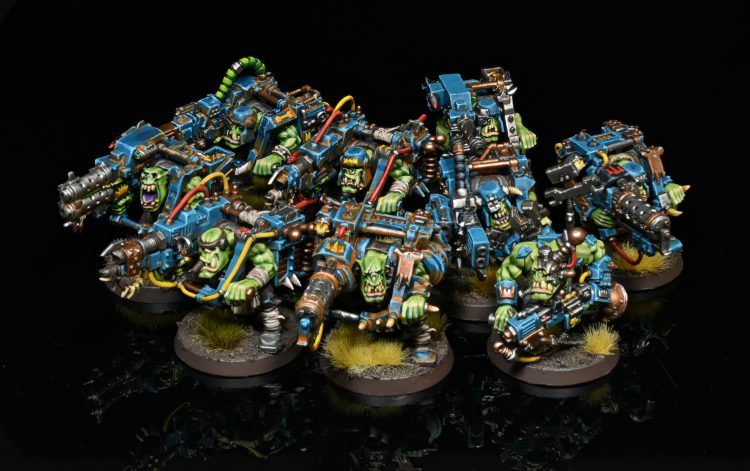 Lootas. Credit: Rockfish
By April our
Long Mercifully Short National Nightmare of More Dakka! Had begun, and we’d get the first of two emergency balance updates in 2025 as a result.
- The sheer horror of the first few weeks of More Dakka (including some events choosing to ban it outright) stirs the studio to action, and an emergency nerf is dropped, nuking it and returning Taktikal Brigade to the top of the Ork pile. This is good, but leaves the field clear for Ynnari to dominate.
- The Death Guard and World Eaters codexes arrive. Death Guard lands ultra-pushed, full of very powerful Datasheets at low prices. World Eaters has more of a soft landing, as a big focus seems to be tuning down the power of the Index Strategies, but the Khorne Daemonkin detachment starts strong, and over time people have come to love the new Berzerker Warband more and more.
May
The changes keep rolling in, with powerful new options each month. Death Guard land strong, World Eaters slowly build steam, and Space Wolves and Thousand Sons make a quieter, but significant, contribution. This would be the last month of the Pariah Nexus format.
- Ynnari and lists that can beat them (mostly Warpbane Task Force and Coterie of the Conceited) dominate the early parts of the month.
- Death Guard start to make a (disgusting) splash in the back half of the month, with Ynnari and Imperial Knights continuing strong.
- The Thousand Sons Codex lands, another eye-poppingly potent book, albeit held in check by a poor matchup against Death Guard.
- Space Wolves get a new book, with some very solid Character and elite Datasheets giving them plenty to work with (though it doesn’t formally come live till June, as this is an army box release).
- Chapter Approved 2025-2026 arrives, providing a solid set of changes to the core missions and Secondaries, but what will turn out to be a failed experiment with a new comeback mechanic in Challenger Cards.
Lowest of Men: As an experiment, Challenger cards offered some entertaining moments (surprise fall back shoot and charge baby!), but did enormous damage to early high-scoring pressure lists and armies that died for the cause to win on score. They were also utterly brutal in the hands of slow-burn winning builds like Thousand Sons and Mortarion’s Hammer Death Guard, who reaped the benefits for some time before the experiment was abandoned.
June
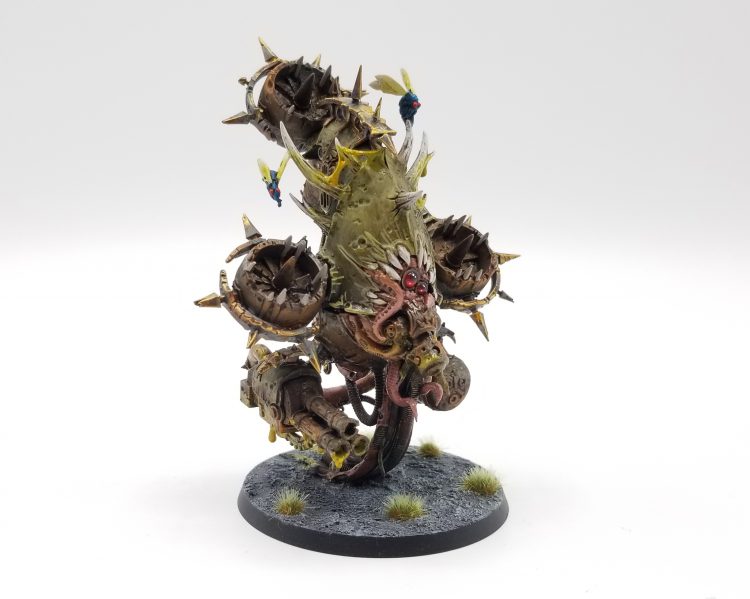 Heavy Blight Launcher Bloat-drone Credit: Robert "TheChirurgeon" Jones
A new Dataslate mixes things up just in time for an update to Knights which would completely upend the meta. Bucking tradition, the Knights releases were split for the first time, so instead of getting Chaos Knights and Imperial Knights at the same time, we only saw a Chaos Knights Codex update, while Imperial Knights received datasheet updates but not a new Codex, and were able to run wild as a result.
- The Dataslate arrives, and this time succeeds in spiking Ynnari into the ground, but unfortunately comes too soon after the Death Guard release to give them the point increases they need. Elsewhere, there’s lots of love for underperforming factions/units, and Dark Angels and Tyranids pick up strong detachments that have powered them since.
- Knights (mostly) arrive, poised to hit the metagame like a freight train. Aggressive pricing on big Knights allows the new Lords of Dread and Infernal Lance detachments in the Chaos Knights codex to dominate, while an updated Imperial Knight index smashes foes via the raw efficiency of Canis/triple Atrapos builds.
July
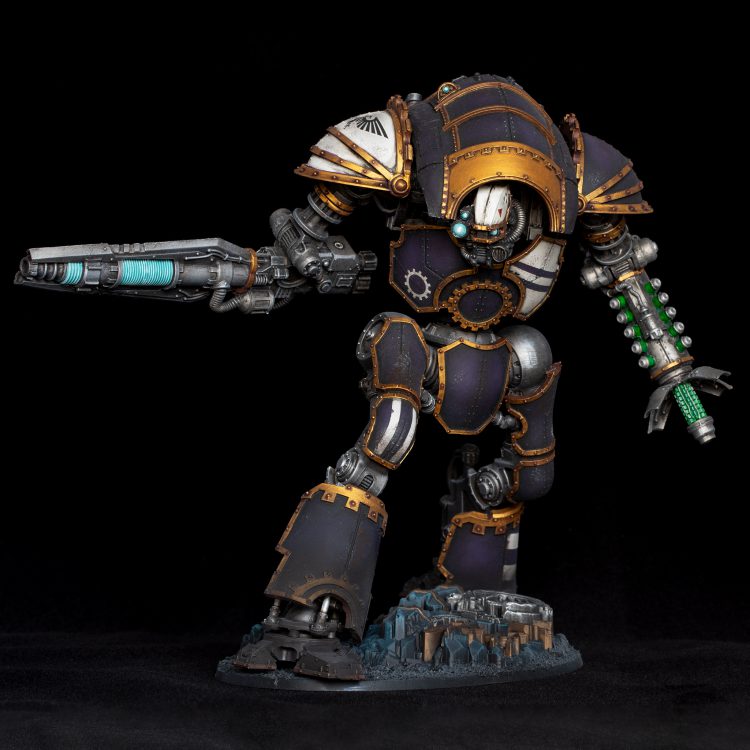 Loyalist Knight Atrapos. Credit: Jack Hunter
By July it was clear some mistakes had been made. The new Knights were absolutely dominant, and anything able to deal with them was likely getting eaten alive by Death Guard. Eventually some of those Death Guard lists would start adding a double battle cannon Despoiler, just to add insult to injury.
- July has probably the most one-note metagame of the year outside of the few weeks More Dakka was legal - Knights and Death Guard are the only game in town, and it isn’t even slightly close.
- Grey Knights arrive with a bit of a whimper - the book mostly amps up existing Warpbane lists with some improvements to Purifier and Dreadknight Datasheets.
- Black Templars, meanwhile, arrive with a resounding cheer - a potent alternative to Oaths and some great Datasheets set up Templar Gladius as one of the enduring builds of the back half of 2025.
August
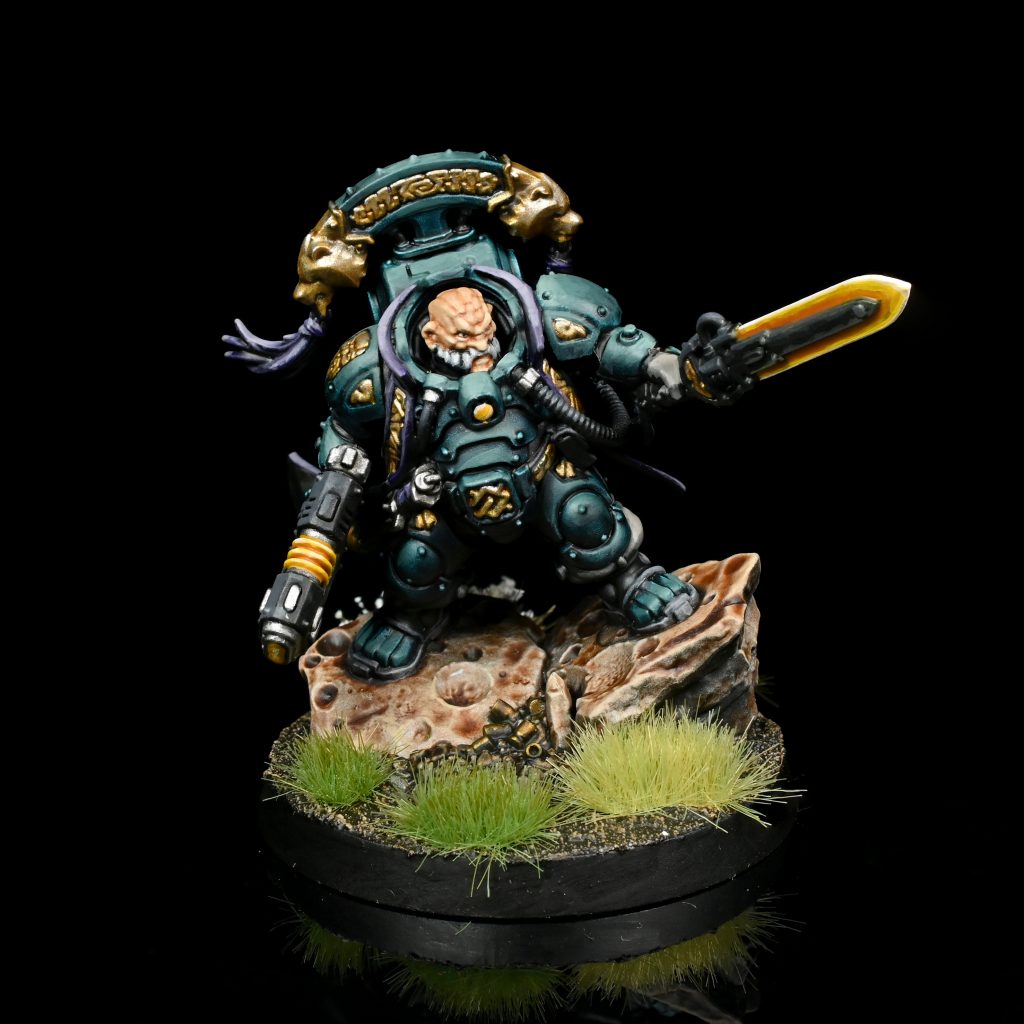 Ûthar the Destined. Credit: Rockfish
Our new National Nightmare continues into August, as Knight Summer dragged on and through the 2025 WTC. The mess would eventually give us our second emergency balance update of the year, giving us point hikes on Death Guard, Chaos Knights, and Imperial Knights units.
- The Leagues of Votann received their new Codex and a dozen new units added to their range. It’s a solidly all-rounder book launched into an absolute hellscape. Once the dominant builds get their come-uppance, it’ll put up OK results.
- Aeldari seize the opportunity to creep up the rankings. Aspect Host builds designed to beat Knights turn out to, uh, beat pretty much everything else too.
- Speaking of the hellscape - an emergency early release of Dataslate points for Death Guard and the Knight factions brings some relief, though ironically for Chaos Knights it ends up somewhat improving their performance long-term, as players normalise onto the double gatling Despoiler builds rather than Lords of Dread.
- The gradual wave of Marine releases for Codex chapters kicks off fairly softly with vulkan and an updated version of Firestorm, Forgefather’s Seekers.
- France wins the World Team Championships, attacking the metagame by passing up on Knights when everyone was building to counter them.
- A number of potent teams lists - Host of Ascension Neophyte spam, Chaos Cults AC/DC in CSM, and Berzerker spam World Eaters - are unleashed upon the singles world in the wake of WTC.
September
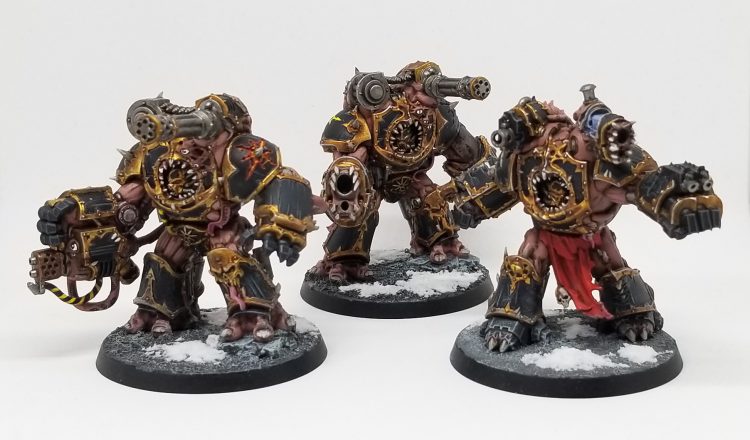 Credit: Robert "TheChirurgeon" Jones
The points updates appeared to have the intended effect, cooling things off for Death Guard and Knights and opening the field up a bit. This would happen just in time for the
full balance Dataslate to arrive, bringing nerfs for Thousand Sons, massive buffs for AdMech, and not really touching Aeldari, setting the stage for the final quarter of competitive play. Challenger cards were also killed stone dead, to general acclaim.
- The Imperial Knights Codex is released, with somewhat muted impact - the raw power is a little lower than the Index, and the one busted-looking plan from the book (all-in Valourstrike) gets toned down pre-release.
- The second set of Marine releases brings some serious power - Aethon Shaan and the Shadowmark Talon detachment for Raven Guard create an immediate contender for best Codex Marines.
- The Drukhari Codex launches, with lots of raw power but more prohibitive point costs than the other big releases of the year. Wych Cult units get juiced up substantially, and Spectacle of Spite ends up being the biggest news out of the book.
- Liam Vsl wins the LGT, the biggest tournament of the year, using Veterans of the Long War CSM.
Rob: This was an incredible move of trolling by perhaps the best player in the game, convincing CSM players around the globe that maybe they too, could win an event with this Detachment. Liam would go on to tear things up at the World Championships with Aeldari.
October
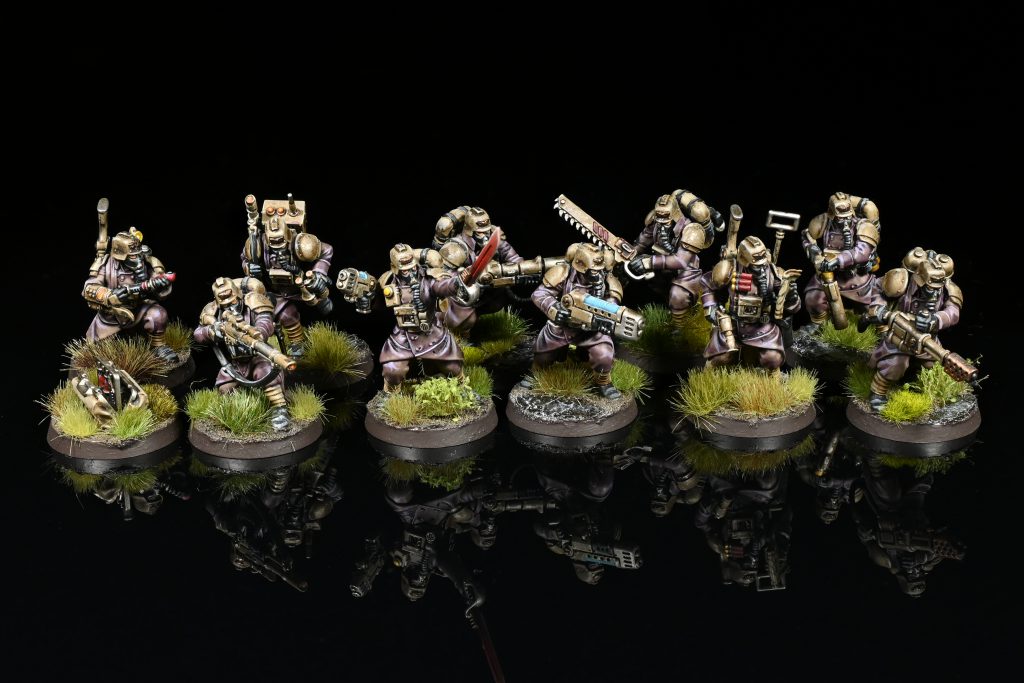 Death Korps of Krieg. Rockfish
Knight summer is over and now it’s time for a healthier meta to take its place in the fall. The metagame hits probably the most dynamic and exciting patch of the year - while some factions (notably Aeldari, Sisters and AdMech) are overtuned, it takes players a while to iterate to the optimised versions, and different strategies come to the fore each week as new things get tried.
- In that spirit, the Las Vegas Open is won by Nemo the Fish using the left-field strategy of Recon Element Guard horde.
- Suboden Khan and Caanok Var release, the White Scars seeing some limited usage, but neither really challenging existing powerful Marine strategies; Raven Guard, Ultramarines, Dark Angels and Black Templars can all compete at the top.
November
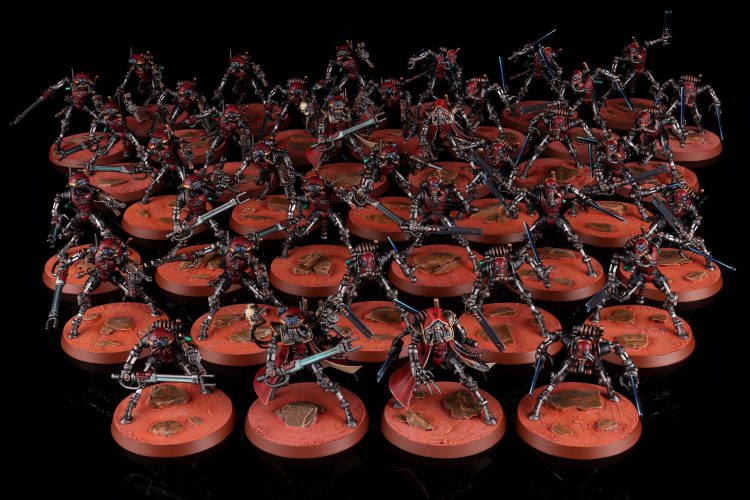 Sicarian Infiltrators and Ruststalkers. Credit: Pendulin
With the Q3 balance update still pretty fresh we went into the 2025 World Championships with a bit of uncertainty around the top builds. Events had been pretty dynamic leading into November, though it was clear Aeldari were among the game’s top factions. What wasn’t clear yet was just how strong Admech and Sisters had gotten after a year of small buffs, which finally tipped them over the edge.
- The World Championships of Warhammer bring an end to the wide open metagame, with Aeldari and the Adeptus Mechanicus utterly dominating when the best players in the world bring their A game. Fittingly, these two factions clash in the final, with Richard Siegler’s AdMech defeating Liam Vsl’s Aeldari.
- Raven Guard continue to do a solid job of stopping those factions having things entirely their way, while Sisters properly hit their stride with a series of dominant performances.
- Ultramarine reinforcements arrive alongside the new Blade of Ultramar Detachment, with Victrix Guard turbo-charging the most Codex Marines.
December
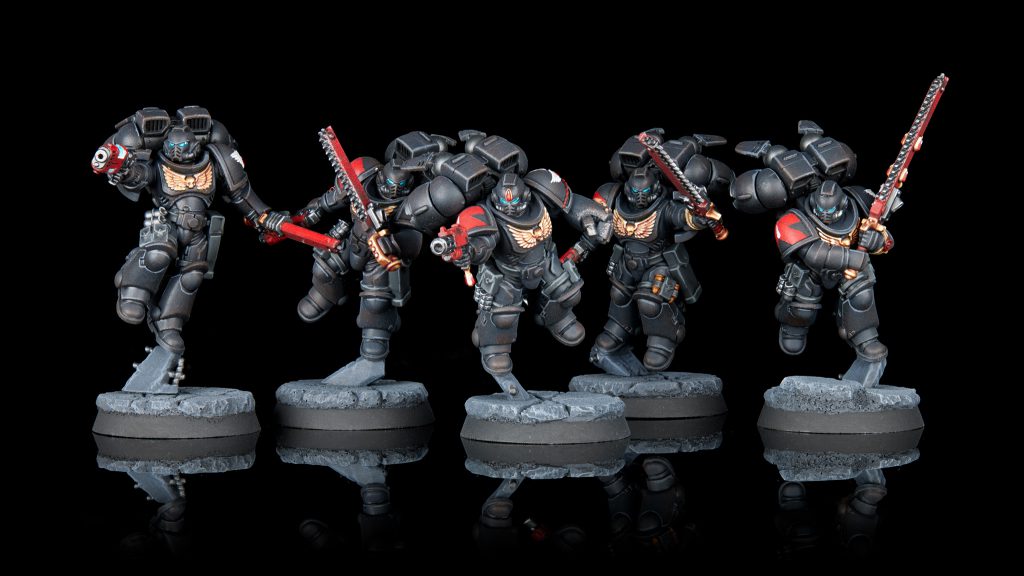 Blood Angel Death Company marines with jump packs. Credit: Jack Hunter
Everything old is new again, and the ghosts of the World Championships continue to haunt the field as Victrix Guard dominate, alongside the residual strength of Aeldari, AdMech and Adepta Sororitas.
- A Q4 Balance update drops the hammer on Aeldari while giving us point nerfs to Victrix Guard, Sisters, and Adeptus Mechanicus.
- We end as we began - Grotmas brings gifts for some and nerfs for others, with Grizzled Company and Rage-Cursed Onslaught putting Guard and Blood Angels back into the conversation, and Aeldari receiving a small consolation prize with a new Harlequins Detachment as the rest of the army goes back on the shelf.
Final Thoughts
 Wings:
 Putting this together was a weird experience, because it highlighted that this year has been
pretty bumpy by some measures, but it’s generally felt a lot better than that.
As always happens when an Edition gets into its stride, the studio is now
better at writing rules for it, and that tends to mean there’s a lot more power in every new release, and a much higher risk of it landing hot. In the middle parts of this year, this coincided with some very aggressive starting points for new releases to give us a little bit of the dreaded Ninth Edition energy, where the metagame was completely bowled over by each successive Codex unleashed upon us. To be clear, we never hit anything as
bad as Ninth was, because (with the dishonourable exception of
More Dakka) the rules themselves were never as busted, and Tenth’s Detachment system does a better job of applying guardrails, but it still wasn’t super encouraging to see, and a few of the worst point offenders definitely should have been obvious. The presence of the Aeldari Codex also somewhat legitimately helped smooth the edges of the rest of the year, particularly Knights when they were at their worst. Such a selfless move from everyone’s favourite faction.
Much more than roving elves, the thing that’s kept the competitive game positive and thriving is how responsive the GW studio now is, combined with a
generally much improved sense for pitching balance updates. Problems have simply not been allowed to fester, and
other than persistent failures to fully grapple with the Aeldari Codex till the December update nuked it, the first big hit on each problem child has generally solved it. The speed of action has generally improved as well - it only took weeks for the More Dakka PDF to be replaced with big word art saying “Nuffing to see ‘ere”, and when it was clear after their first quarter that Challenger Cards were a failed experiment they just got liquidated rather than us suffering through several rounds of trying to “fix” them. Remember Challenger Cards? They only died three months ago and yet I have fully expunged them from my brain.
The other thing that’s helped a lot is how much smaller the gap between top builds and everyone else is in Tenth. Even when very strong stuff has been dominating, other books have been able to
participate with some degree of success, and the competitive game feels far more accessible and vibrant as a result. Codexes that have landed at more middling power level have also not been complete washes - World Eaters, Votann and Drukhari all had slow starts out of which real builds emerged, which was fun to watch. More pure digital rules is good too - new detachments either with Dataslates or miniature releases (e.g. the Codex Marine ones) helps keep things fresh.
All of this means that I’ve had a tonne of fun playing Warhammer at tournaments this year, and if you’re reading this, you probably have too. The weekly number of events and average player count has ratcheted up throughout the year, and we’re at a point where a
normal weekend is 15-20 2-day events, with ~800-1200 participants, with player numbers spiking up further whenever an especially large tournament occurs (such as this year’s London Grand Tournament, the biggest 40K event ever). This level of energy is fantastic to see, even if it is probably going to force us to make some
small changes to the column in the new year to keep it viable.
What does 2026 hold? Lots more Warhammer, probably. Tenth is now Codex-complete, and the field looks pretty wide open, so we should have some good months ahead of us. Simple maths and pattern recognition would suggest that we might have some bigger changes coming later in the year (and a need to book the guy who does the big stone sign outside our office in Goonhammer HQ), and whatever those may be, we’ll be here to provide a weekly roundup of the tournament world. Also, thank you for continuing to make me laugh with army list names, and thanks to the TOs who have taken my rant about the challenge of finding mission details for Showdowns to heart. Happy New Year all.
 Rob:
Rob: What a year. It’s insane how many releases and updates we had this year and putting it all down really underlined just how much of a firehose of content Games Workshop can put out. I’ve been tickled recently hearing Age of Sigmar players complain that the game is changing too much or moving too fast and I can only think “huh, I actually feel like 40k got stagnant a couple of times this year.” The studio has been doing a stellar job this year staying on top of updates when they were needed, though admittedly some of those errors were completely unforced.
The fun part is there have been multiple times over the last year or two when I’ve heard someone say something like “x is killing the game,” or “this is killing player enthusiasm” but by every metric that’s just not true - we’re looking at more events than ever, firing all the time. I think it’s a bad time to be trying to put on a major but the landscape is stuffed with smaller 30-60 player events, to the point where players can easily pick and choose which ones they want to go to. We’re still on the upswing when it comes to the popularity of competitive 40k.
 Curie:
 It’s definitely been an interesting year - it felt like a very slow start after the rather quiet fall 2024 that had very few releases. Grotmas was a welcome surprise and definitely
set the meta tone for the start of the year, and then books started to arrive very quickly, with each one shaking up the meta in its own way.
While I agree that the studio has gotten better at writing rules within the context of the edition, it does feel like they could take a little more time on the releases they had rather than generating additional ones (such as Grotmas or the quarterly detachments). We now sit at a point where there’s nearly 200 detachments to keep track of, but a very small number of them make up the vast majority of games played. As an example, from September to December of this year we at Stat Check tracked 55,300 games played, of which codex-compliant Space Marines made up 4,110 games, or 7.4% of the games played. Of these games, 2,269 of them were either Shadowmark Talon or Gladius Task Force. Meanwhile we saw two additional releases that were reworked 1st Company Task Force detachments (18 games played at events for 1st Company btw) rather than adjusting the existing detachment. Similar story with the recently released Chaos Space Marines Nightmare Hunt that was a reworked Dread Talons.
All that being said, I’ve had a blast with this edition so far. It’s the best written edition to date, and the studio has become much more involved with the competitive scene, from growing the TO support program they run, to expanding the rules support they’ve been providing with more regular updates. I look forward to playing a lot more warhammer in the new year and seeing how they build on this “complete” edition as Wings referred to our current spot.
Lowest of Men: This year saw some real highs and lows in terms of game balance, but, as others have alluded to, the game (and playerbase) invariably found a way through them, and anything insurmountable was dealt with pretty quickly and effectively. In singles, this has meant a year defined by the top players largely playing armies they love and are experts in, and typically doing best when they did so, no better demonstrated than by the Liam VSL (CSM) and Alexandre Sacco (Drukhari) final at LGT, with the two European masterminds playing armies that weren’t in anybodies top-meta consideration prior to the event. This kind of nonsense makes my heart sing. In teams, we saw some deliciously devious solutions to problems unleashed, and a WTC which had a lot of genuine innovation and last minute problem solving in a very stormy meta.
The game has been one in which the very best can find their own solutions, and can create interesting builds, and from the standpoint of analysts of the game like ourselves, this is really good news. There is still a little bit of that ‘releasing 100 mongeese to catch the 100 cobras we released last time’ in the rules cycle at times, but the knowledge that things change rapidly, and usually for the better when they’re bad, makes it all entirely navigable. It cements Tenth for me as the best of the editions I have played - the question now is how to build on it successfully in a future edition!
Have any questions or feedback? Drop us a note in the comments below or email us at contact@goonhammer.com. Want articles like this linked in your inbox every Monday morning? Sign up for our newsletter. And don’t forget that you can support us on Patreon for backer rewards like early video content, Administratum access, an ad-free experience on our website and more.Thank you for being a friend.
 This website uses cookies. Learn more.

 Goonhammer Hobby Round-Up: March 2026
 Goonhammer Reviews: Tribal Conquest
 Conquest: Weaver Courts Gemred Knights and Scaile Dancers Model Review