 Image credit: Games Workshop
Do we really need another story about this?
Image credit: Games Workshop
Do we really need another story about this?
If there was one overarching sentiment I heard about
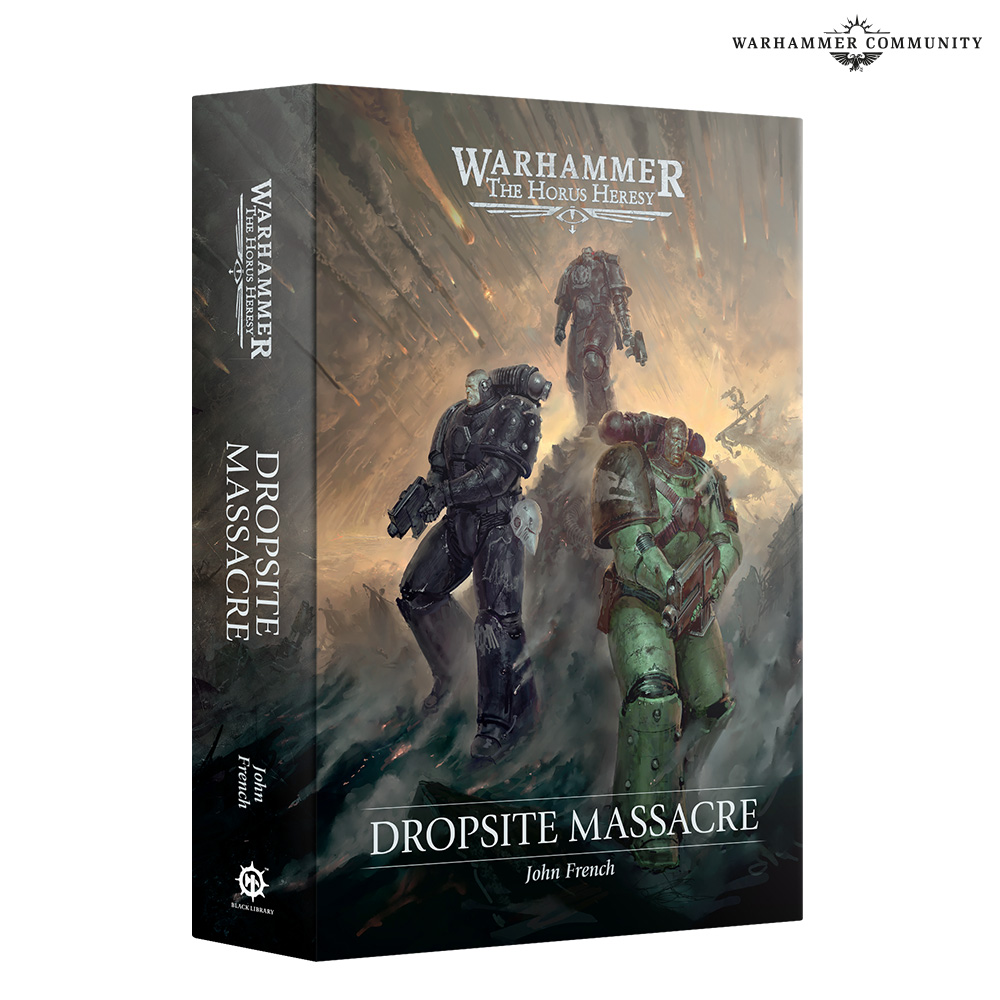
John French's Dropsite Massacre after it was revealed, this was the one. It was no slight on French, who has done well with his Ahriman series and has been writing Horus Heresy for nearly as long as he has Warhammer 40,000 (
Fateweaver was in 2011, followed closely by
The Crimson Fist in 2012).
Rather, there was the sense that this thing had been done to death, and really didn't warrant another retelling. We may well have heard the same misgivings were the author
Dan Abnett or
Aaron Dembski-Bowden.
And you know, I kinda get it. The Horus Heresy ran for fifty-four books before another dozen in the Siege of Terra. The ground has been richly mined. But here's the thing- I'm only eight books in to the series myself. It was never much of a priority before (beyond the "First Five,"), and now that much of my reading is determined by what books to review for Goonhammer it's not easy to make a lot of progress.
Perhaps that was a feature instead of a bug, reflective of a recent push to make the Heresy more accessible to newer readers of the Black Library. After all, note
the recent announcement of the Horus Heresy Saga reprinting, a curated collection of the setting's twelve essential books.
One of the things I always try to consider when writing a book review is, am I the ideal target for the book? Some books are great for the newer reader, who may not be as familiar to the setting or its lore. Others come alive in the hands of the veteran who can see all the Easter eggs and understand the references and tensions behind the scenes. I've reviewed both kinds, and I've been both kinds of reader depending on the book.
Seldom do I have the certainty as I do with this one, that I am probably the best kind of reader for the
Dropsite Massacre.
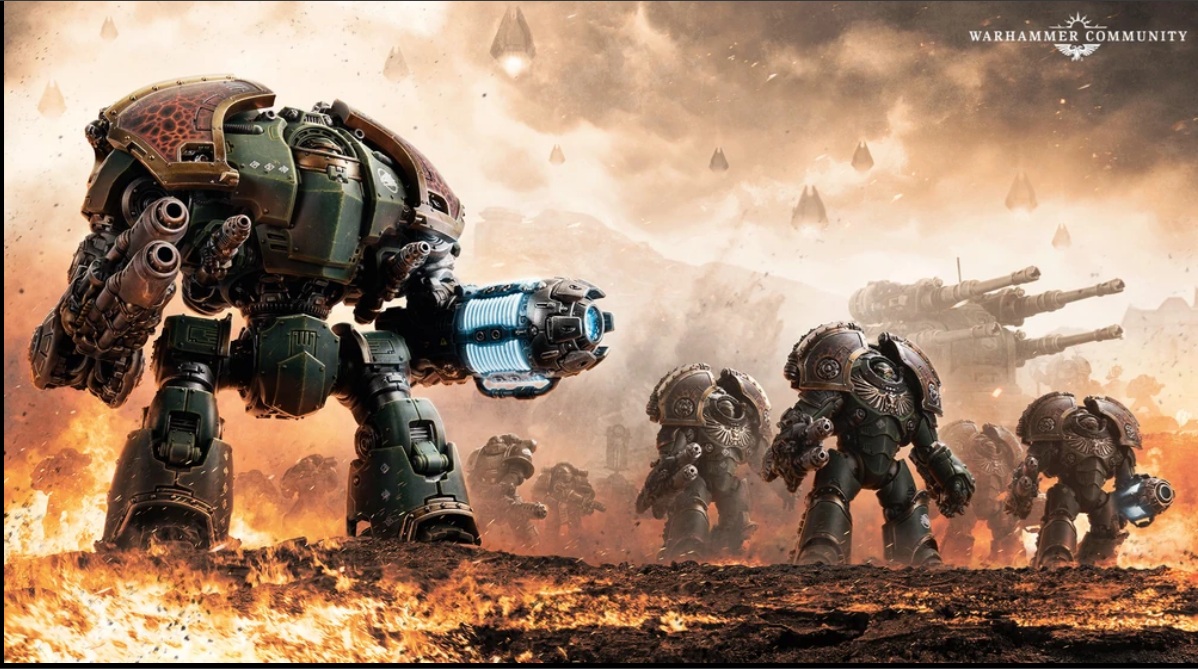 Image credit: Games Workshop
A Tale of Treachery
The first overt action that Horus took against the Imperium wasn't the Isstvan V, the site of the Dropsite Massacre, but rather Isstvan III. Plotting in secret, the forces of the Sons of Horus, Emperor's Children, Death Guard, and World Eaters Legions used the virus-bombing of Isstvan III not only to strike the first blow against the Emperor, but also to purge their ranks of those they suspected would defy the rebellion from within.
Now aware of the treachery within, the Imperium sent its full might to destroy the heretics at their point of greatest concentration, the neighboring world of Isstvan V. What they didn't realize, however, was just how far the rot had spread, and that some of the blades they sent to dispatch their new enemy would soon be turned on them instead.
Of the eight Legions sent to bring Horus to heel, five of them were already secretly pledged to the Warmaster. The three who remained loyal- the Iron Hands, the Raven Guard, and the Salamanders- would find themselves crushed between hammer and anvil as the full extent of the treason revealed itself.
In that sense,
Dropsite Massacre is a bit like reading a book about the Titanic. You may already know from before the first page how it's going to end, but it's the tale of how things get there that keeps the pages turning.
So how did French do in its telling?
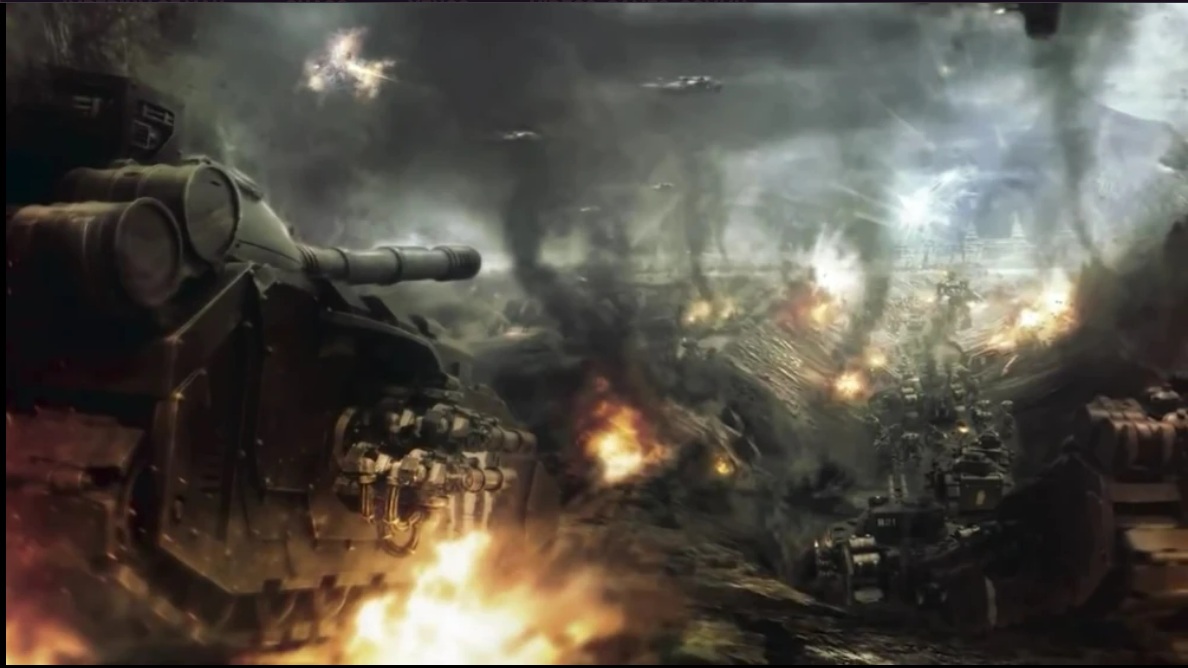 Image credit: Games Workshop
A Plan Comes Together
In short? For what it is- an action story-
Dropsite Massacre is a masterpiece.
I don't use that word lightly, but it's clear that French understood the magnitude of the assignment that had been handed him and harnessed the peak of his powers.
The book is extraordinary on both a macro and micro level. In the smaller scale of the latter, French packs in loads of terrific details that breathe life into the story. As a Night Lords fan, for example, remarks about how the Night Lords are the least-disciplined pilots of all the traitor legions and brief sequences like what happens when a Night Lords boarding party goes after a hospital ship let them stand out in a crowded narrative- and he does much the same for most of the others (Alpha Legion devotees will especially find a lot to like here, Word Bearers perhaps not so much). Like an impressionist painting it's full of little brushstrokes that come together into the whole when you step back and take in its entirely.
In other places French was almost writing prose as sculpture. For instance, you see an almost symmetrical intertwining of two different dialogues wherein the feelings and motivations of both sides of the struggle are thrown into relief: one sequence between Angron and Horus, the other involving Corax, Vulkan, and Ferrus Manus. This gives an almost
Rashomon-like feel as both sides carom towards open conflict, each feeling the need to reconcile their actions with their consciences and ambitions before the fateful die is cast. The sense that the drama is performing the actors pervades both, and there are struggles from both perspectives before they ultimately resign themselves to what they believe to be inevitable.
To be clear, though, this is not like one of French's Ahriman stories where the protagonist dwells at no small length within the musings of his own mind. There
is contemplation and introspection here, but it doesn't compete with the action. This is a high-tempo story that weaves together a large cast of characters, and French deftly sidesteps the risks that a sprawling cast can carry and turns it into one of the book's greatest strengths.
Dropsite Massacre is a book in epic scale written with a cinematic eye- it's (incredibly helpful) dramatis personae lead-in is four pages long- and jumping from so many perspectives leaves little time for character development, introspection, or even deep attachment to characters (save those you may have brought along yourself). Instead, the book marches forward as a series of interwoven moments. French's chapters are short, and I never felt like a single element was out of place or risked stalling the book's momentum. While the point of view changes frequently from Human to Astartes to Primarch, it is always with that delightfully dreadful
tick-tick-tick as we march towards oblivion.
Each of the strands being woven together are compelling. Horus and Maloghurst, feeling very much their sails filled with the winds of fate. Corax and Vulkan, worried that battle commander Ferrus Manus might be rushing into disaster. Fabius Bile creating a new type of solider for the Emperor's Children, the glorious Kakophoni. The plots, schemes, and scintillating moral ambiguity of the Alpha Legion and its operatives. The grueling battle of wills between a new Princeps and his Titan.
All these and more, skillfully woven together like a narrative braid.
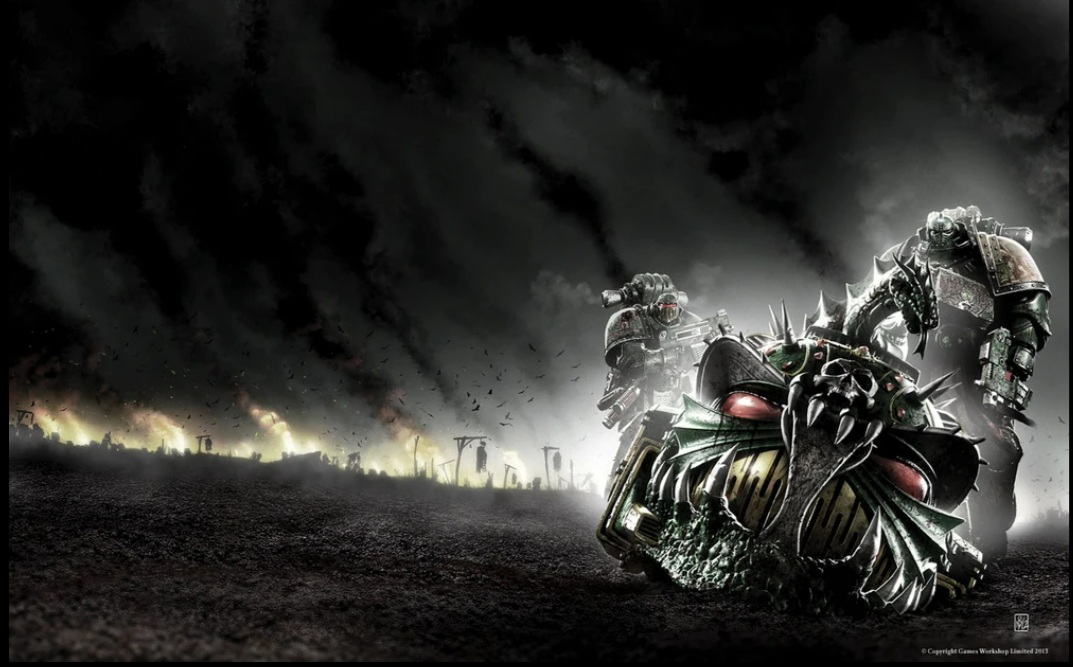 Image credit: Games Workshop
Explosively Woven
Finally, you arrive at the book's fourth act- the Massacre itself. And that's when you realize that what French has been weaving hasn't been a braid, but rather a
fuse.
Everything preceding this point has been in service to building up the tension-
why are those Iron Warriors over there setting up entrenchments instead of preparing to deploy against the traitors' citadel?- and the book
gallops as it finally goes off. You'll want to make sure your dance card is clear before starting it, lest you (like me) end up reading into the wee hours of the night. As the true scope of the betrayal becomes clear to characters you've spent the previous chapters with, the pages all but turn themselves.
French does a particularly good job of portraying the confusion felt by the different loyalist actors. The dropsite was completely congested, and once the comms go down each commander has to work out for themselves what's happening- and what they can possibly do about it.
The great tragedy of the Massacre plays itself out over and again in the small moments as much as the big, making it all the more moving. For instance, the crew of a stealthed Raven Guard recon voidship who realize that the only thing they can do- and perhaps their most vital duty- is not to intervene but to simply bear witness to the Massacre unfolding below in the hopes of surviving to bring word to the Imperium.
I mentioned at the start of this review that there was one overarching sentiment I'd seen in the community about
Dropsite Massacre, and it was "do we really need another story about this?"
Turns out we did. Because the second most-common sentiment I saw (often paired with the first) was, "okay, this was really good," and obviously I'd concur. This was a terrific story masterfully told, and a great entry into the Horus Heresy canon for both the veteran reader as well as those relatively fresh to the series
1.
Footnotes
- As always, some familiarity is useful. The "core four" (or better yet the "first five") are probably the bare minimum.
Have any questions or feedback? Drop us a note in the comments below or email us at contact@goonhammer.com. Want articles like this linked in your inbox every Monday morning? Sign up for our newsletter. And don't forget that you can support us on Patreon for backer rewards like early video content, Administratum access, an ad-free experience on our website and more.Thank you for being a friend.
 This website uses cookies. Learn more.


 SRM's Roundabout to Adepticon 2026: Curd Is the Word
 Goonhammer Hobby Round-Up: March 2026
 Conquest: Weaver Courts Gemred Knights and Scaile Dancers Model Review